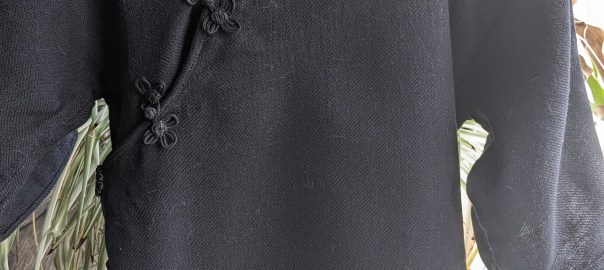
My handwoven handmade shirt! I made this shirt to be a little fancy, breathable, with floofy sleeves and frog buttons. I wanted to experiment with cottolin (cotton and linen blend) and mercerized cotton to see if the sheen of the mercerized cotton was detectable at range. I actually wove a sample, and it was not as shiny as desired, but I decided to move forward anyway.
Measuring the warp was exhausting. I used my mini heddle as a warping paddle and measured four threads at a time. But my goal was 720 threads, and that’s just a lot of time at the warping board (mine is a bunch of PVC so I can change the distances easily). Taking breaks allowed me to do more research and find new ways of construction that also enabled me to use thinner warp, so I didn’t have to do as many warp ends. I realized that I could weave a longer, thinner panel and then sew it together instead of using the full width of my loom.
I watched Claire Yixuan Zhang’s qipao video at least six times while making this – once when I found it for research, a couple times while planning how wide the warp really needed to be and making paper models, before cutting out my mockups, and before taking the scissors to my handwoven. One of the things that really stands out to me about this construction method is the value of keeping as much fabric from the panel in the final product. And being handwoven, this shirt is probably the most expensive piece of clothing I have now.
I finally sleyed the reed, set up the heddles, and wound on my warp. I practiced a new way of dressing the loom with a smaller project right before this, and I’m glad I did. Dressing the loom front to back like this was less stressful and more ergonomic for me, and I think I’ll continue using this method.
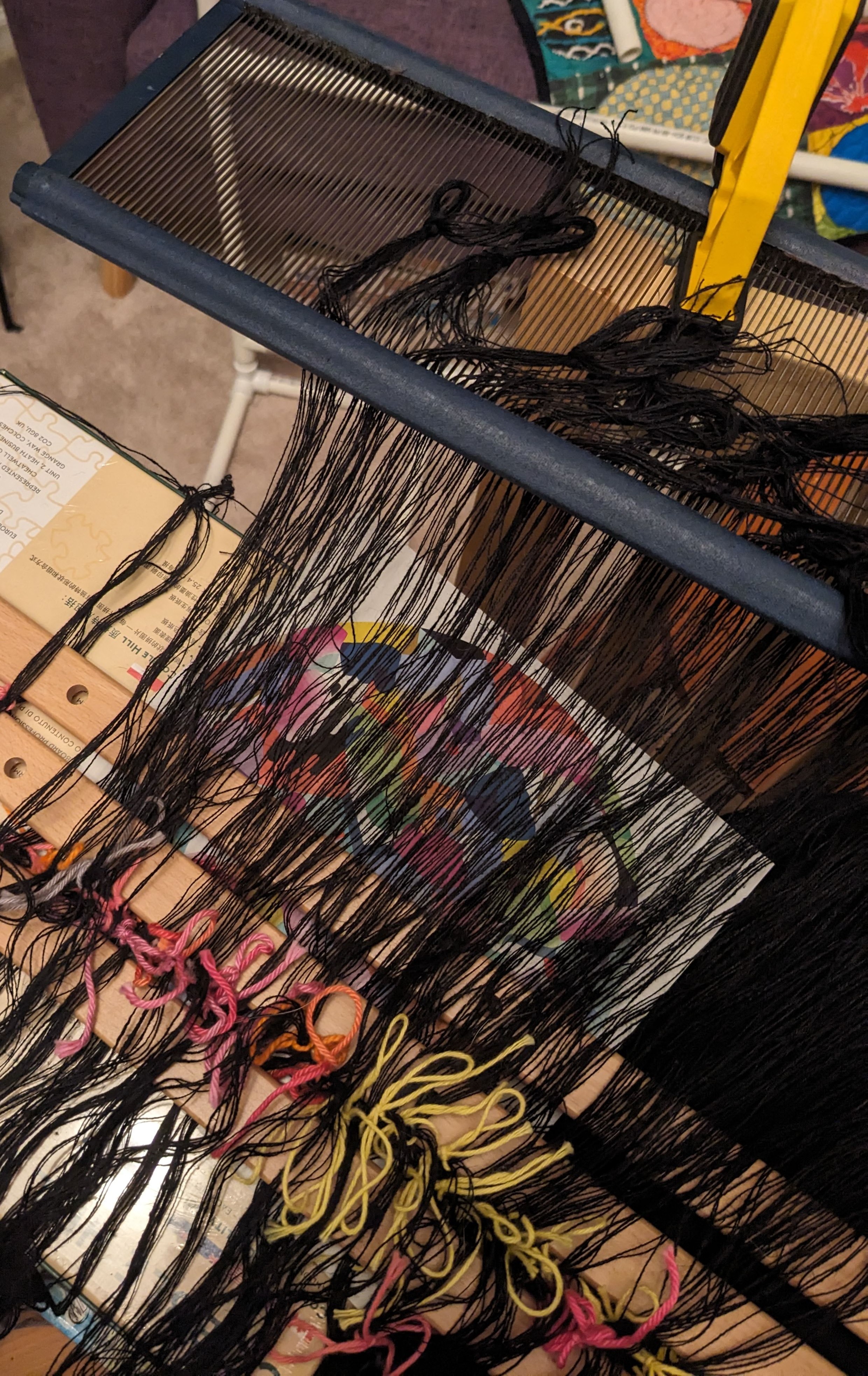
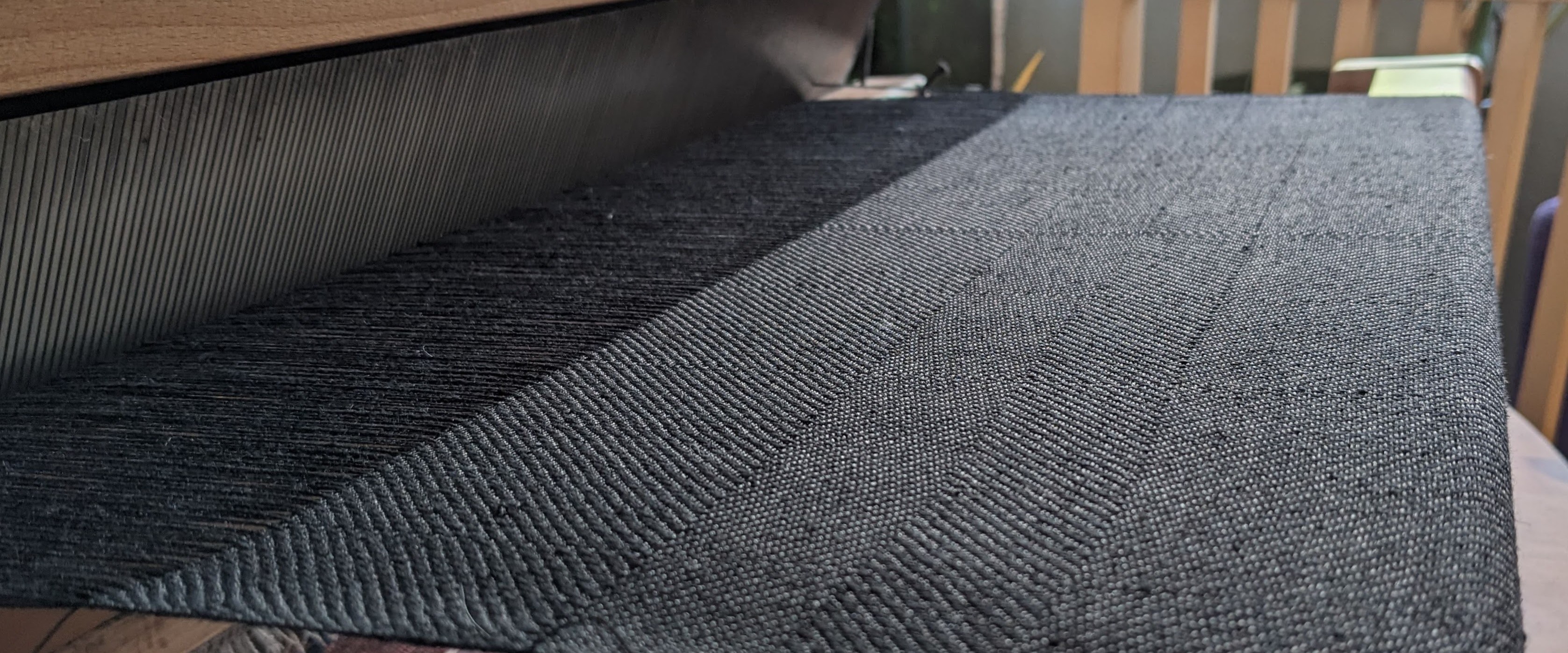
These really obvious stripes happened on both the sample and the final weaving – but only on the loom. I’m still not sure why the twill pattern is so obvious on the loom but not when finished, but I suspect it has to do with the “fuzzing out” of the cottolin during washing and the mercerized cotton (which I used exclusively in the weft) sinking into the structure and becoming less pronounced.
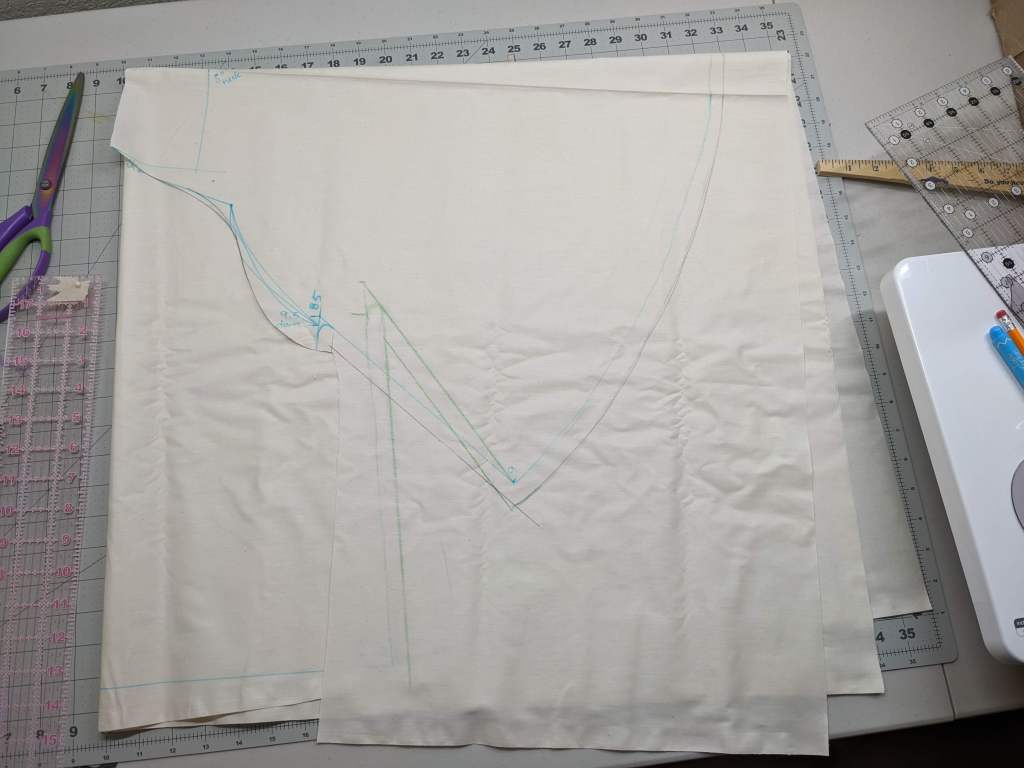
It turns out that weaving all black, simple four shaft twill for, oh, 190 inches is really boring. So in procrastinating on the weaving, I ended up being very responsible and making two mockups with the cutting technique from Claire’s video. The mockups helped me figure out how long and big I wanted the sleeves to be, and what the neckhole should look like. I also learned how to make wheat paste to stabilize the edges of my fabric as I cut into it, which made me much less nervous.
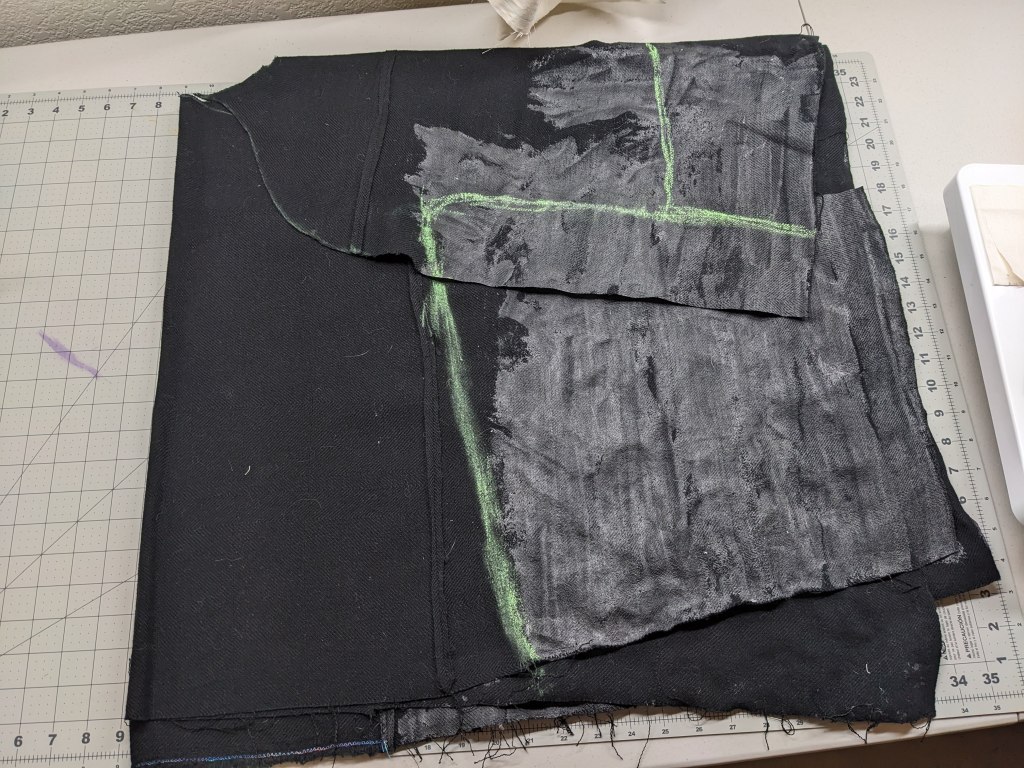
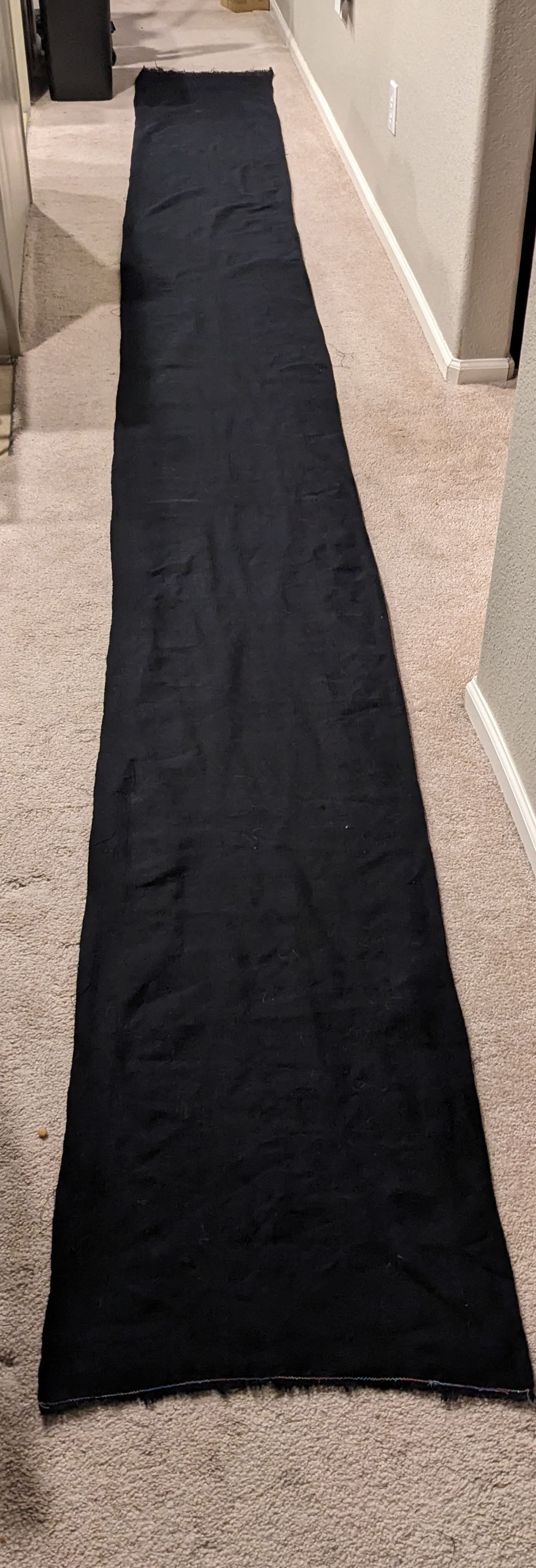
Once I finally finished the panel (left below), I sewed it to be three times the width and one third the length (right) to make an almost-square.
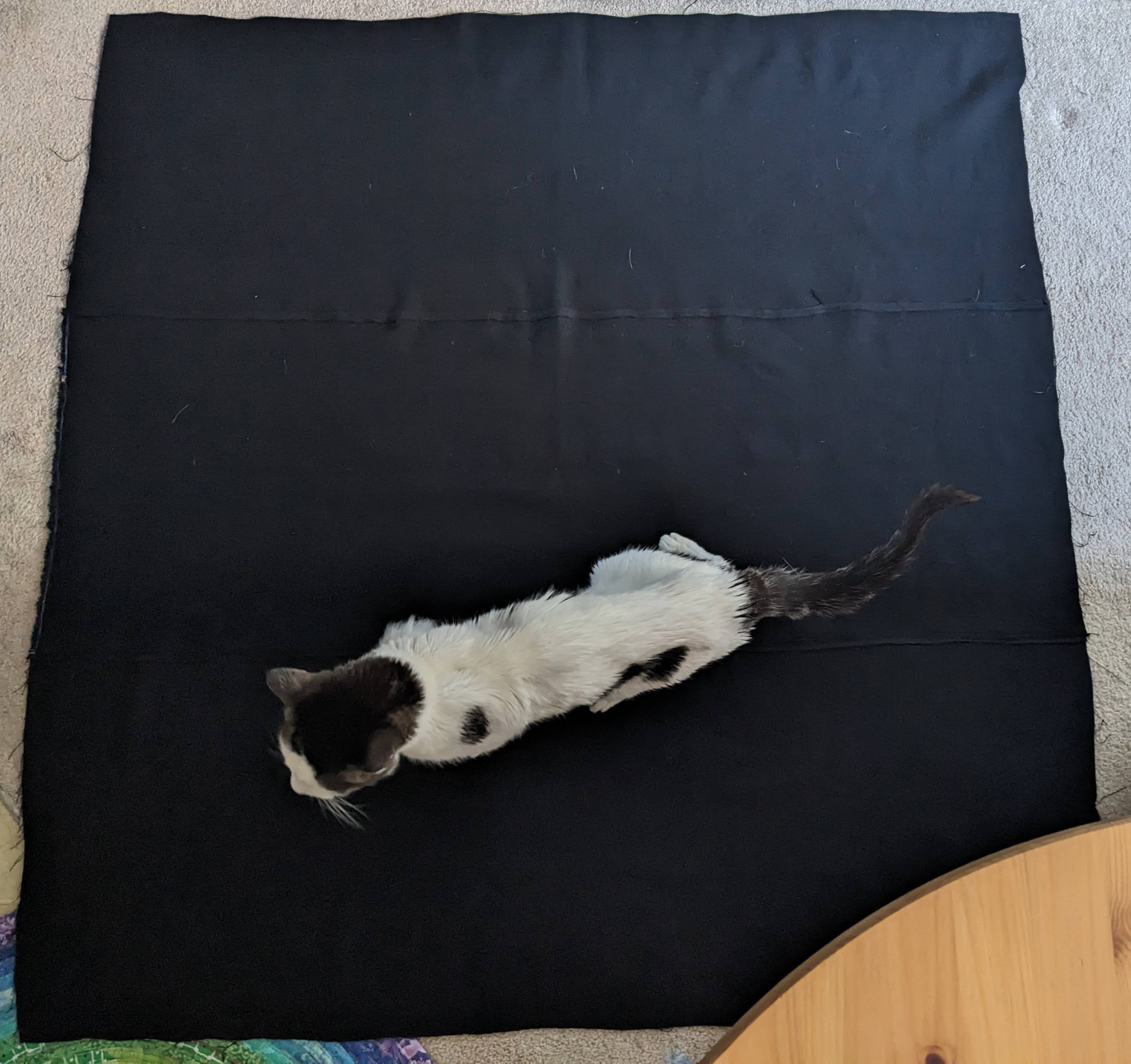
Then I followed my mockup plans and made the final! I accidentally cut out the neckhole from version one, instead of version two, so I had to make some weird pleats around the neckhole on the back. The collar was the part I was most nervous about, but I just took it slow and made a mockup collar to make sure that it fit onto the neck hole.
I ended up using “bias” (read: just strips on the normal grain) tape to seal all the raw edges, including around the sleeves and on the inside side seams. I did this the first time with the sewing machine because I thought it would be faster. But then when I washed it, some of the fabric had not been caught in the tape and came free and slightly unwoven, which I repaired by hand. It probably would have been easier and faster to do all the tape by hand, which I will remember for next time.
I used frog buttons that a friend bought for me in Taiwan (on the front), plus some additional frog buttons from an old shirt (down the side).
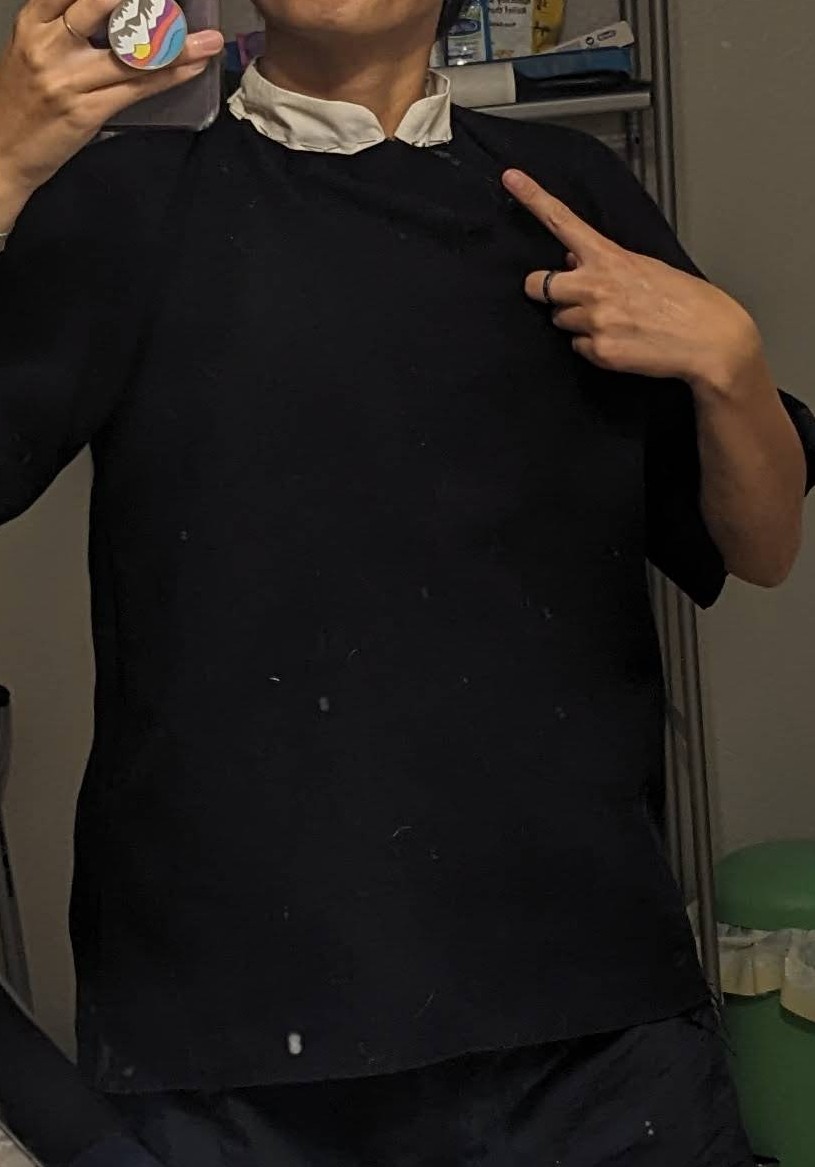
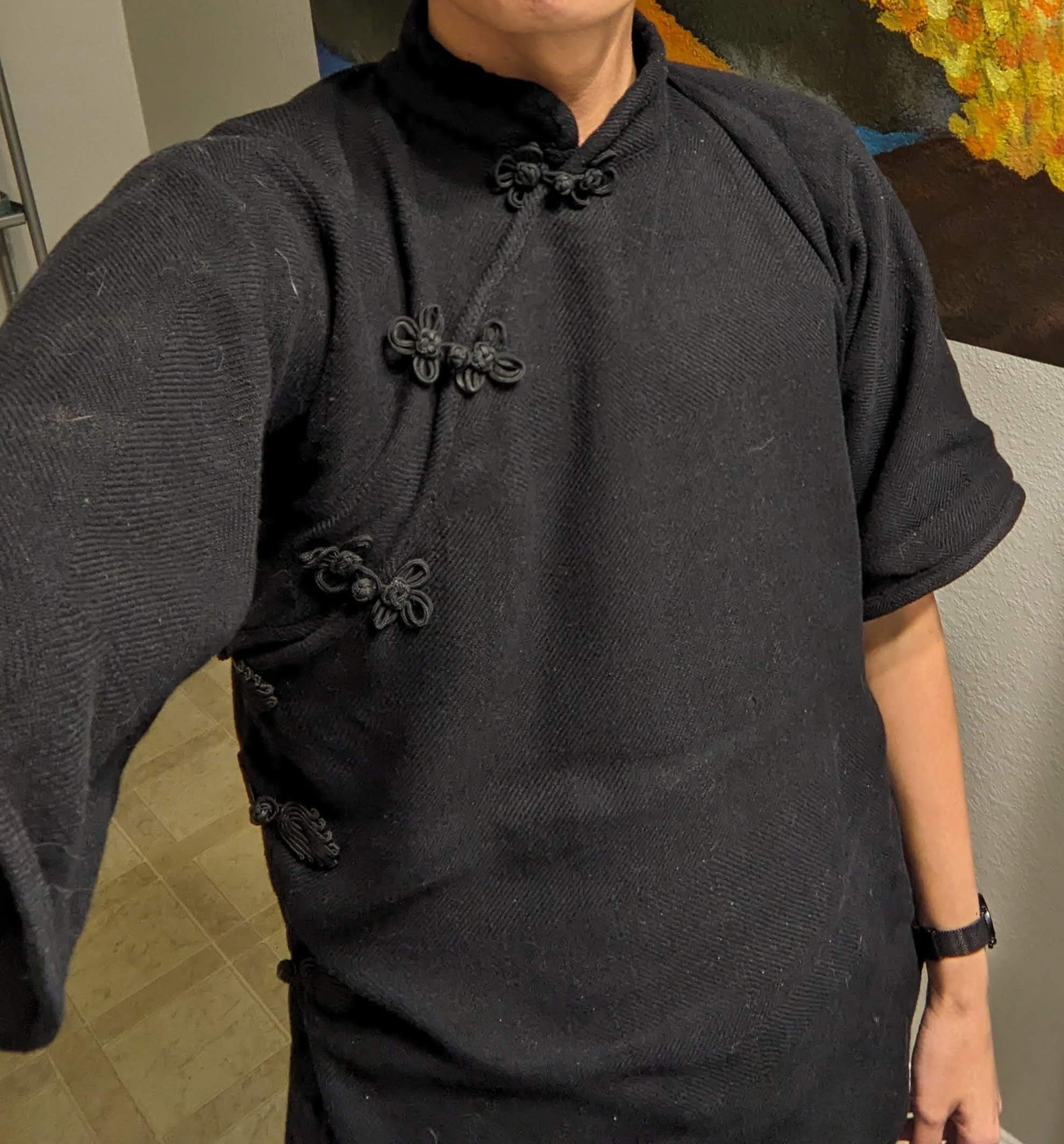
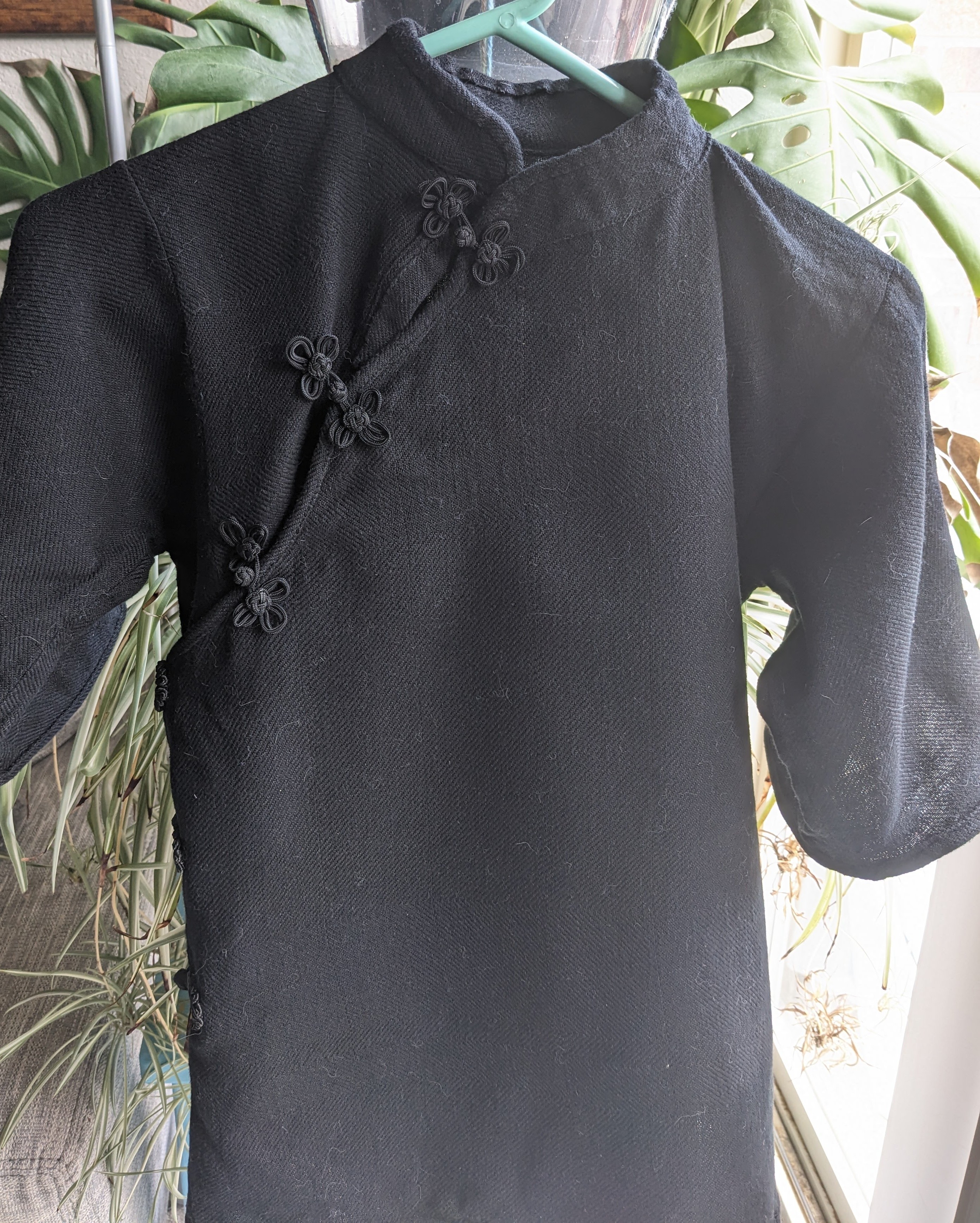
The collar ended up a bit asymmetrical, and I want to address it. One friend said they would lean in an make it even more asymmetrical, and another friend said I could probably add material and make them more even, so we’ll see what I decide. On my second wear, the front overlap wasn’t quite enough when I raised my arms, so I want to add some material so all my skin is covered.
Project completed May 2026.

