Tag Archives: cotton yarn

More Twill Towels :)

Now that I’ve given all my end-of-year gifts, I can post my work over the past many months! This year I got into weaving and doing dish towels felt approachable and they’re a classic weaver’s project. I’ve posted some that I already worked on here, and then started getting ideas…

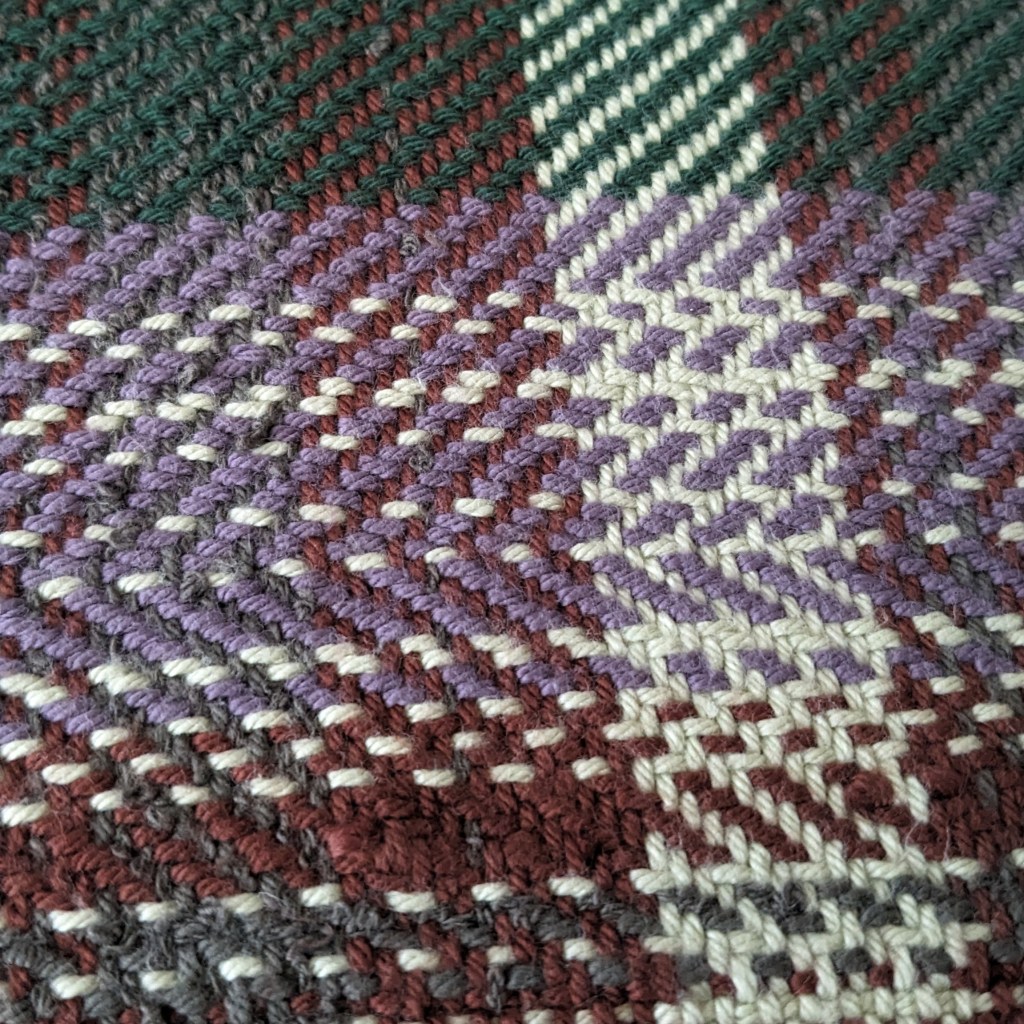
First was to pull colors from nature, pictures I take while out and about. Picking a four or five color palette to work with is NOT a strength of mine, I love chaos too much. I started with a picture I took on vacation in Redwoods National Park last year and one of the sunrise in Rocky Mountain National Park. Conveniently, these two had some shared colors so I went with dark green and brown for the warp, and others for the weft.
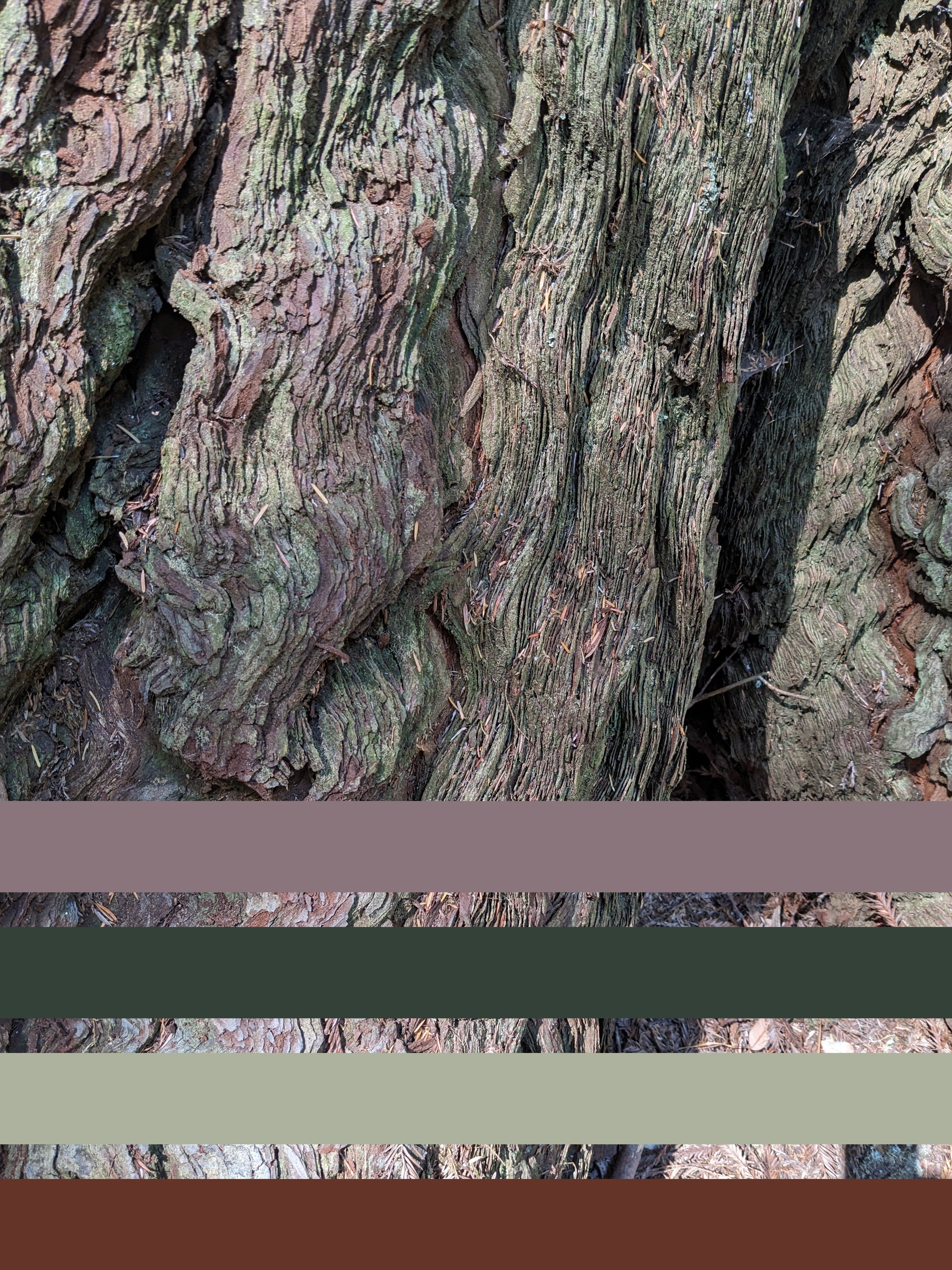
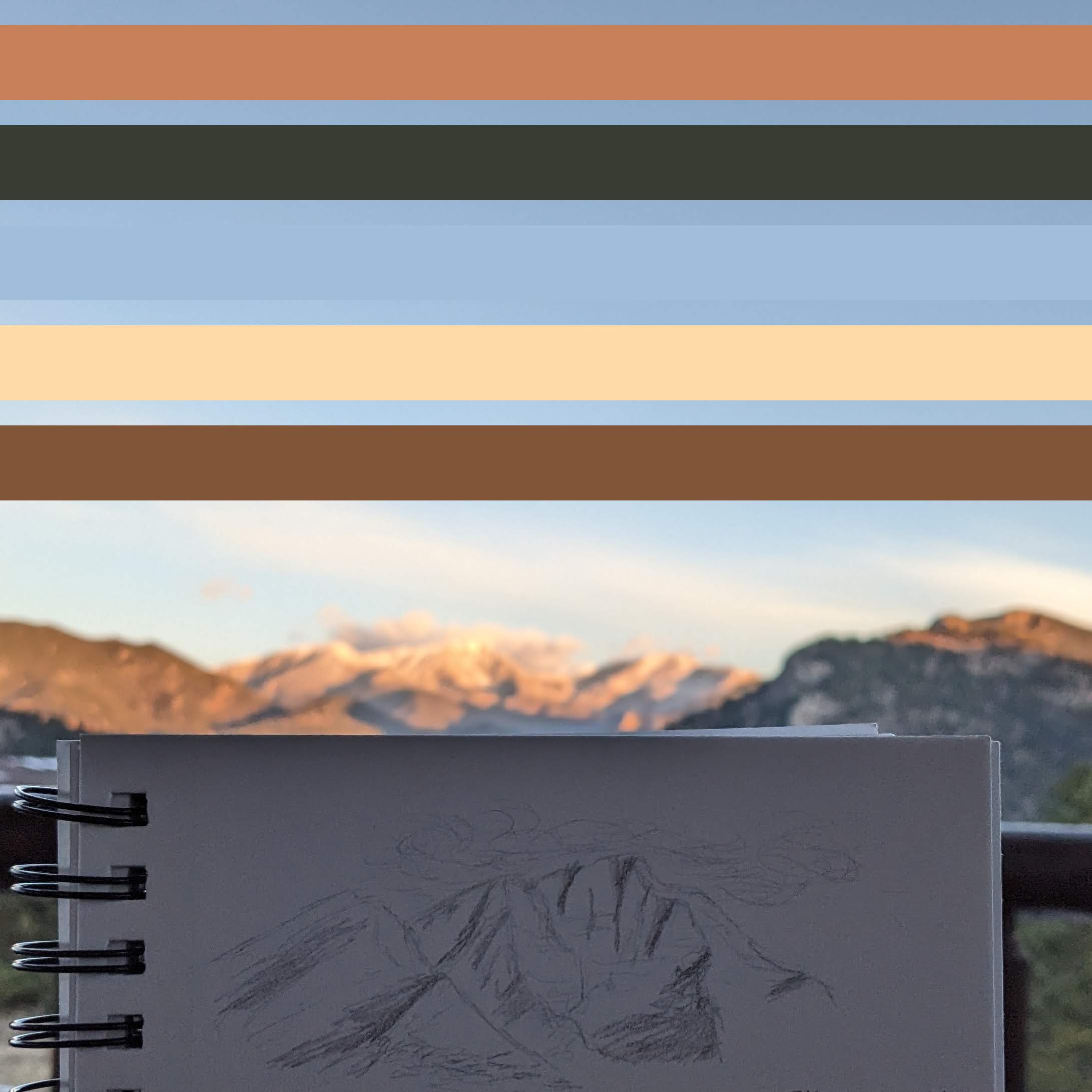
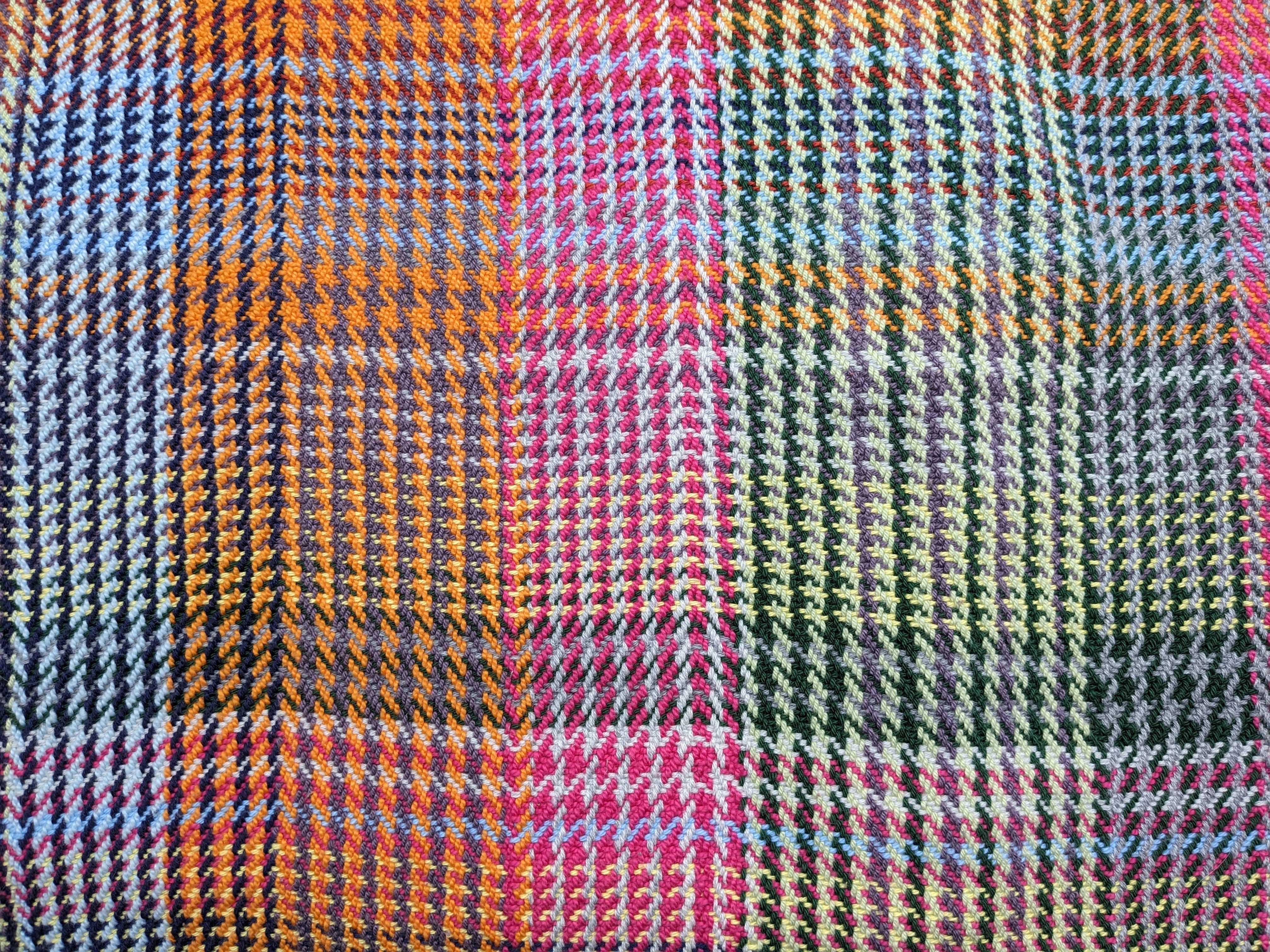
I started with the mountain colors, working in 2/2 twill, changing weft colors on a whim, sometimes using clasped weft to do half-rows of color. It became clear pretty quickly that the colors I chose were not really that representative of my picture inspiration, and more just red, yellow, and blue. But those three colors are still fun to with. The dark warp just got lost, I’m not sure why it isn’t as present in the final towels, but maybe it just serves to make the weft pop. I renamed these as the “primaries” series, but I still want to make a sunrise series.
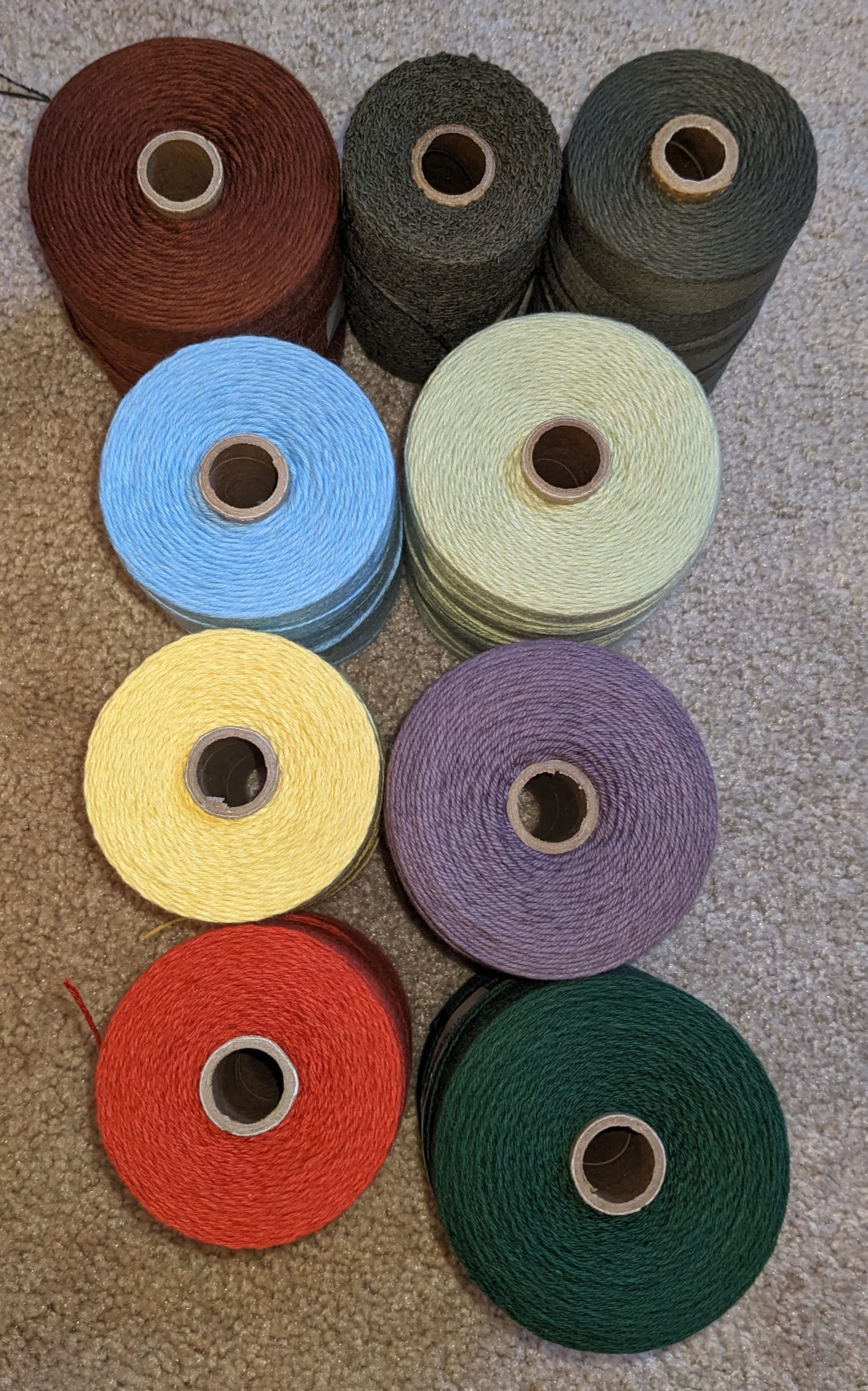
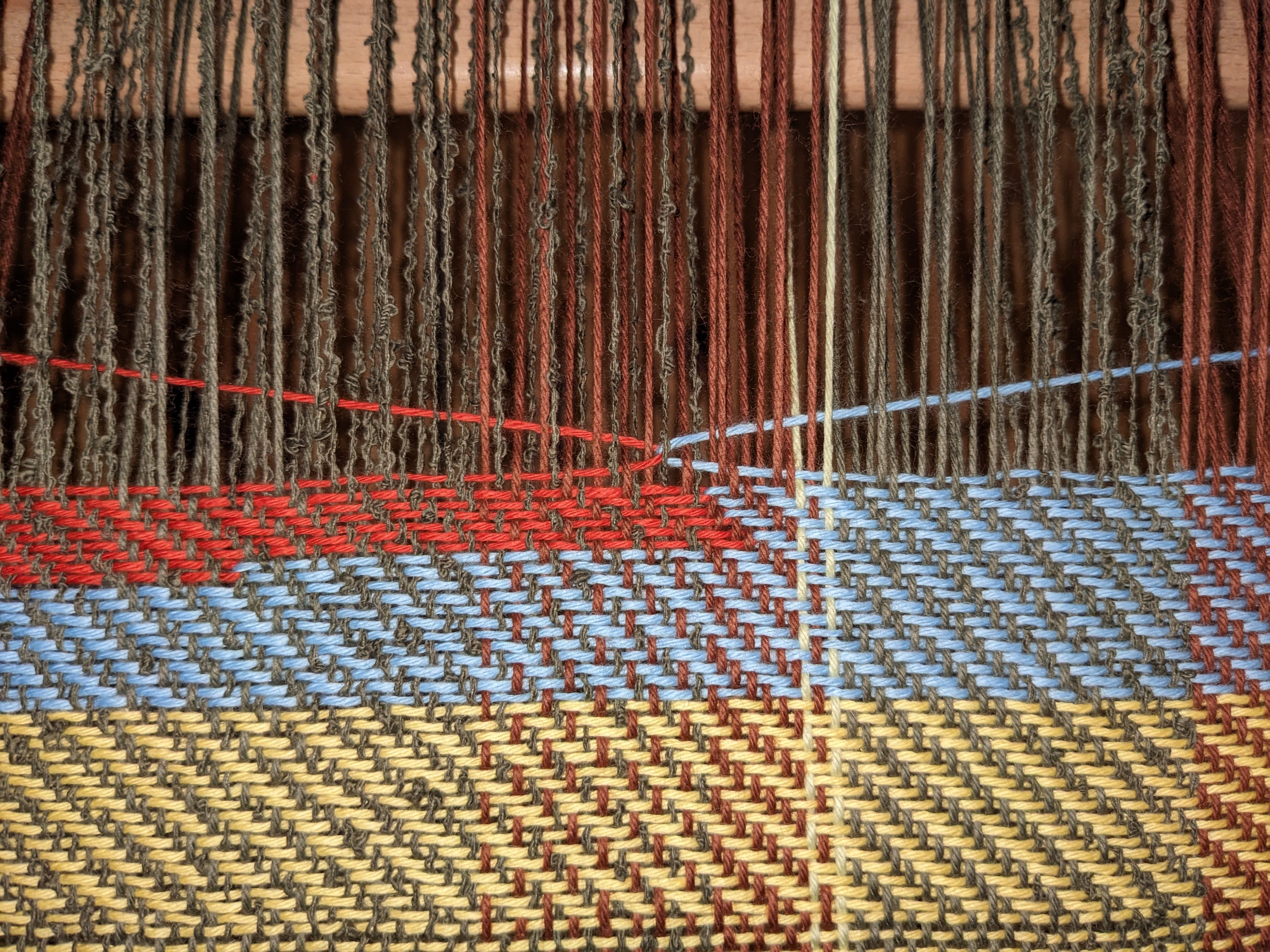
Then I started in on the tree towels – but this was the longest warp I’d wound on, and the tension was pretty wonky, to say the least. In retrospect, I think a couple things happened: the tension wasn’t even as the warp was wound on and I wasn’t putting in dividers often enough, which meant there were more overlapping threads in the middle of the bar, which meant the circumference that the warp was winding onto was not equal across the warp. In other words, the sides of my warp didn’t have enough thread and the center had too much, and it was a whole hassle. I ended up unwinding it and trying again, because my weaving was so uneven and it was frustrating to work with.
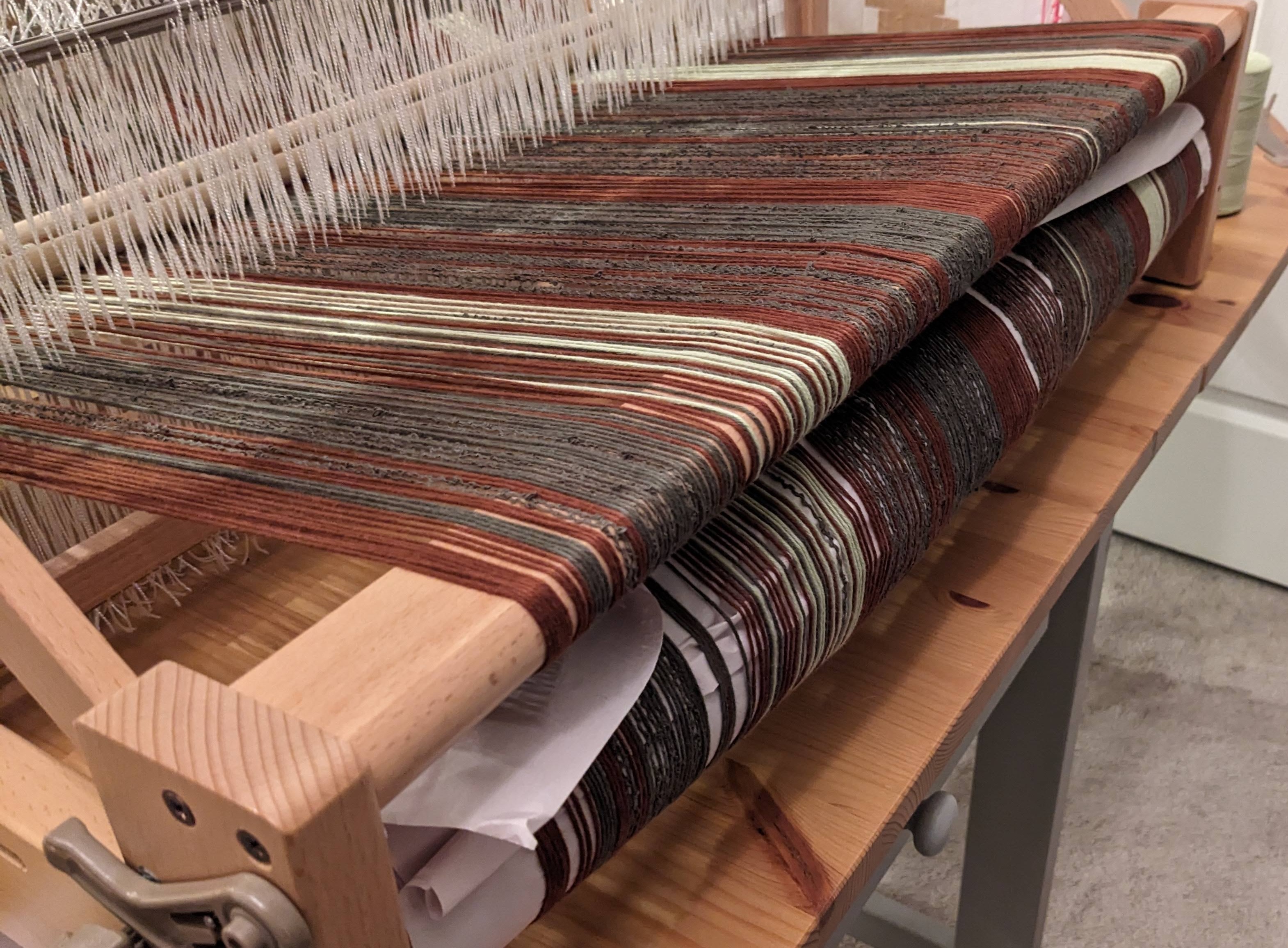
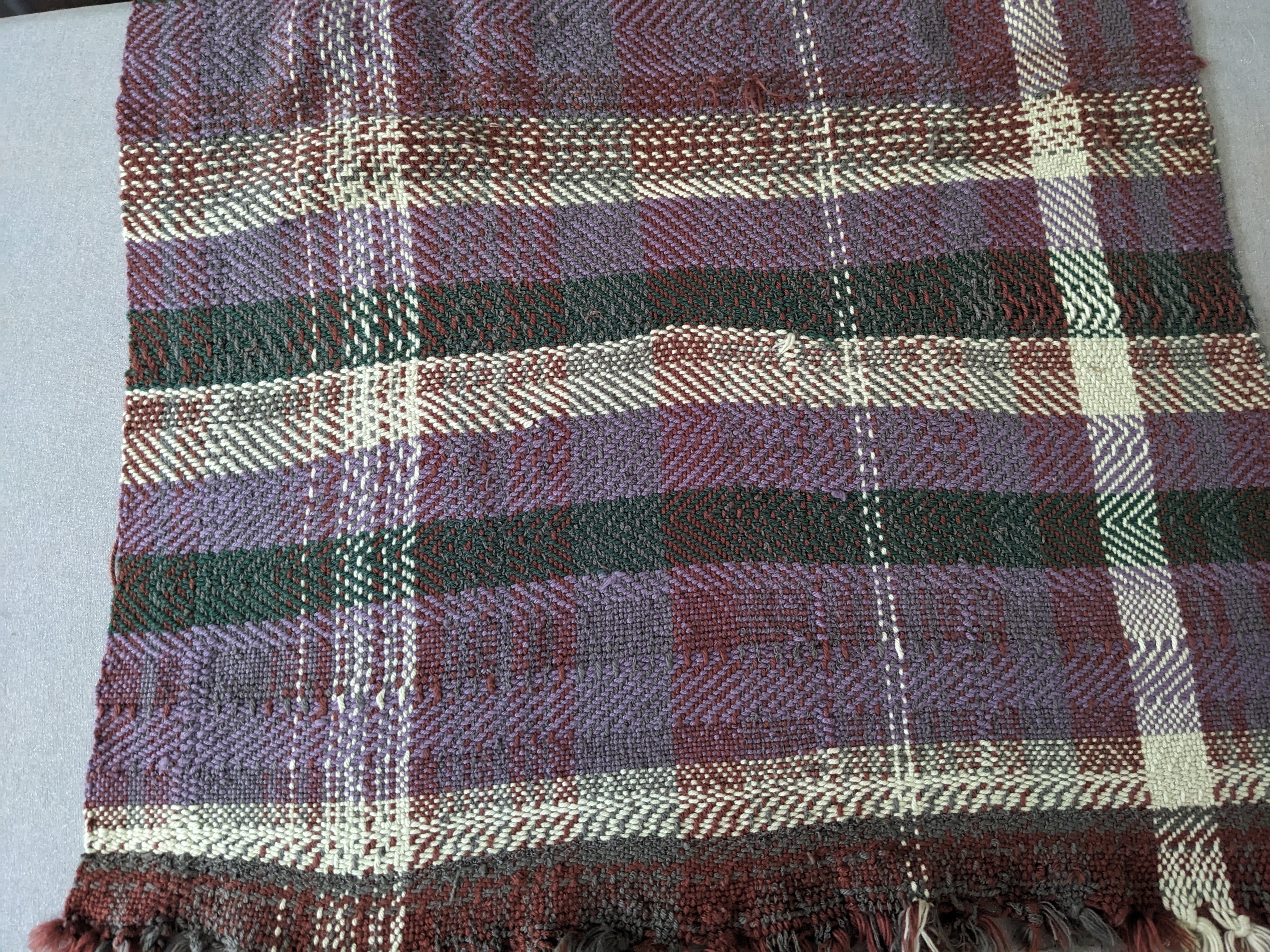
It meant I lost some warp, or length, of my project (yielded 3 towels instead of 6 like the other), but it was worth it for how nicely the towels actually turned out, and the ease of the experience afterward.

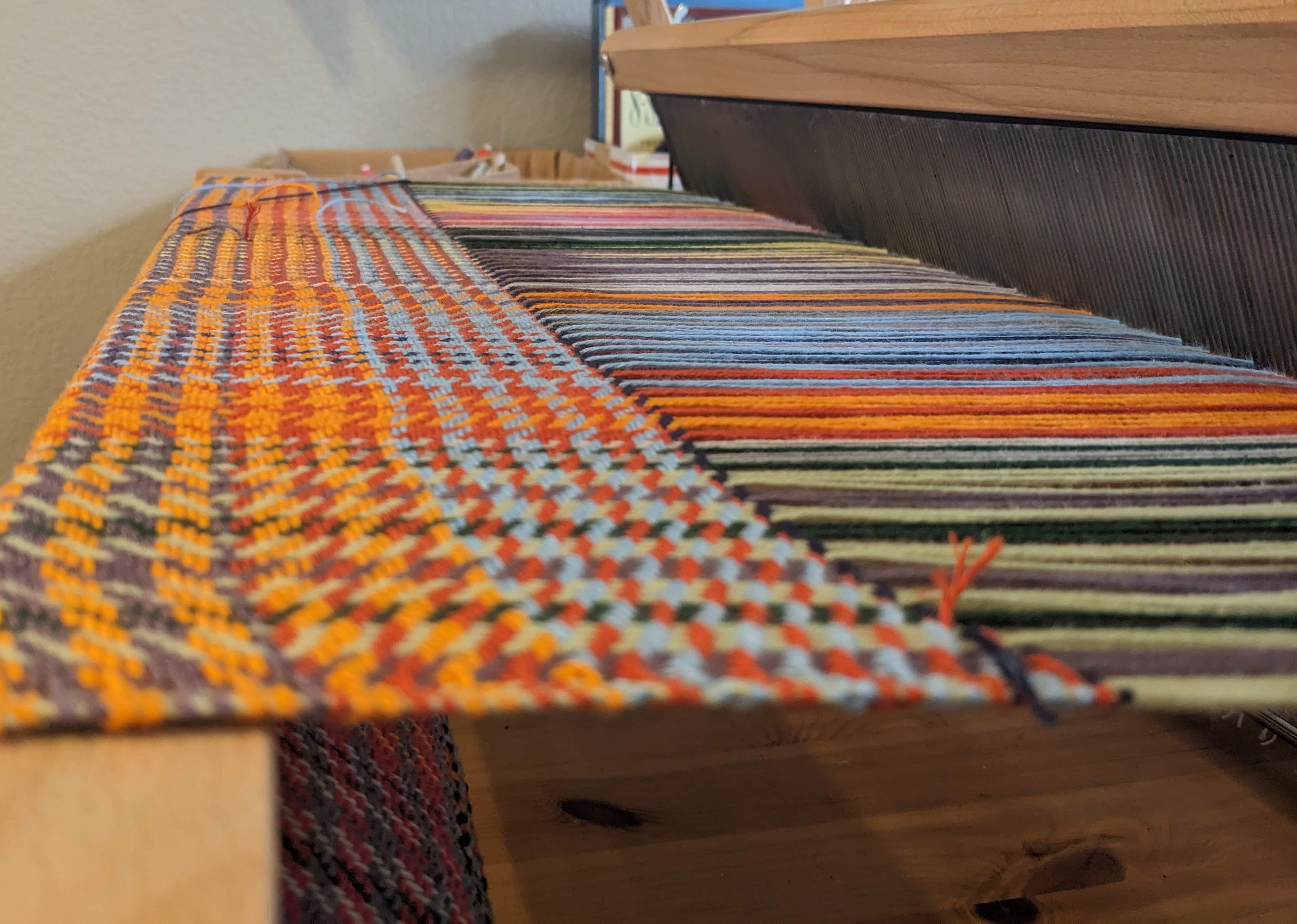
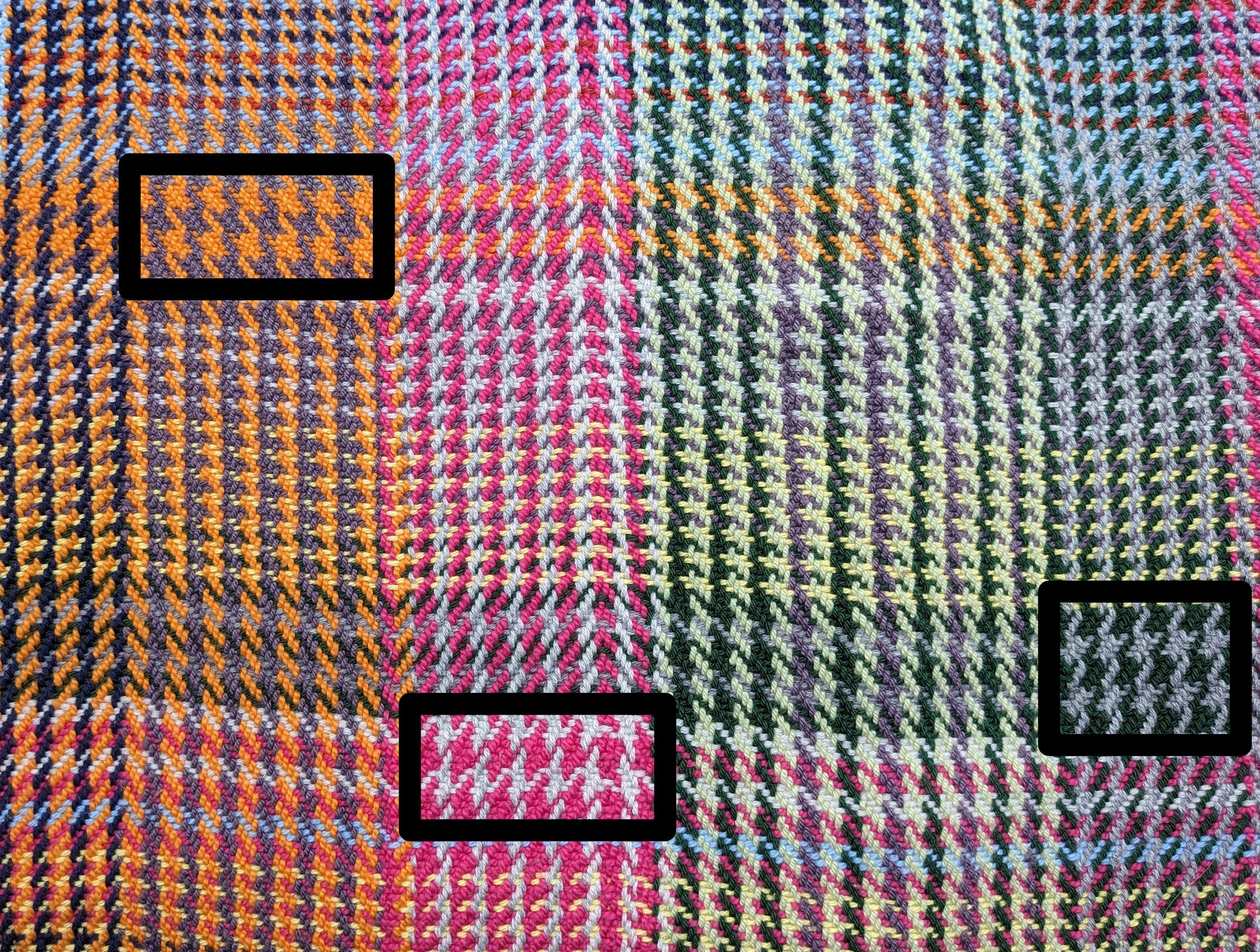
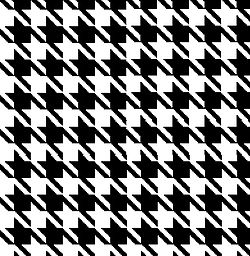
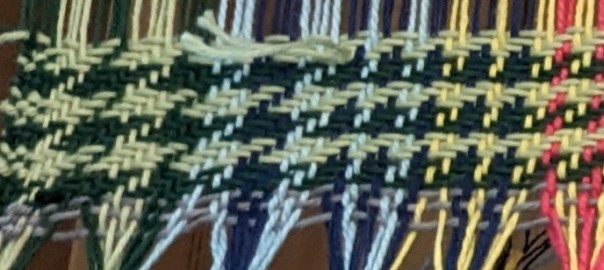
Then I had nice leftovers from lots of projects, so I had to do a scrappy, chaotic set of towels. I wanted to do some sort of “color and weave” pattern, where both the way the colors in the weft and warp are laid out AND the weave structure create a specific look. Most color and weave patterns are using dark and light colors, so I divided up my leftovers into darks and lights and started looking for ideas. I wanted to do a houndstooth pattern, and stuck to a 2/2 twill on four shafts to keep it simple 🙂 these were so fun. I did stripes of four light threads and four dark threads on the warp and the weft, with a few stripes of two just for experimentation’s sake. I used the same light/dark pairs in the weft as I did in the warp, so there are little islands of perfect houndstooth among a sea of kinda-houndstooth.
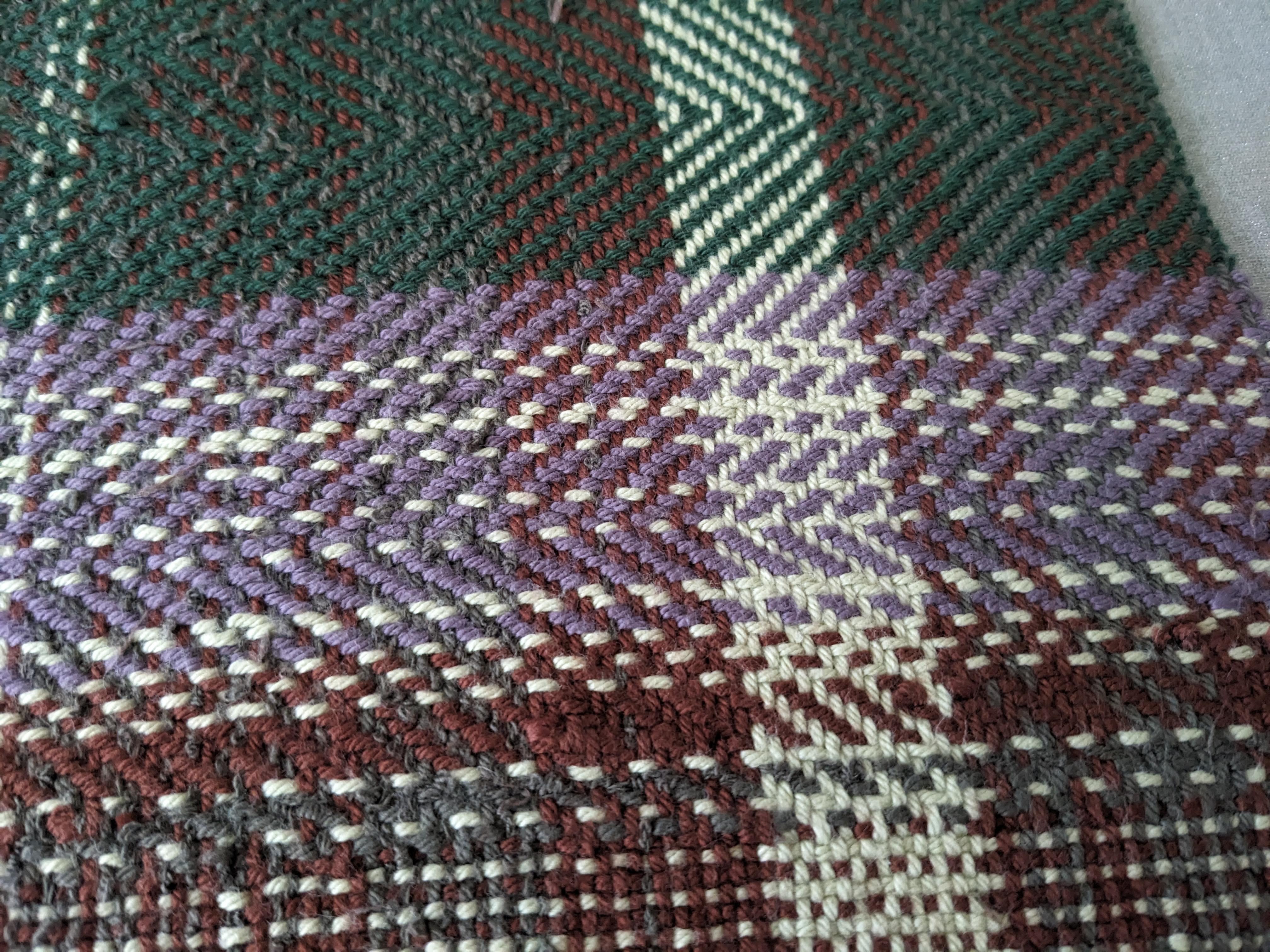
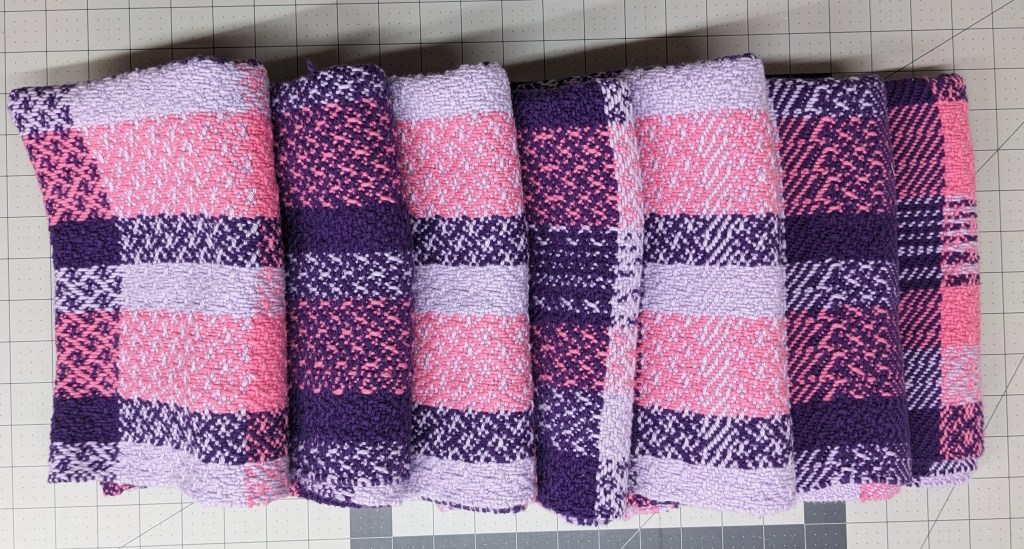
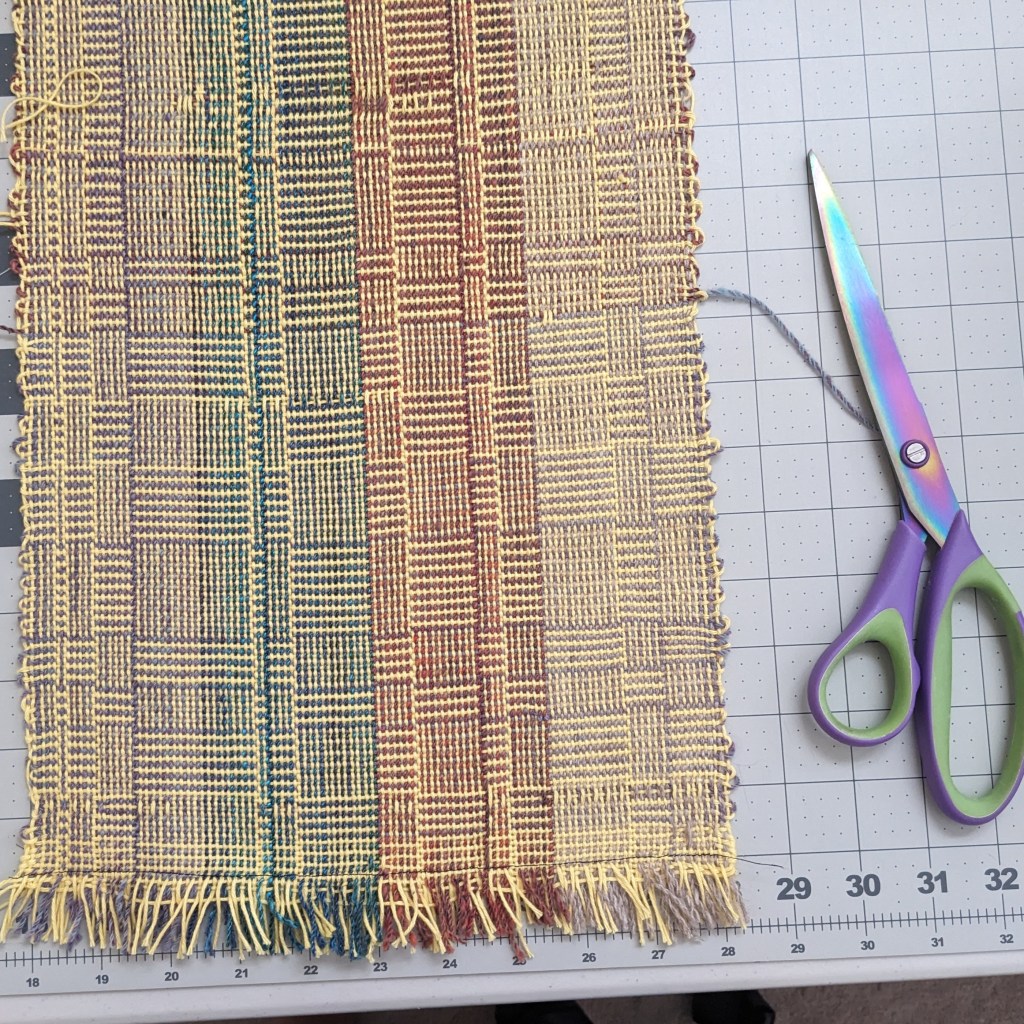
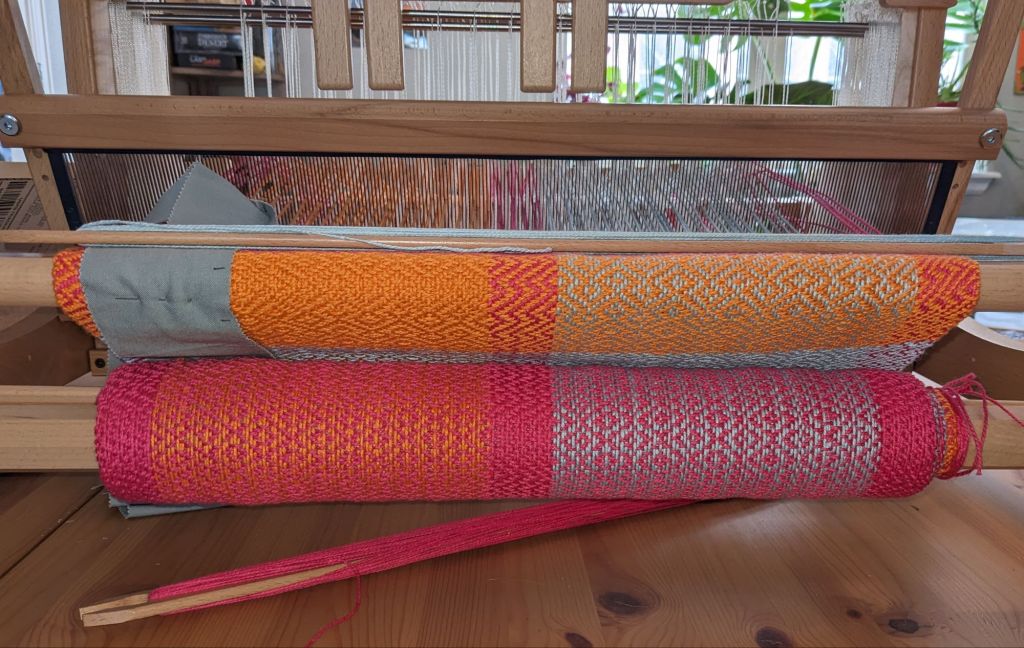
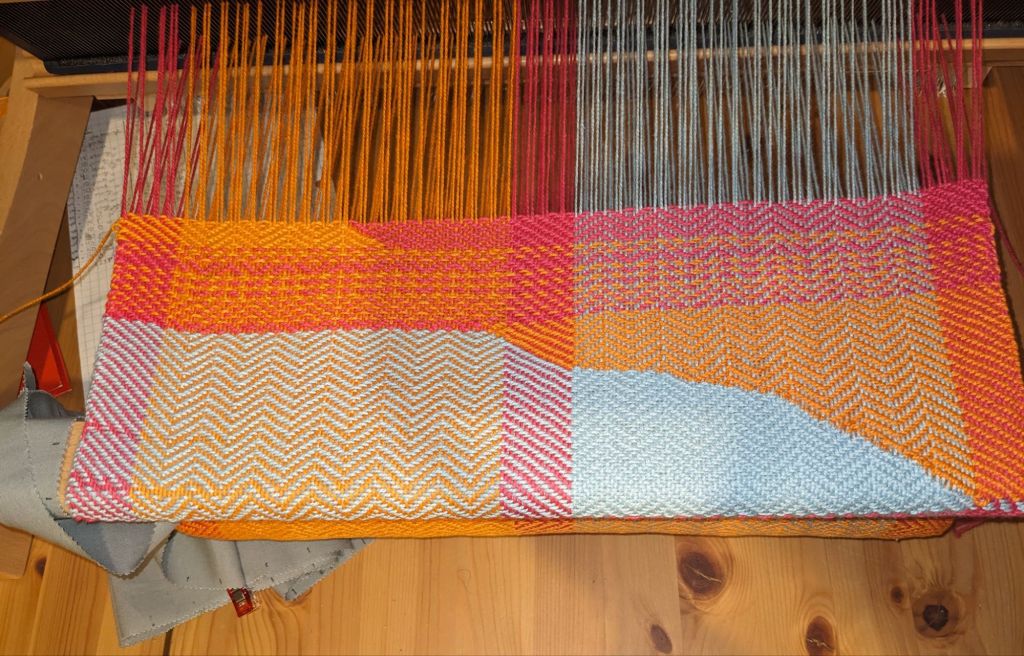
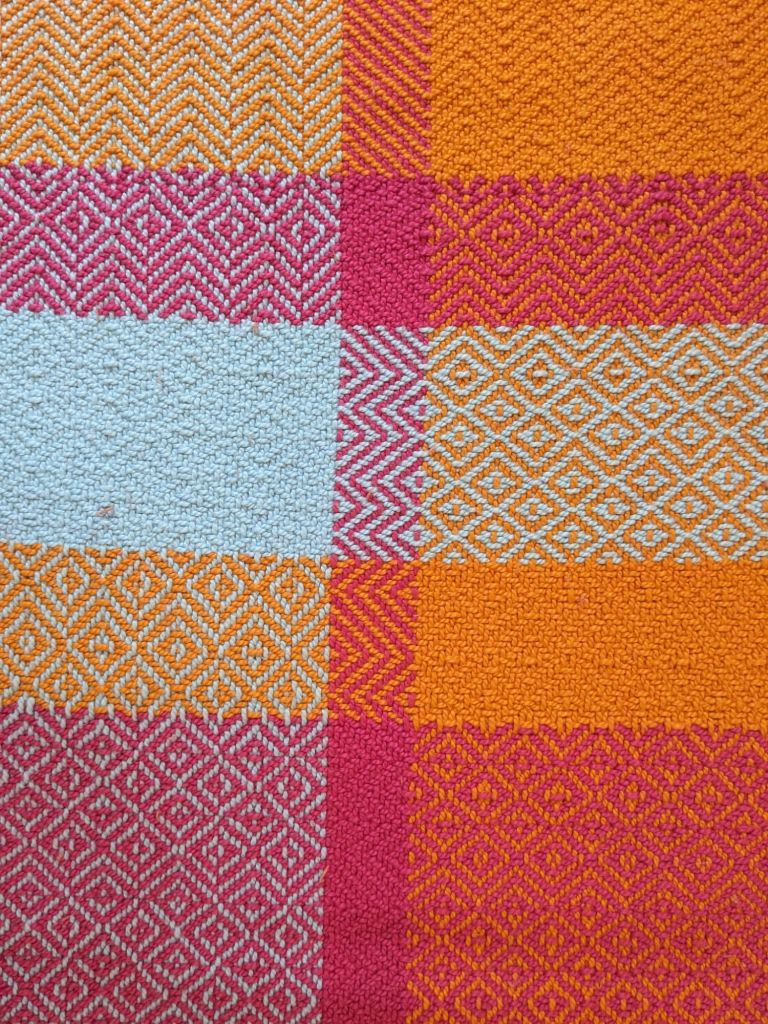
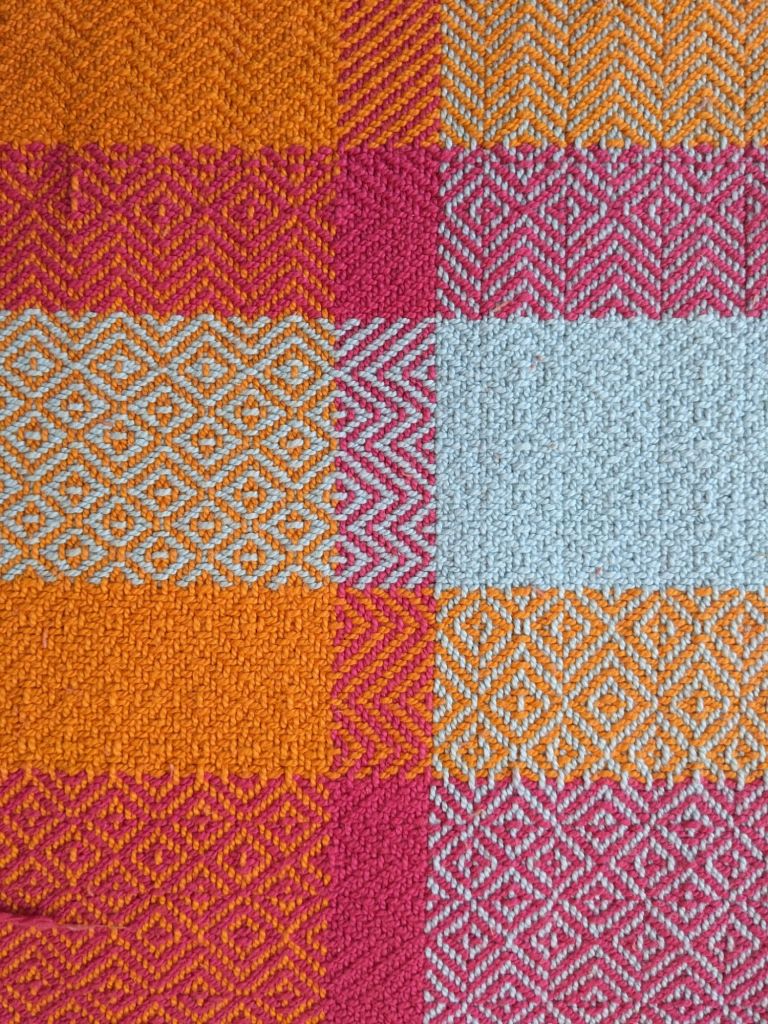
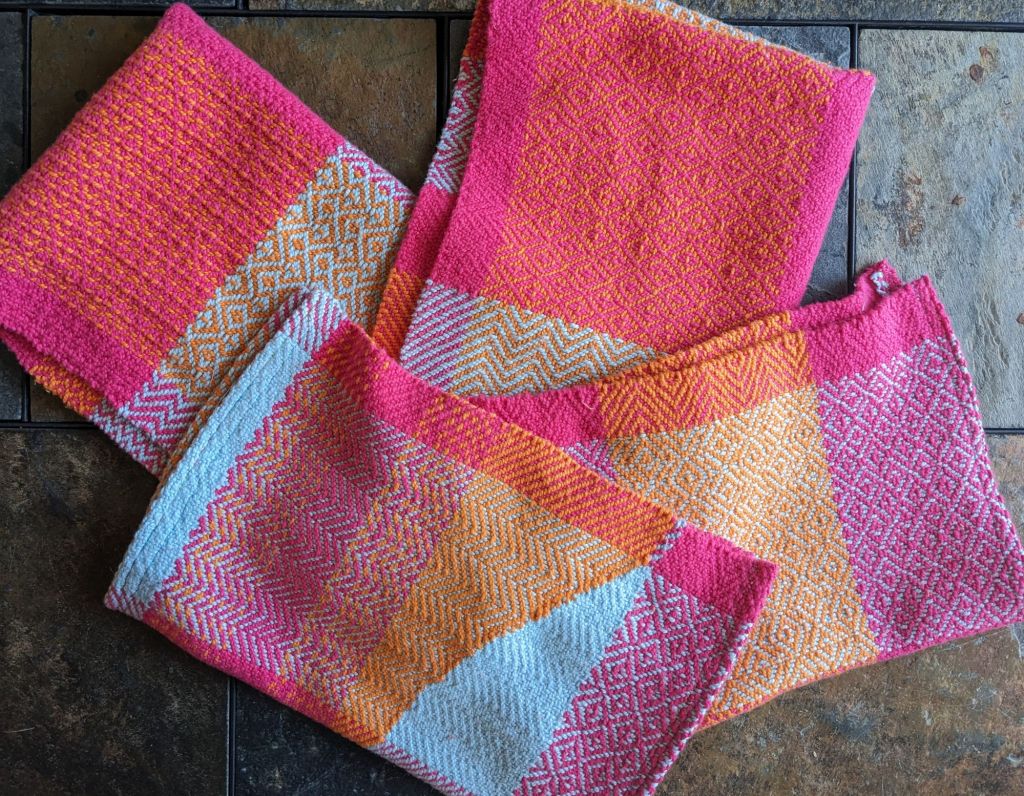
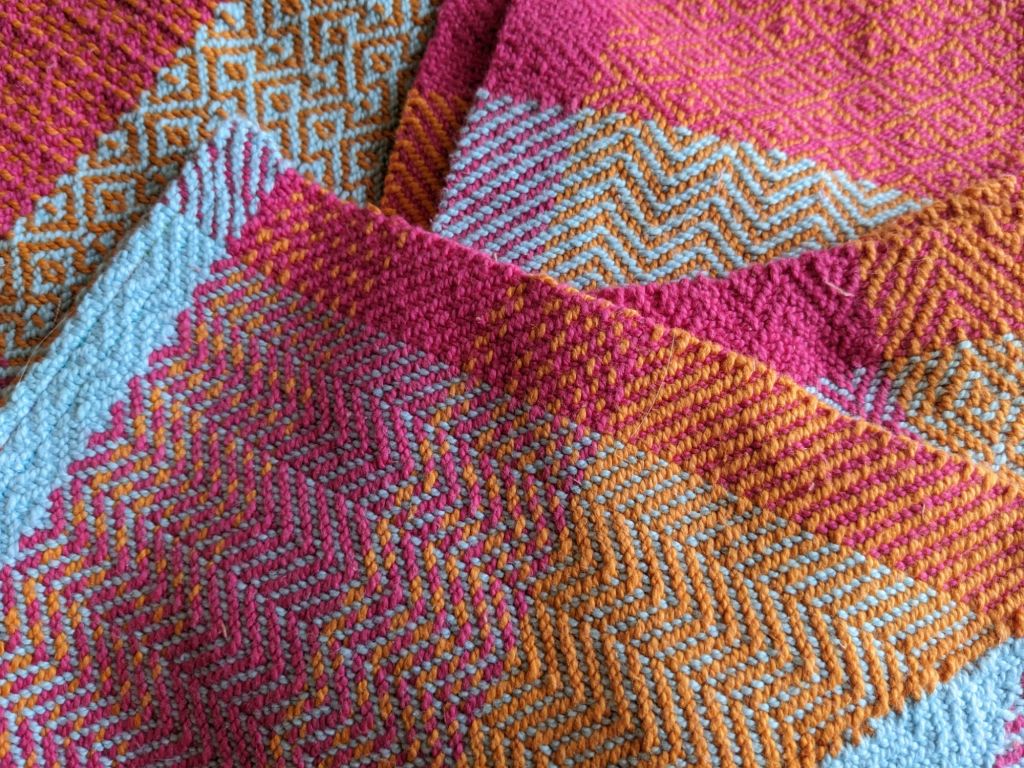
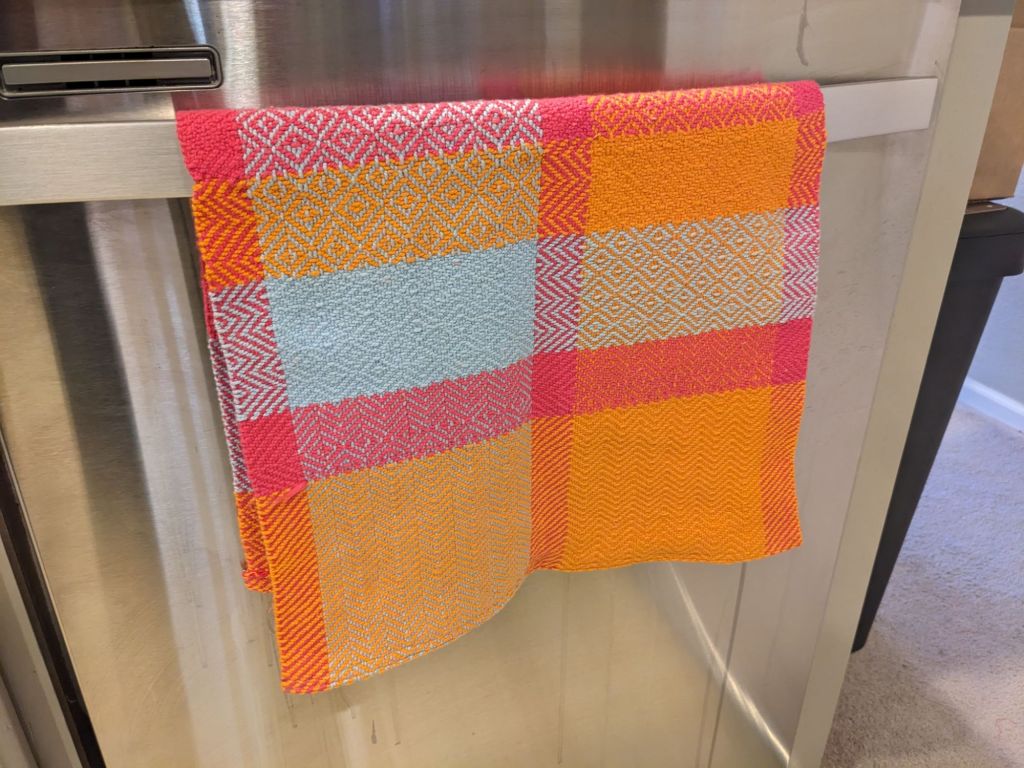
Then, I thought I was done with towels for a moment, but a friend revealed to me she didn’t have any towels and I could not let that stand. I immediately chose colors that went with her apartment decor and a really pretty weave structure I’d been eyeing with no real plan to use. This braided twill (Strickler’s #181) has things in common with a twill, kind of like a point twill, but it creates diamonds that share sides instead of freestanding diamonds. I wanted to do a plaid, because I think stripes are cool and wanted to understand some of the color blending between the three colors I chose. A plaid just uses the same color pattern for the weft as it does for the warp, turned 90 degrees. I figured I’d make the weft stripes whatever width I wanted (or however much yarn I put on my bobbin), but keep the same color order. So I made my warp stripes, wound bobbins of differing lengths for fun, and started weaving. It’s a 10 treadle pattern, so it actually got into my brain and body pretty quickly and I was able to weave this fast. I did do some “2/2 twill” treading just to go even faster, since I was on a time crunch. I yielded 7 towels, so I consider it a win. I really liked the high contrast with the dark purple, but the interaction between the two lighter colors was not as interesting.
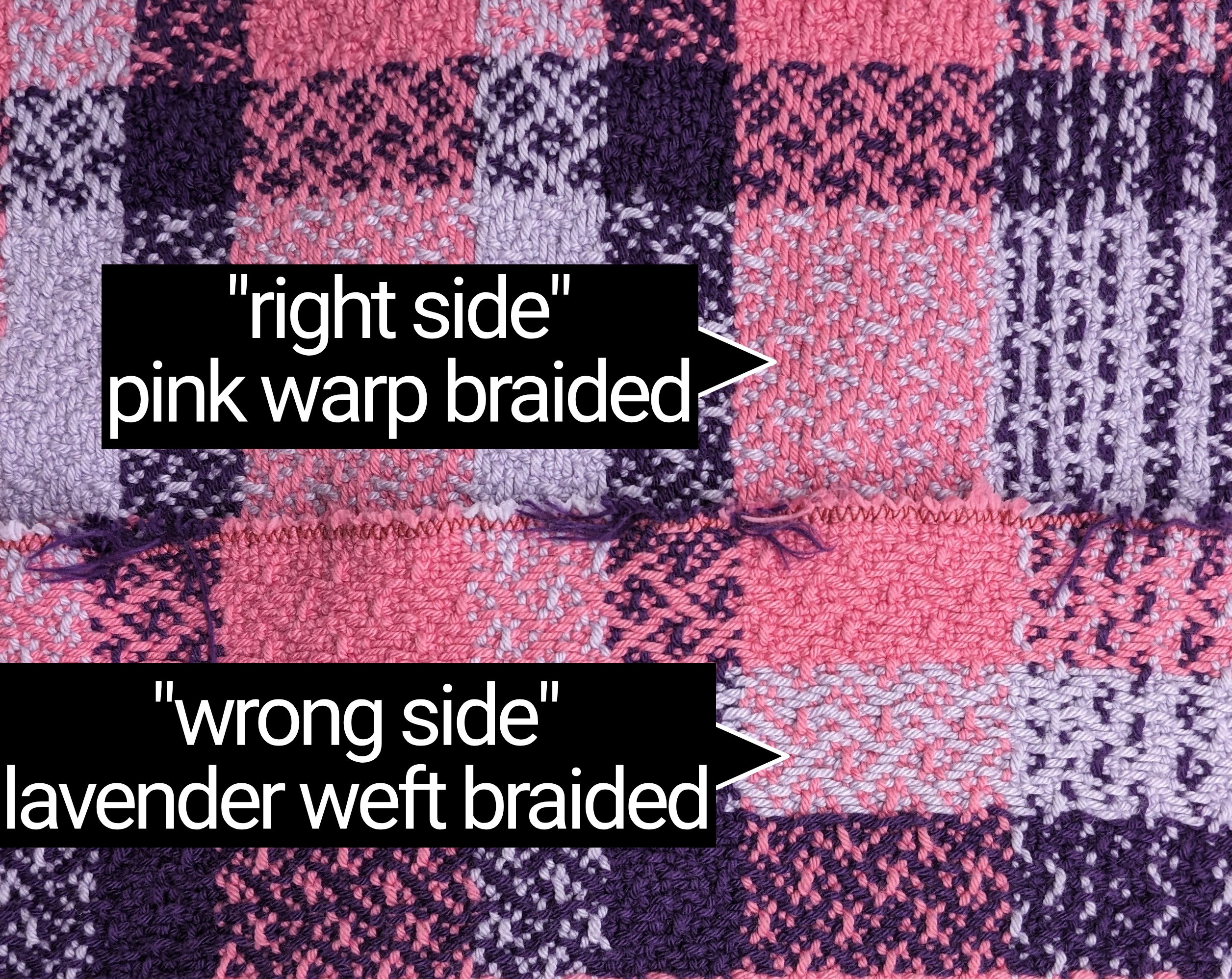
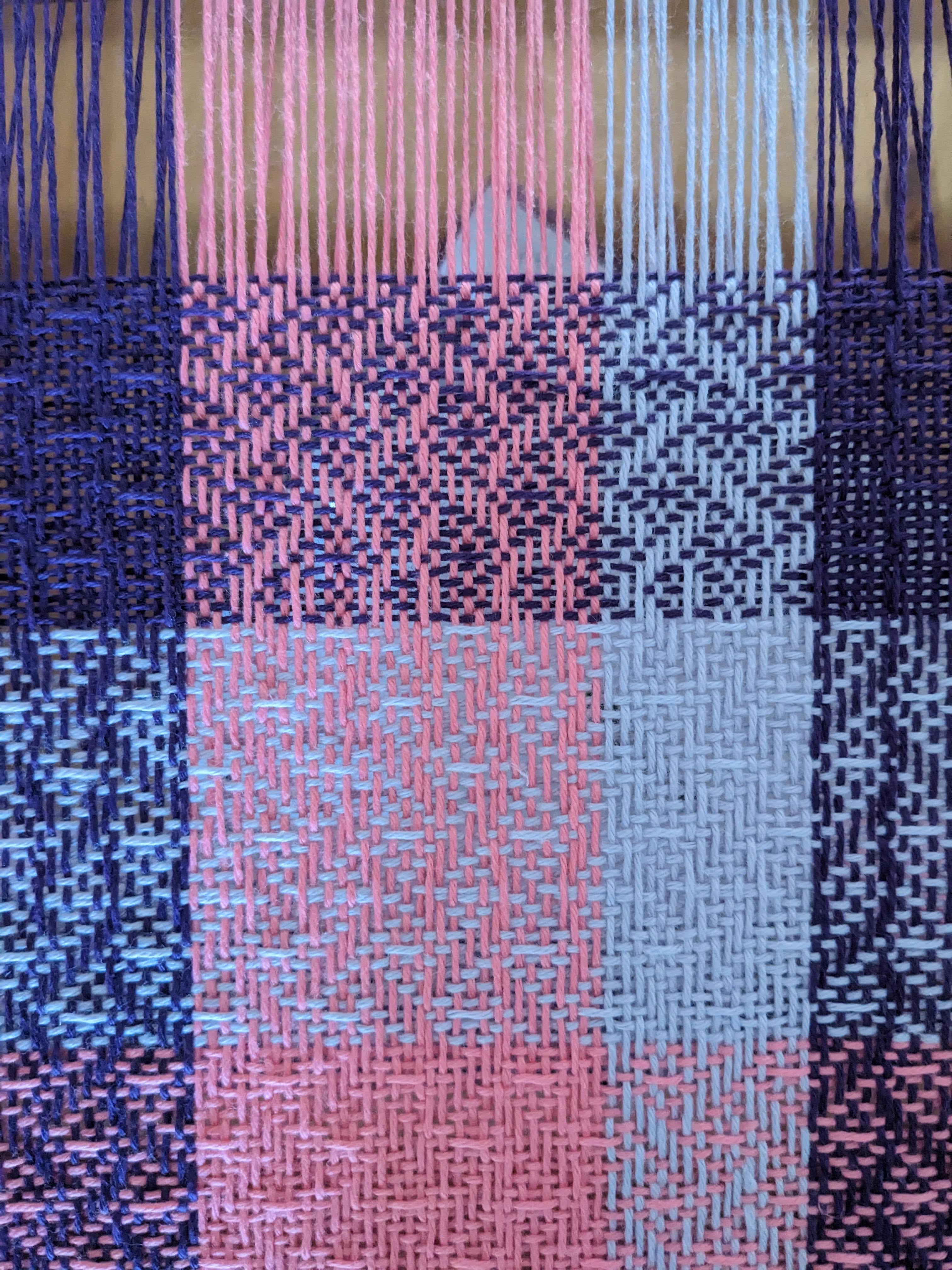
seven towels! some are finished so the “right side” is right, some so that the “wrong side” is right.

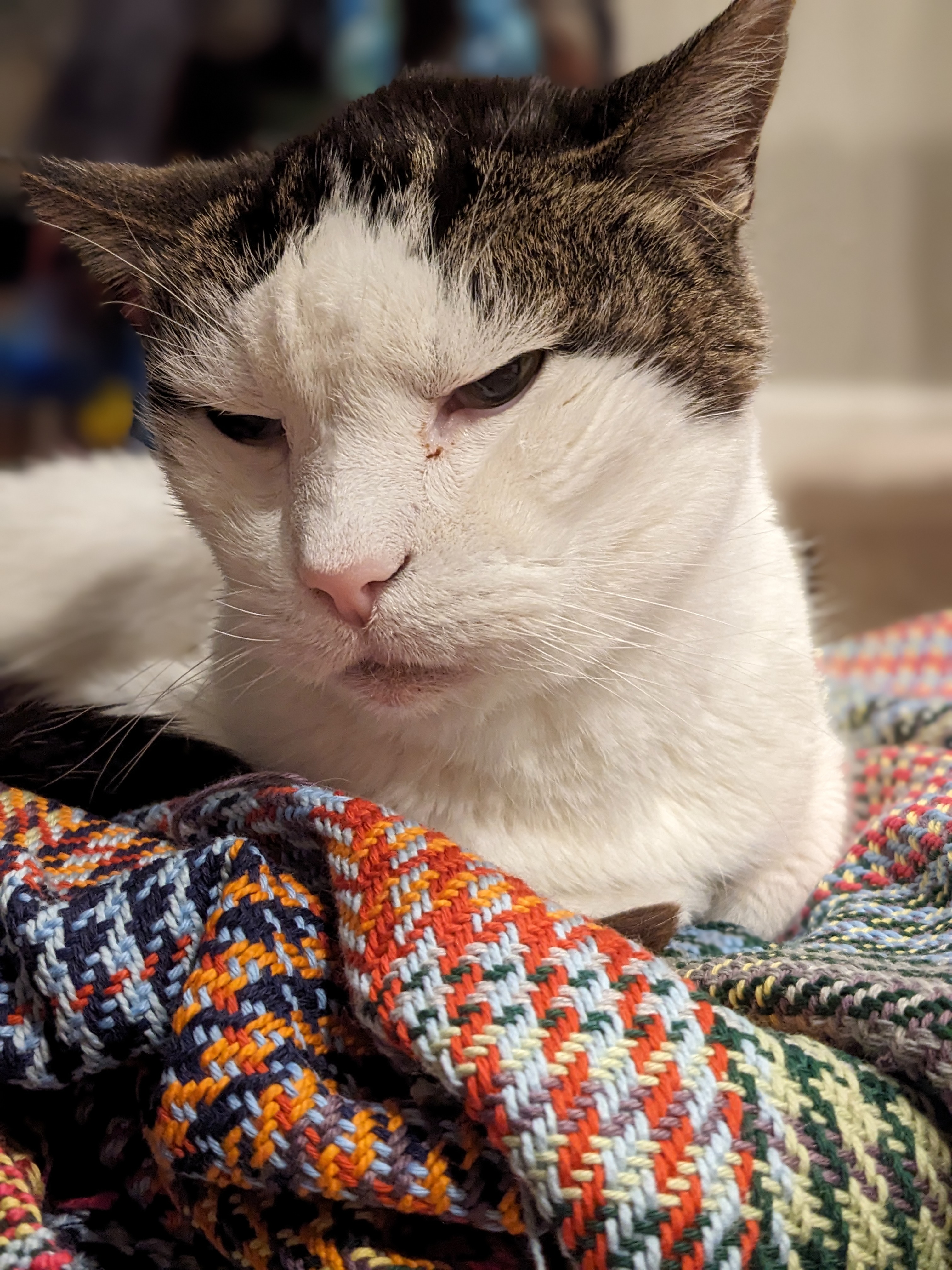
These towels were so fun to make and learn with – I got lots of experience winding on long warps, saw how different colors interact with each other, and tried a new weave structure. I think towels are so low stakes for learning and mistakes. No one cares if they’re a little wonky, or the tension isn’t quite right. I kept the weirdest offcuts for myself, either as napkins or towels, and gifted the rest. I sewed in little tags on all the corners, and I even made little labels to feel extra fancy.
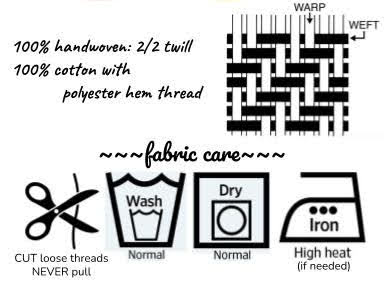
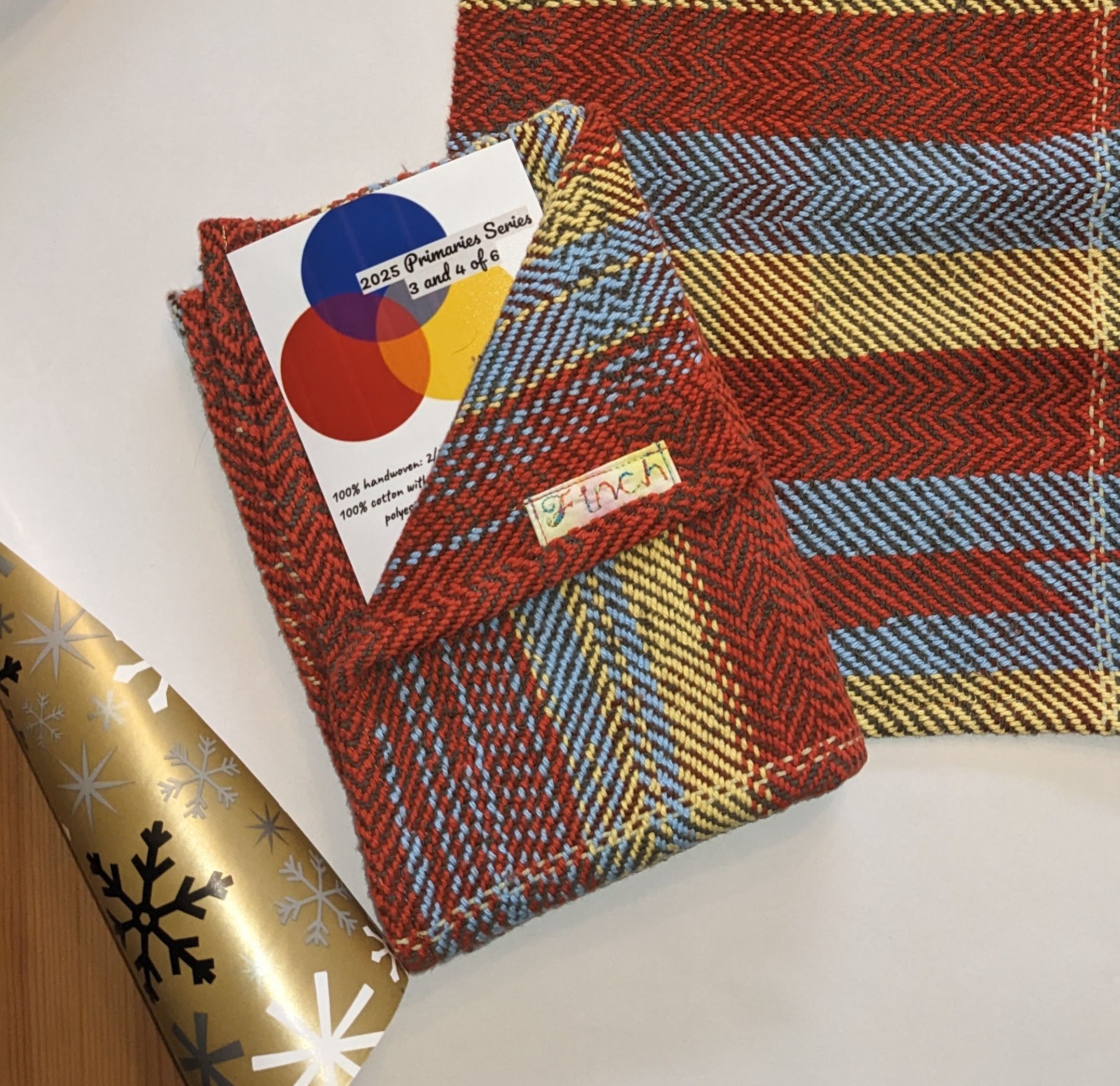
Projects completed December 2025.
Autumn Projects

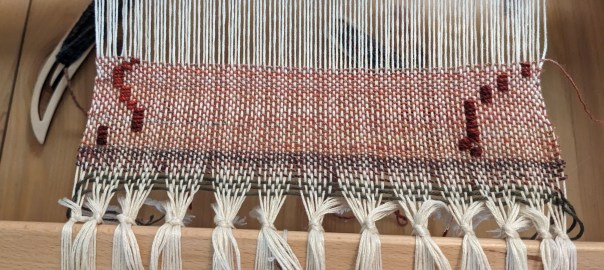
I’ve mainly been working on New Years gifts recently, so here are some sneak peeks:

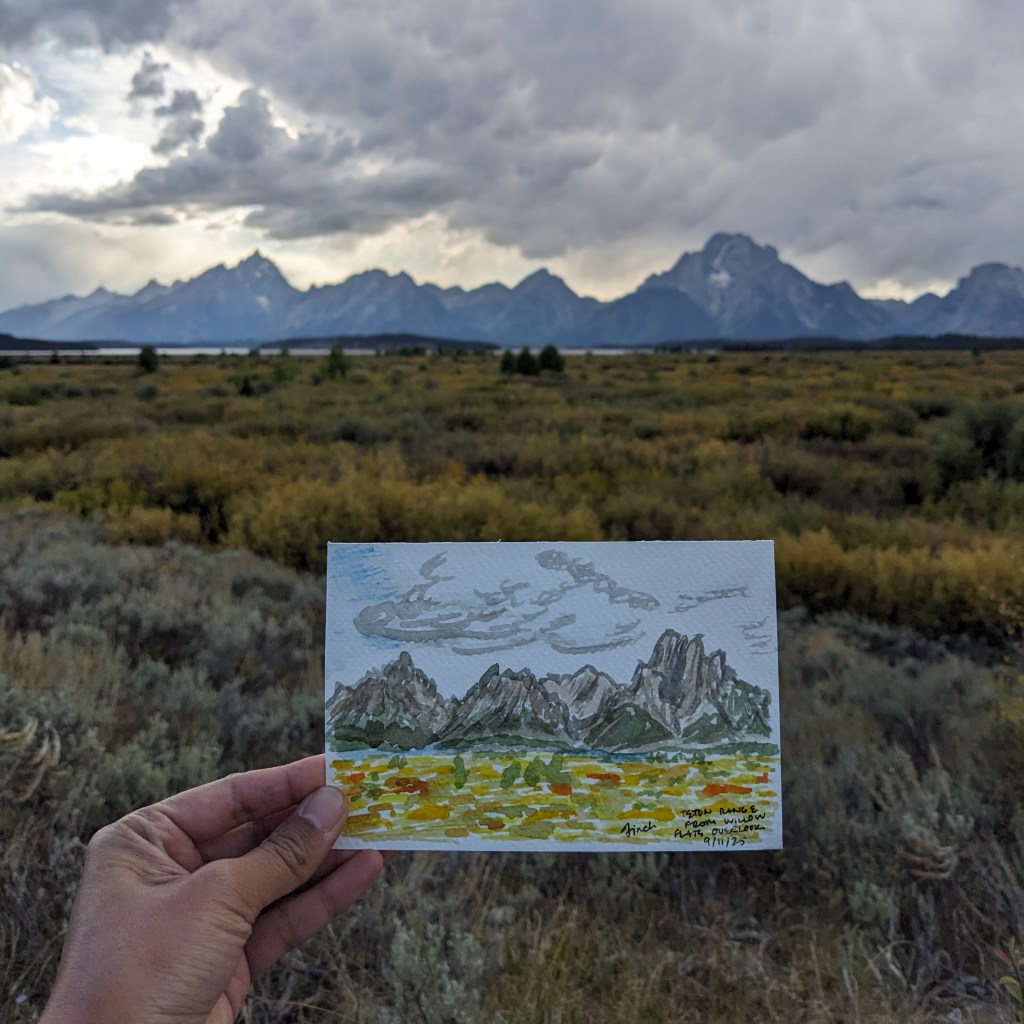
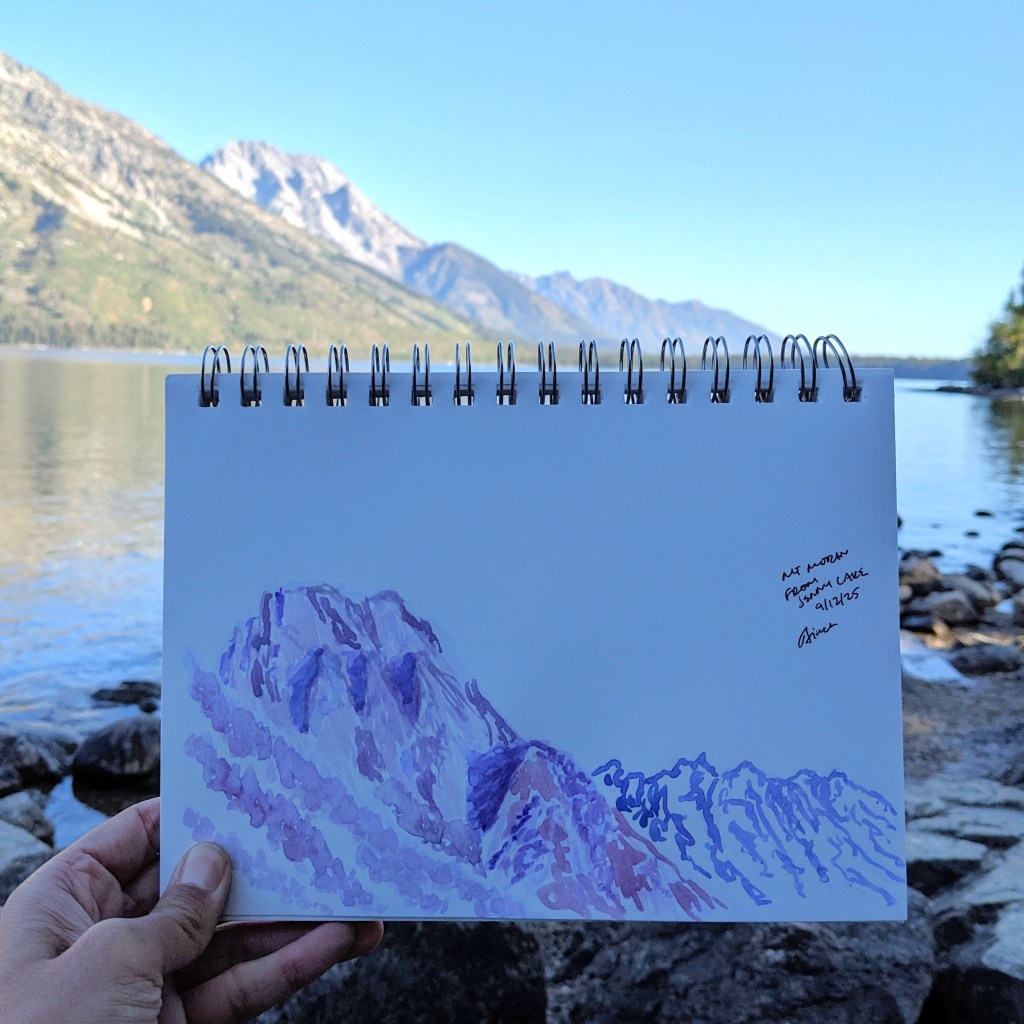
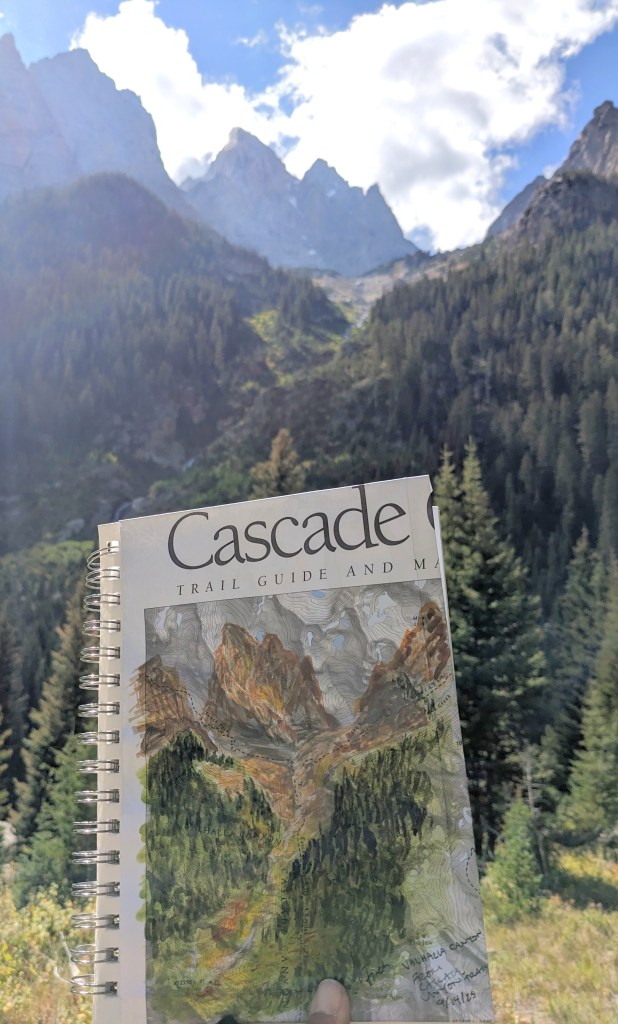
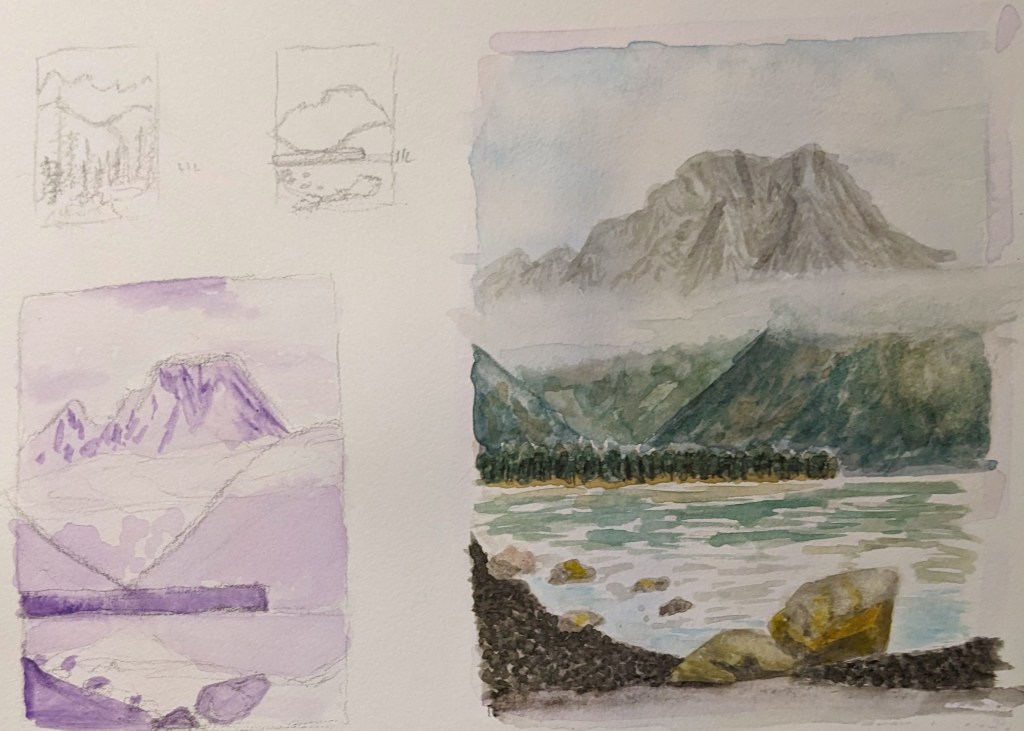
I jumped at the chance to go to the Grand Tetons again with family and did some fun watercolor:

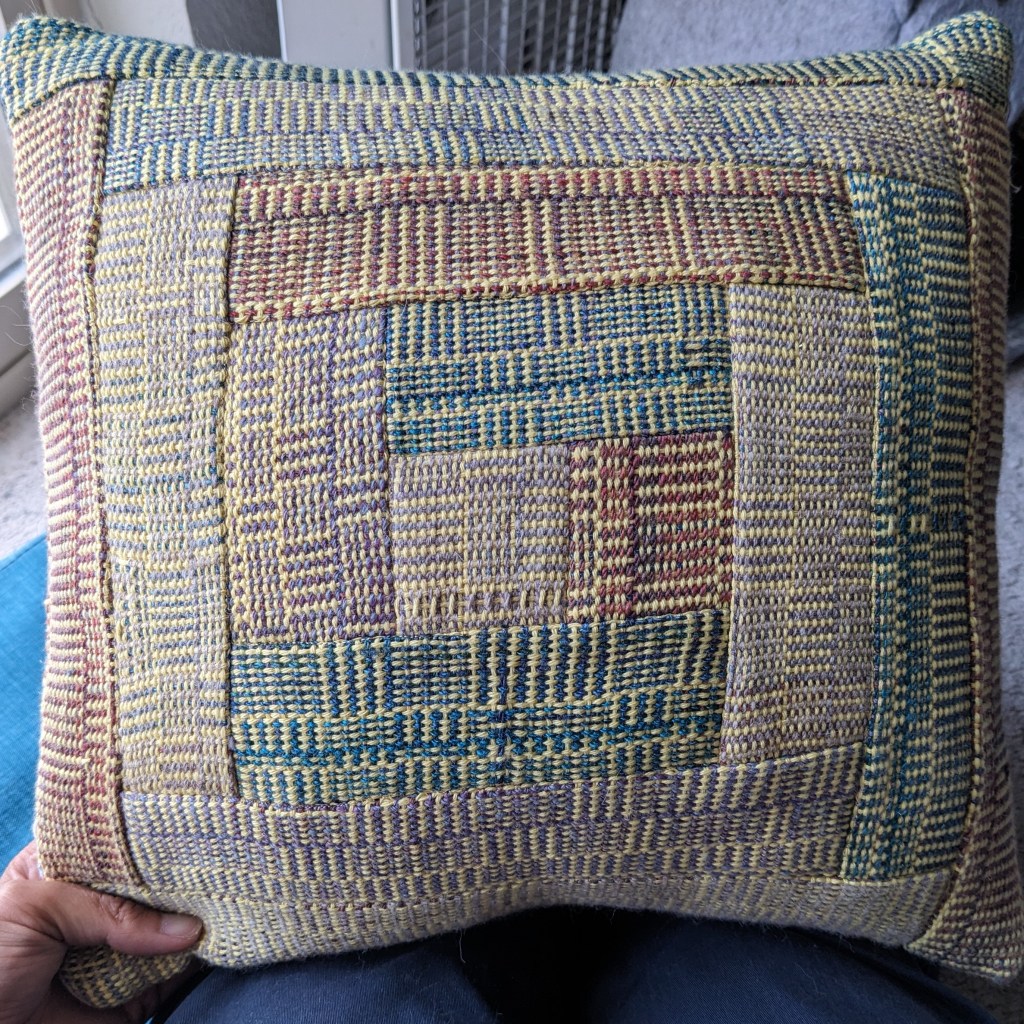
I wove my first “log cabin” pattern using handspun accent yarn and yellow commercial cotton, bravely cut it into strips, and quilted it using the “log cabin” block 🙂 so it’s my log cabin of log cabins pillow now.

I attended a landscape watercolor class at my local art museum, which was SUPER helpful and taught me a lot of new techniques. I think one of my main takeaways is that planning a piece *does* help, and makes sure you’re capturing the things you find important. This includes planning the contrasts, and where your dark and light colors will be. I have been mainly preoccupied with shadows, but have ignored the contrast between back/mid/foreground, which helps guide the eye across the work as a whole. As I looked back through my field book, I found that I tend to ignore the mid and foregrounds, opting to simply look into the distance and draw the mountains I see. But… adding context adds depth and interest to the piece, so I’m now looking with new considerations in mind 🙂

I’m actually quite impressed with myself for this little piece… now to bring these skills outside

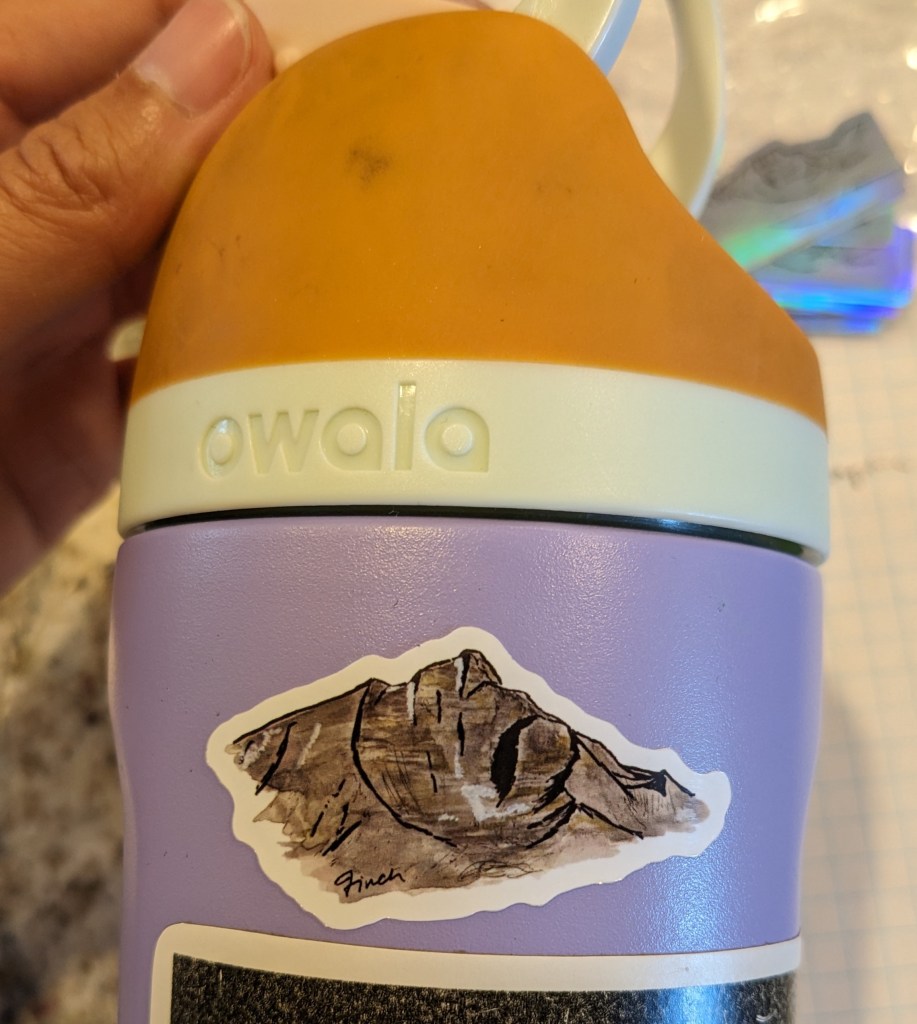
I also made some stickers of my art! Which is so fun!

Musical Table Runner

The yarns for this project were inspired by Sky Loom, a Native North American poem set to music by Jean Ford Belmont.

Oh our Mother the Earth, weave for us.
Oh our Father the Sky,
Weave for us a garment of brightness;
May the warp be the white light of morning,
May the weft be the red light of evening,
May the fringes be the falling rain,
May the border be the standing rainbow.
Weave for us, our Mother the Earth,
That we may walk fittingly where birds sing.
Weave, oh our Father the Sky,
That we may walk fittingly where grass is green.
Oh our Mother the Earth, Oh our Father the Sky,
Your children are we, and with tired backs
We bring you gifts,
We bring you the gifts that you love.

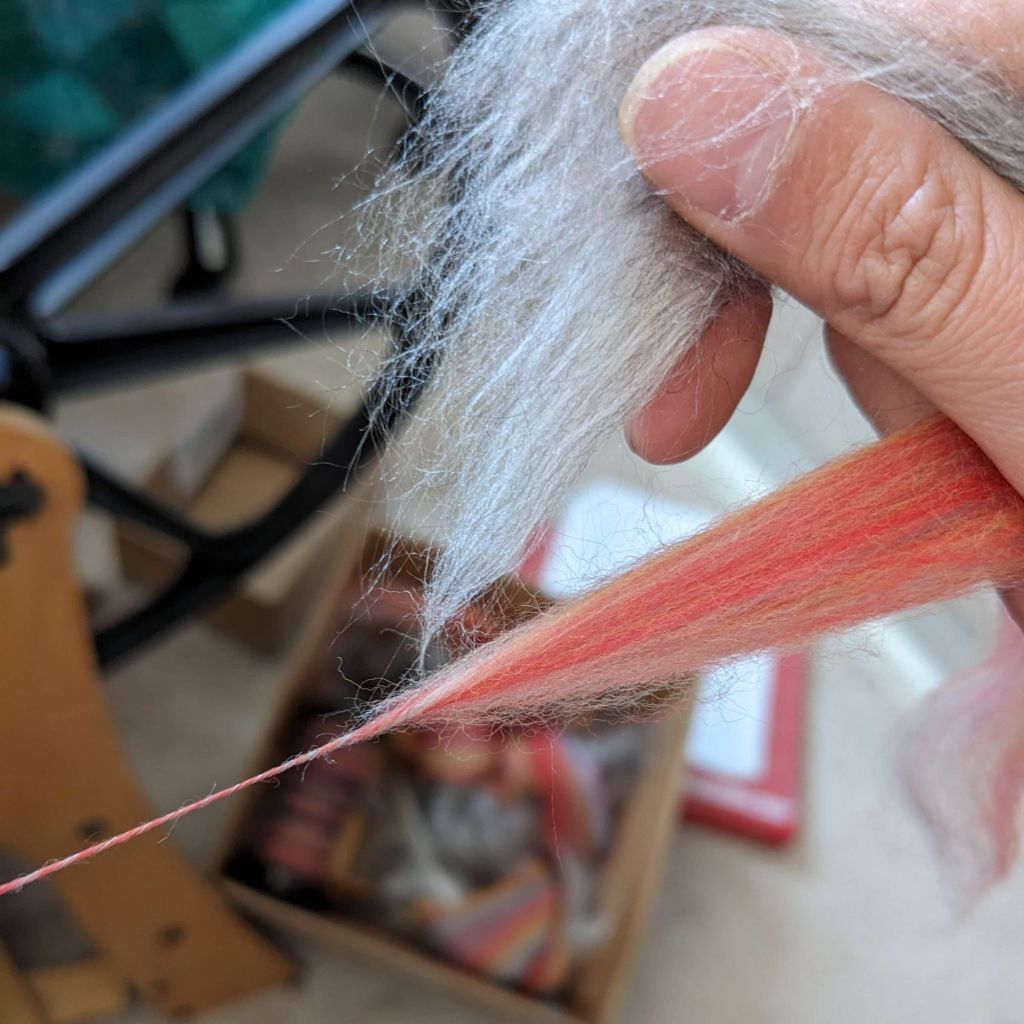
As a new weaver and less-than-fully-confident spinner, I bought commercial mercerized cotton warp for the white light of morning; it is strong and beautifully shiny. All the other yarns in this piece are handspun. 🙂 I used pre-blended and dyed wool and silk for the red light of evening, mixing light and dark gray with the dyed wool to introduce clouds and variation.

I “double held” the fiber to randomly blend the shiny into the mix

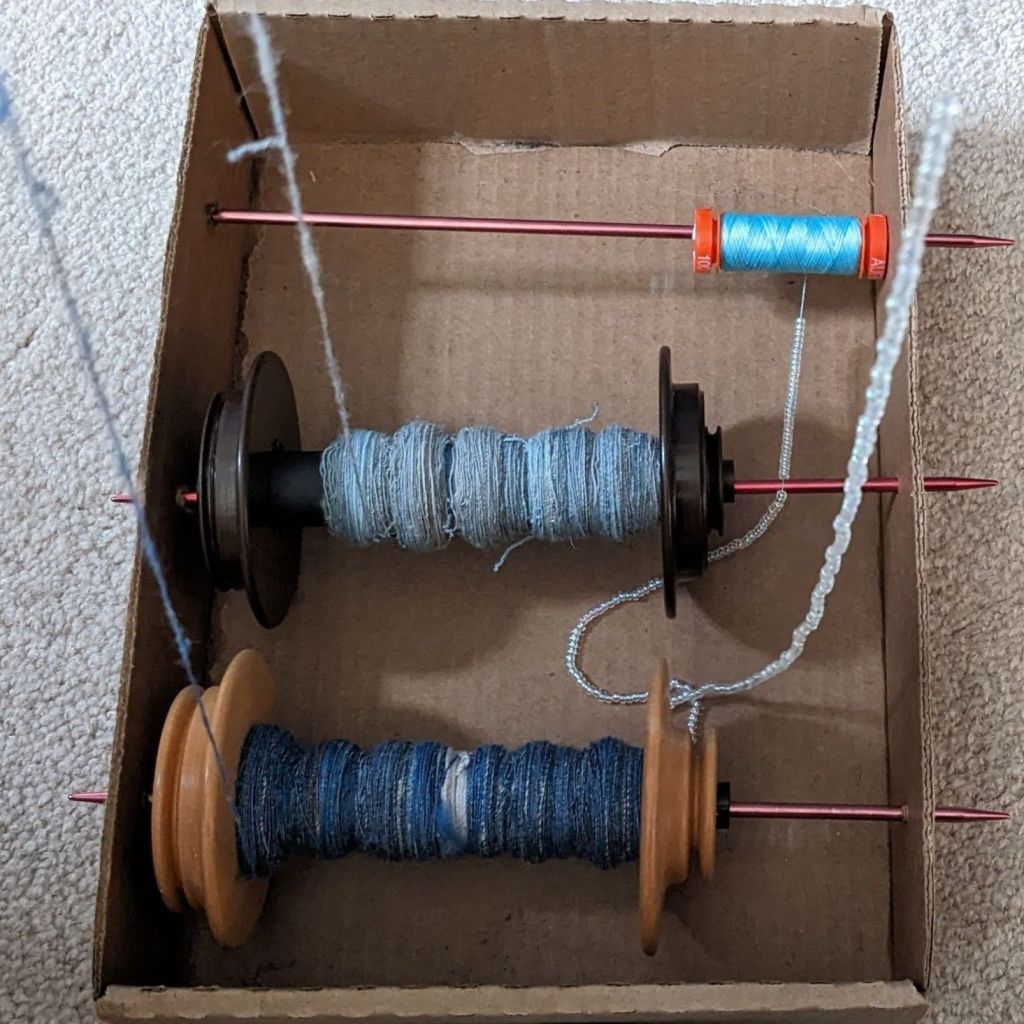
I had some extra gray silk and some random scraps of blue fiber, so I blended those together and spun a light blue and a dark blue ply on my drop spindle. I added a blue thread with shiny clear beads, and plied all three together for the falling rain.

Plying setup with two wool/silk/random singles and the beaded thread.

I usually buy fiber online, but I really needed to match the standing rainbow to these other color blends, and I knew that had to happen in person. I went to a local fiber fair and found what I needed at the first booth I went to. 🙂 dark enough to stand out against the red light of evening, bright enough to really be a rainbow. I specifically spun the standing rainbow to be thicker than the red light of evening, so that it would be puffier and stand out as a pattern yarn. I also chatted with some other spinners, who helped me figure out a more ergonomic way to spin at my wheel, which has really improved my experience.

I wanted the pattern border of the standing rainbow to somehow depict the notes in The Road Home. I’ve performed this song multiple times now, and each time it’s a bit different, I have a different conception of home and what it means to me. I know more and more the “beauty of where you belong” and where I find it. I went back and forth a lot about *how* to execute the pattern. I thought about using my 8 shaft loom as a way of depicting the 8 note scale, a 24 to 30 pattern thread section like a patterned band, something with chord progressions… I wanted to have an item that could function like a piece of sheet music, that depicted the way the notes are arrayed on the page, and then in the voice, in pitch and time. Since the border was going to be a fun pattern, I decided on plain weave (over under, under over) for the red light of evening weft to make it easier to weave, visually consistent, and structurally sound.

I struggled with the format for this project for a while, debating what I wanted and how it would need to be executed while I spun all my yarn. Sky Loom is about a garment, but I didn’t want to make a garment in these colors, and I knew it would end up being delicate and/or non-machine washable due to the uneven fiber shrinkage (wool vs cotton) and possible pattern floats (where yarn is free and not woven in). I talked it over with a friend and they suggested a table runner! This was the perfect solution and I was immediately invigorated.

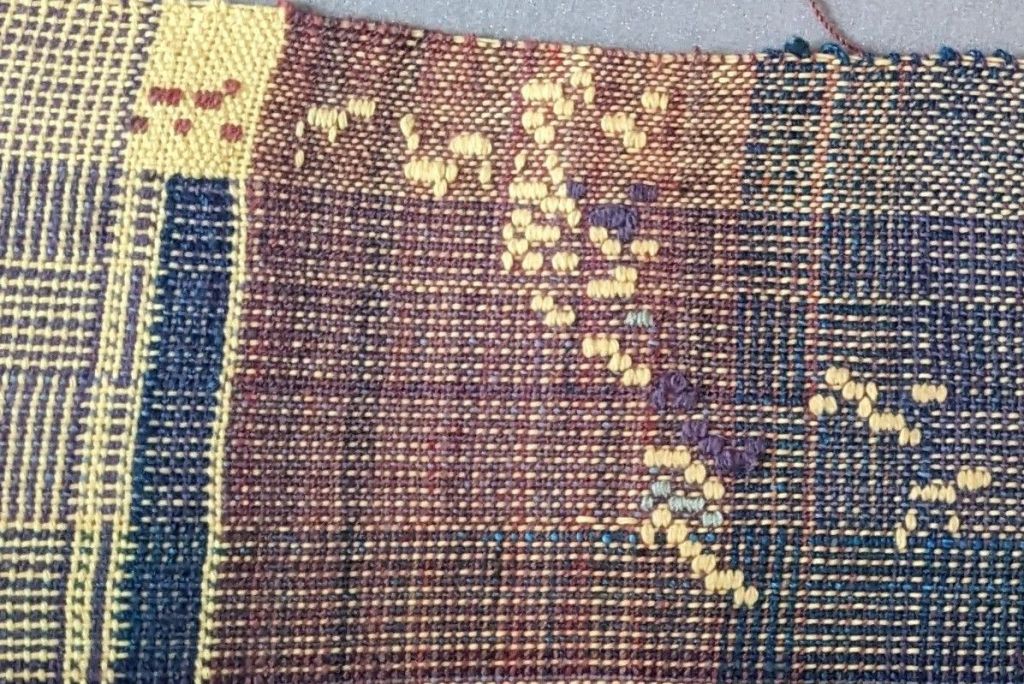
By choosing a table runner, I could have long floats if necessary, since the piece wouldn’t be undergoing much wear and tear. It also defined the dimensions and proportional border width. I decided to be responsible and weave a sample to test out some different techniques and arrangements for the pattern. I quickly realized that weaving a pattern with all the voice parts on the same row was visually overwhelming. I think it might have been easier on the eyes if I had kept going and the ratio of the width to length was different… But I switched to doing one part at a time. Also, most of the parts have at least some undulation up and down their range, so it actually looks more like a standing rainbow, or wiggling rainbow, as it were. The bass part, the lowest voice part in the choir, has the most clear up/down pattern, so I alternated it with the other voice parts that are less visually clear to have more continuity. I used a weft inlay that wraps around two warp threads; the position of the inlay represents the pitch, and each row is an eighth note in the piece. So, looking from the side of the table runner, with a starting pitch, one could use the border as a depiction of what to sing.

Two sections with all five parts next to each other; even using different colors it was way too busy

From weaving the sample, I knew I needed a special “paper pattern holder” to help me keep track of what line I was weaving – the third verse was 122 rows of non-repeating pattern. I used some scrap binder dividers that were translucent and cut and folded them so that I could see 2 rows at a time through a little window. The translucent quality let me verify what I’d just woven if I needed.

Then I just pulled the paper down, two rows at a time

I was able to weave it much faster than I thought! Each verse, the 122 rows, took a little less than an hour – here’s a 1.5 minute video weaving a few rows. I used up all the weft I spun, though I did have to cut the finished piece down to size so I suppose I had extra weft. As always, weaving in all the ends from the rainbow and the cut ends of the warp was super annoying, but necessary. The finishing touch was the falling rain fringe, which I attached using cow hitch knots. I twisted some of them into tassels, left some loose as individual strands, and un-plied some so the fiber would expand and fluff out 🙂

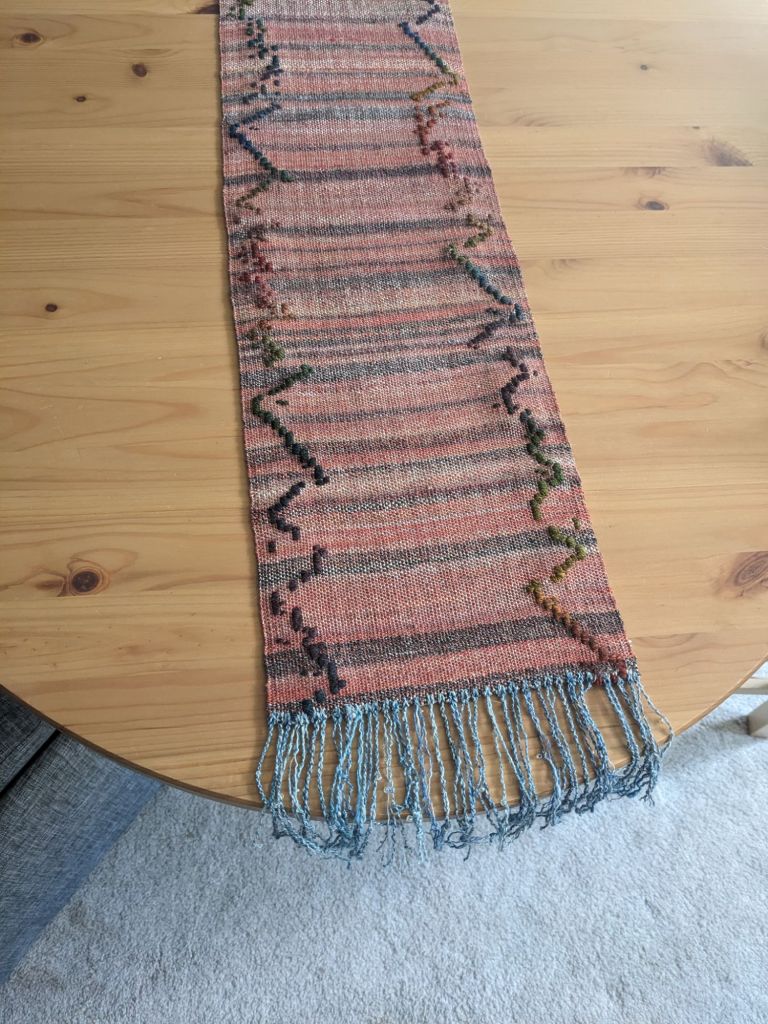
Finished piece on my kitchen table 💜

Project completed June 2025.
Random Project Dump :)

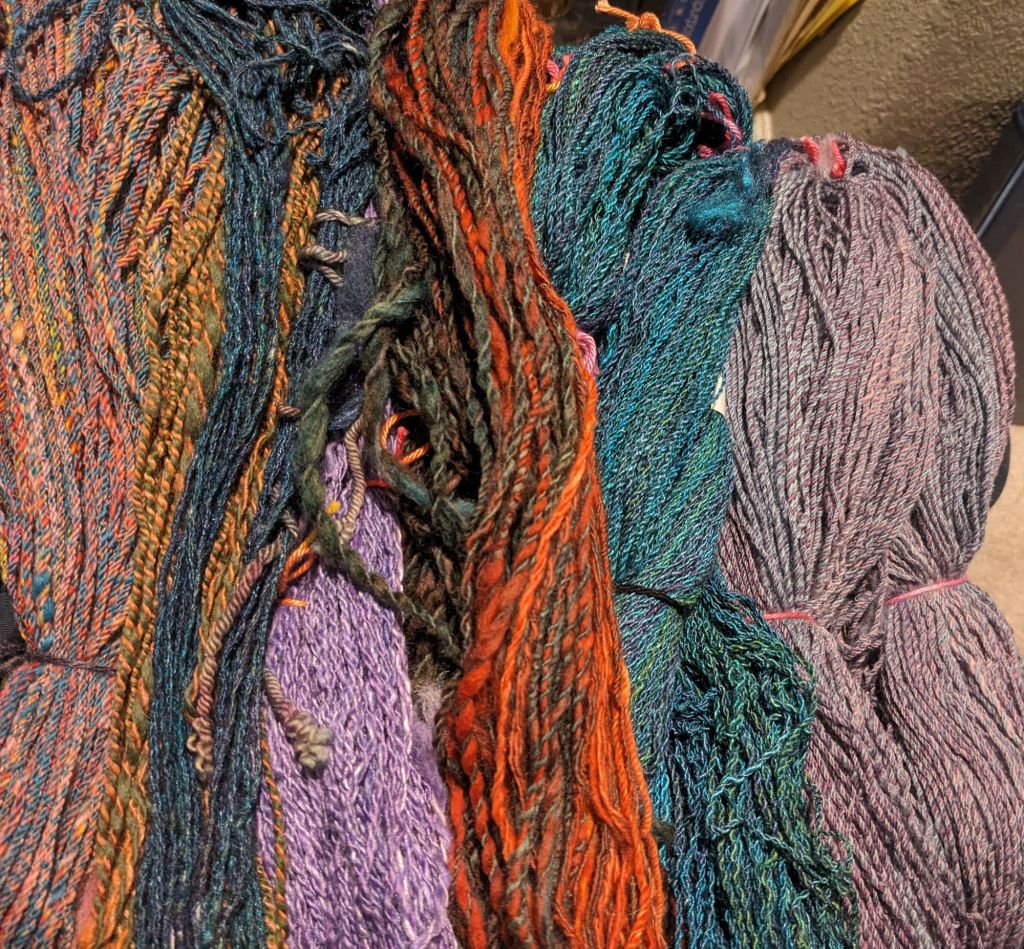
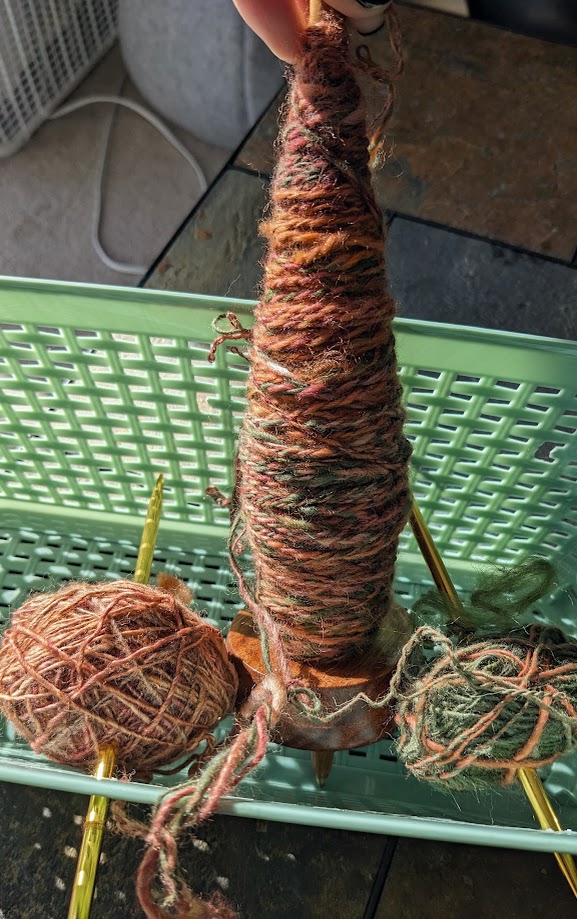
Handspun 🙂 mostly wool, with the occasional silk/wool blend. I find handspinning, whether at the wheel or on the spindle, very meditative and calming. There’s a rhythm, and a sense of creation and accomplishment. It is a wonderful thing to keep my restless hands busy with.
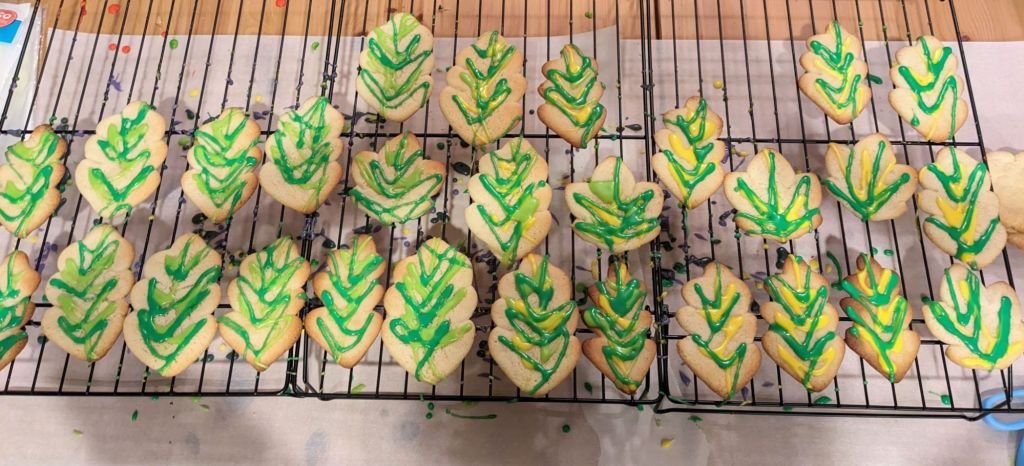
Frosting decorations on cookies! Having a single line of design and multiple repeats was EXACTLY THE SAME as quilting 🙂
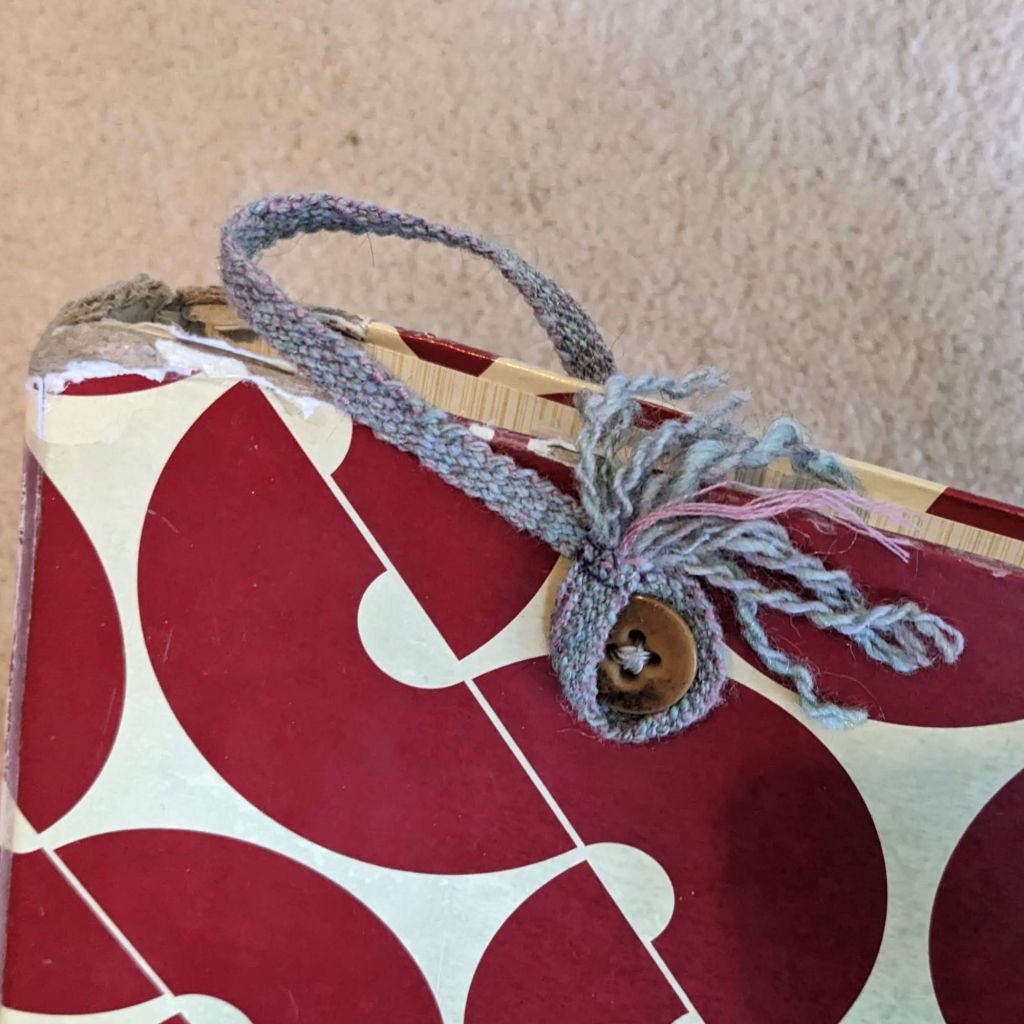
Strap for my choir binder so my hand doesn’t have to do so much work to hold it open. Backstrap loom, handspun wool blend
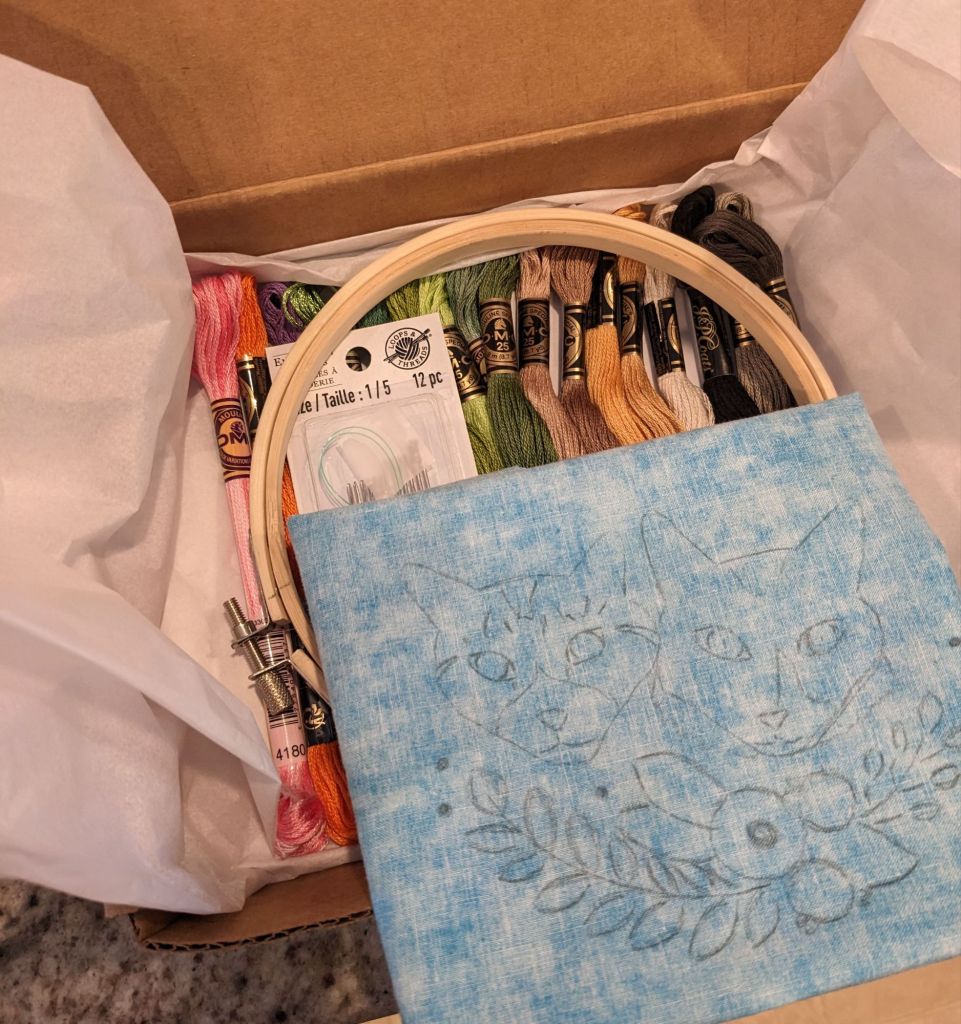
I put together an embroidery kit for a friend, it was so fun to plan an entire project and *not* have to do it 🙂
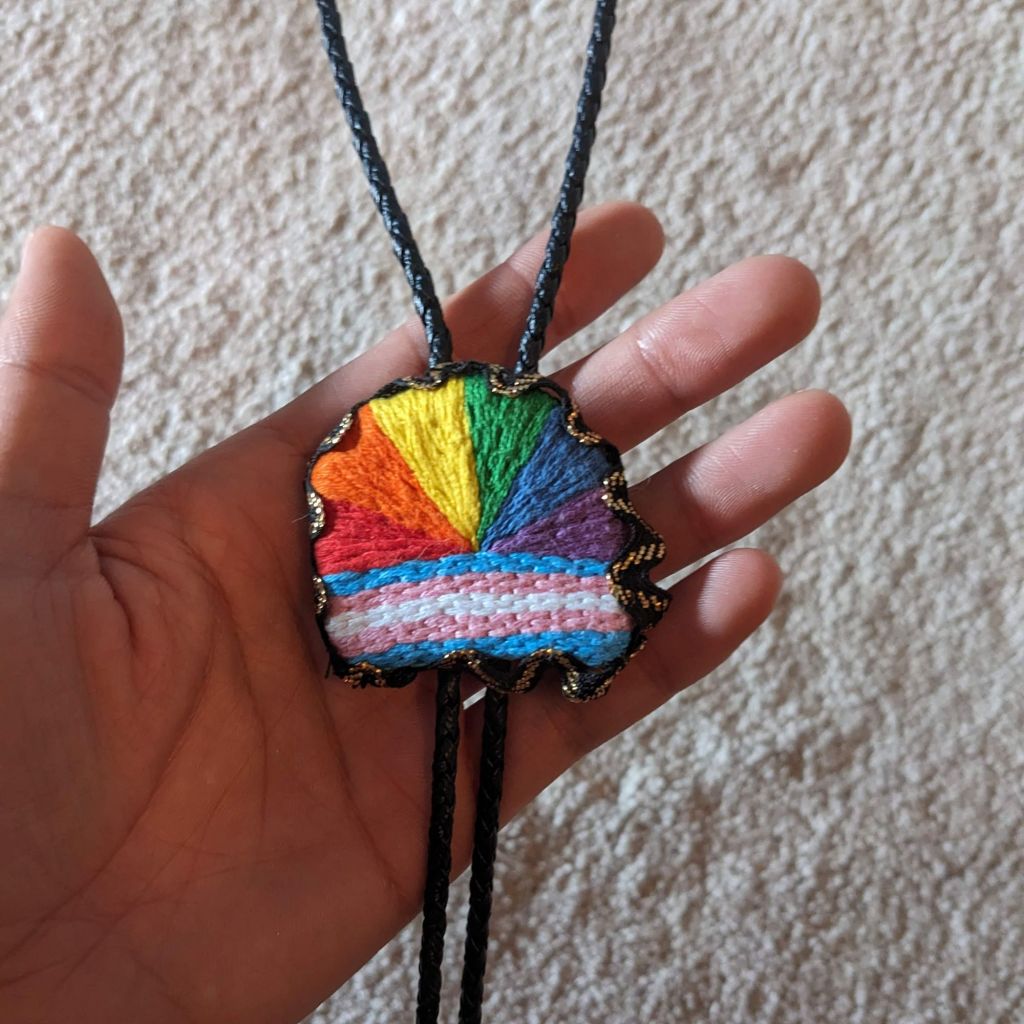
Embroidered gay and trans pride bolo tie pendant 🙂 I made this for an event at the Capitol
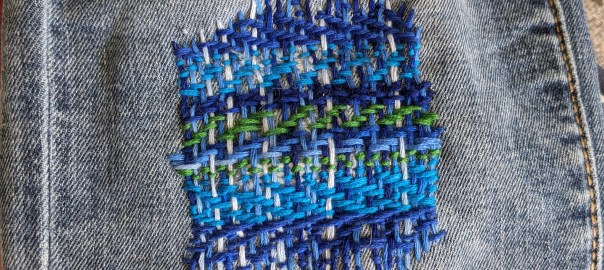
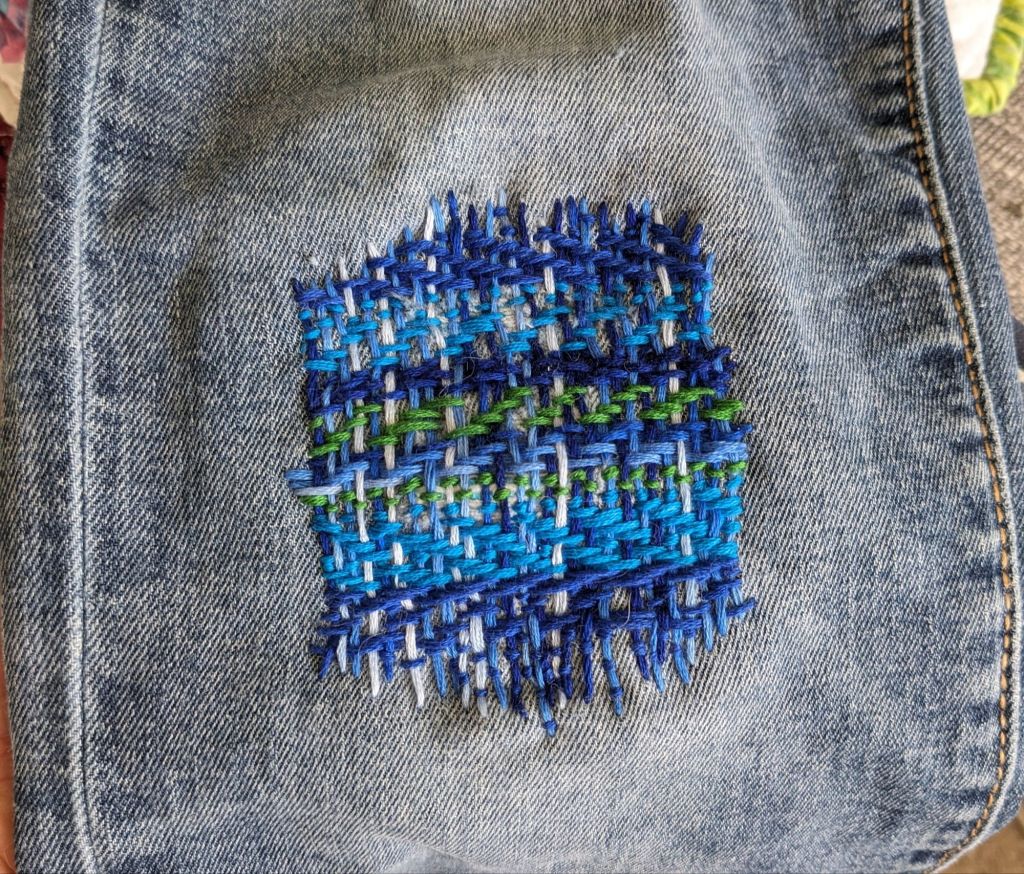
I do visible mending on my clothes, so I decided to do an embroidered/woven patch inspired by my work in twill 🙂
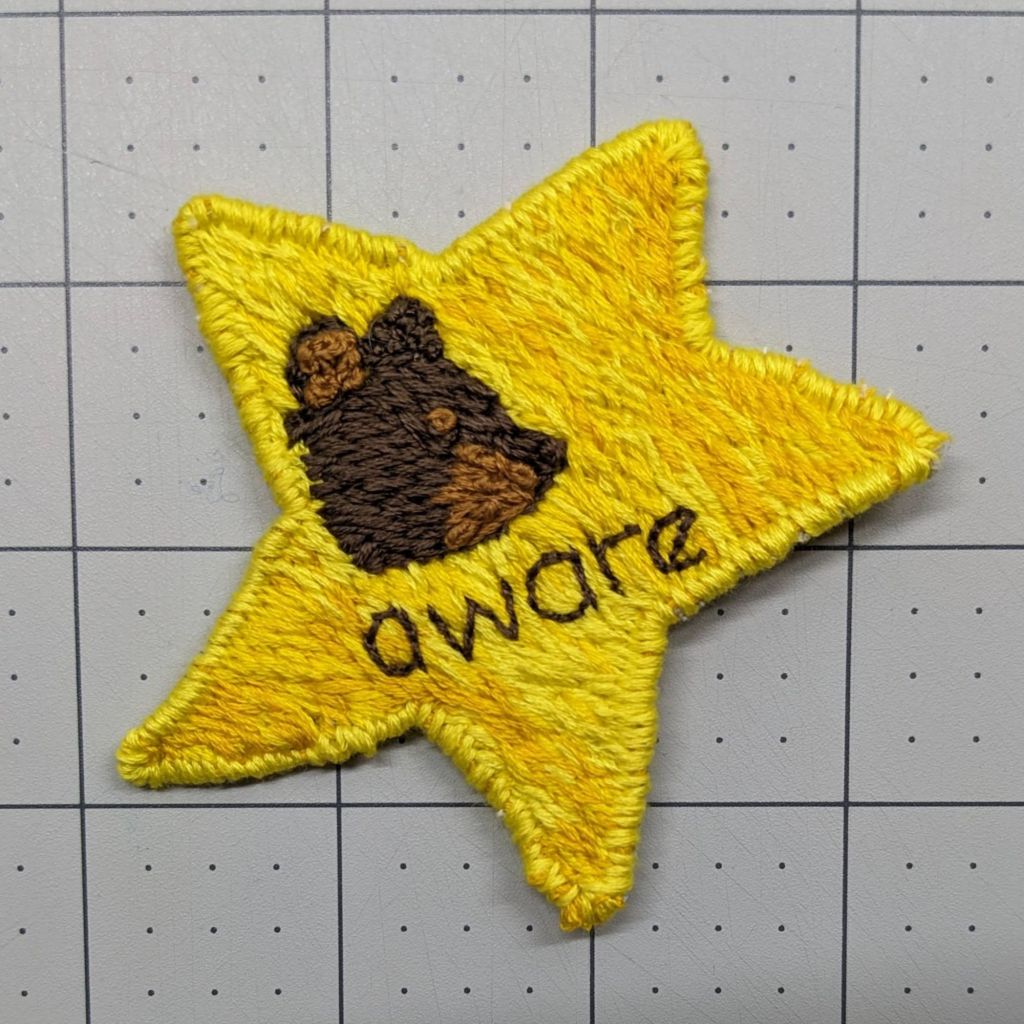
Embroidered bear aware patch

First Overshot Weaving

So my desk is under a window, and throughout the day, the sun blinds me. I have a bunch of plants in the window, so I don’t like lowering the entire window shade. I’ve been balancing an umbrella on my windowsill plants and computer monitor… But I needed something better.

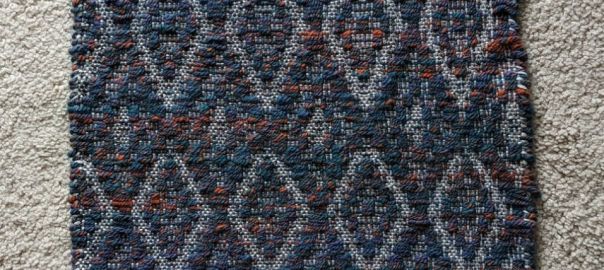
I decided to weave a panel that could move up and down so I could block the sun as it moves across the window. I have been wanting to understand more about overshot weaving, which has two different wefts and makes really interesting blocky patterns. Since this was going to be a small piece, I figured it was a great time to learn an overshot pattern from Strickler’s book.

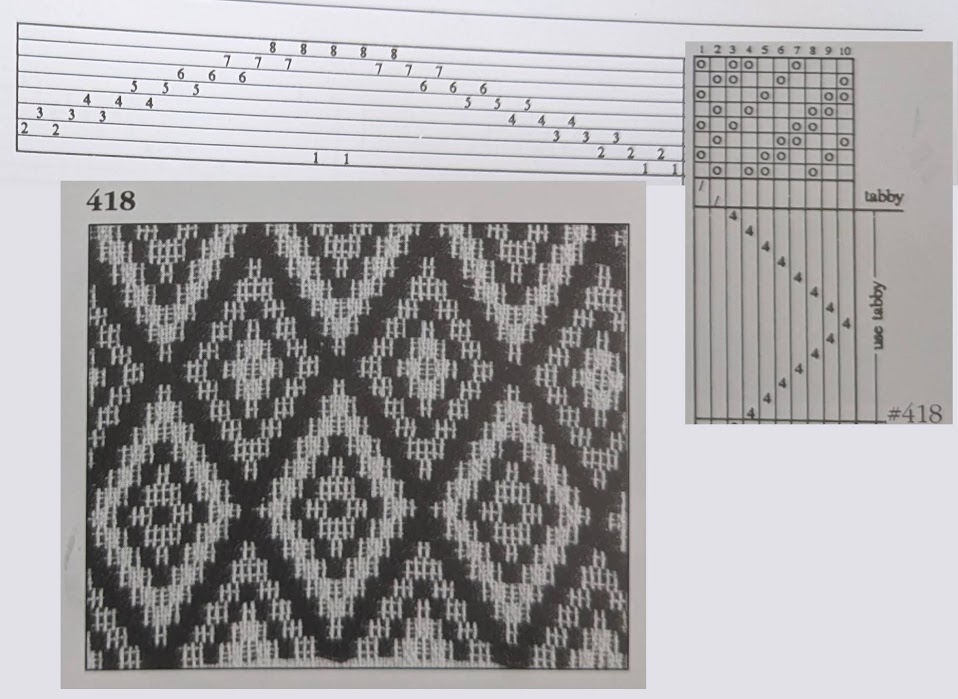
Overshot is a type of weave structure where you raise adjacent threads to create weft floats (long horizontal lines). And you do the same weft floats multiple times in a row, which creates “blocks” of color. Since you can’t do the same floats back to back, a plain “over under” (tabby) weft pick is put between them to secure the threads.

I chose #418 by Ardis Dobrovolny, and “eight-block point repeat twill”, because it’s clearly an overshot version of twill diamonds, which I already love and know about. I had a theoretical understanding of overshot, but didn’t quite understand how the threading diagrams created the pattern I could see – so using a familiar diamond twill helped me compare and contrast overshot with what I already knew.

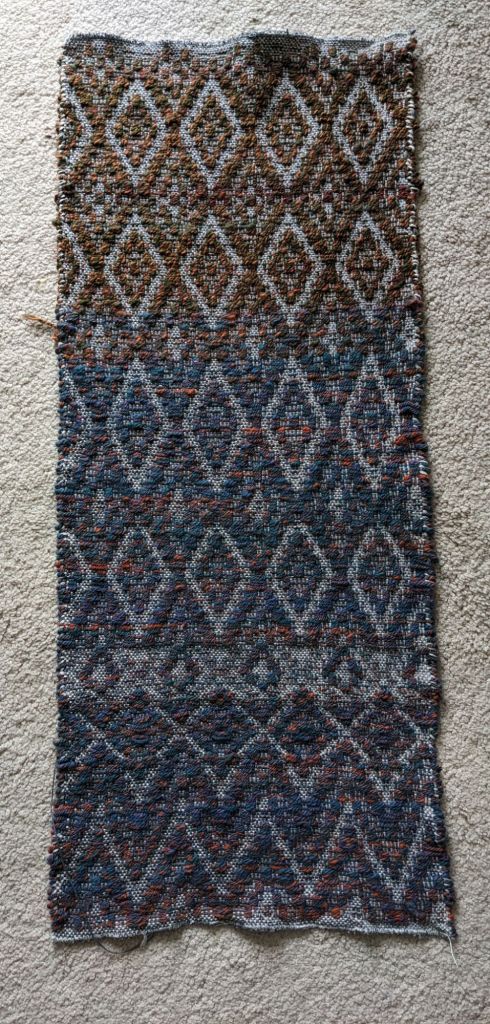
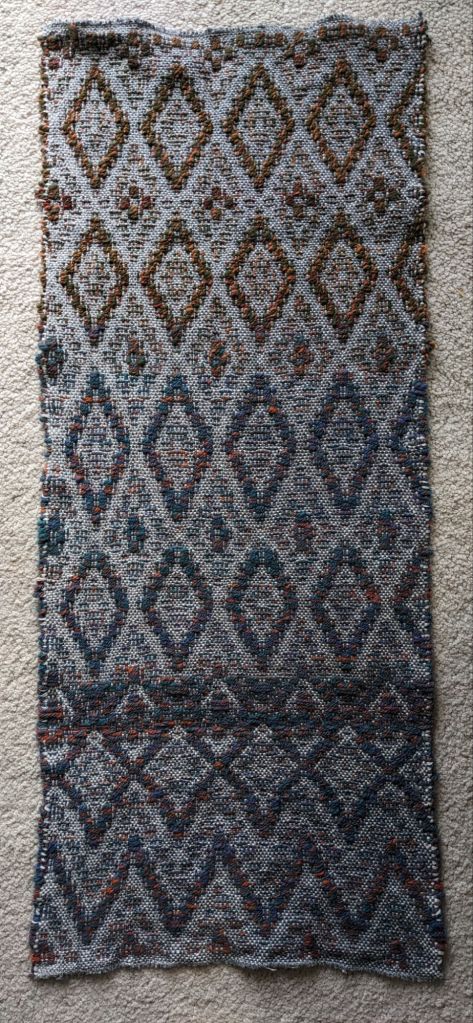
Despite having the pattern, I did some improvising on the order of the sheds and the number of picks on the same shed. I even did a few rows of the inverse sheds, where the threads meant to be raised are lowered.

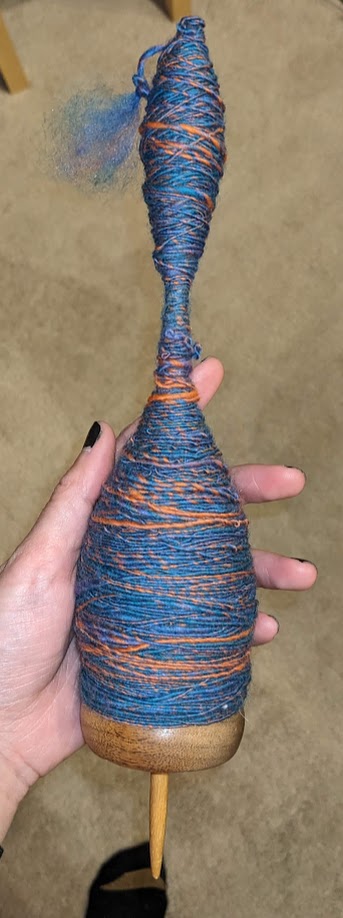
This was also my first time weaving with my own handspun!! I originally tried a different handspun but it didn’t have enough color contrast with the background warp and weft, so I pivoted to this fun blue and orange wool yarn 🙂 I spun this on my bottom whorl drop spindle. Then I ran out of that yarn and added some wool “Autumn”, which I spun on my supported spindle. I used commercial cotton yarn for the warp and tabby weft.

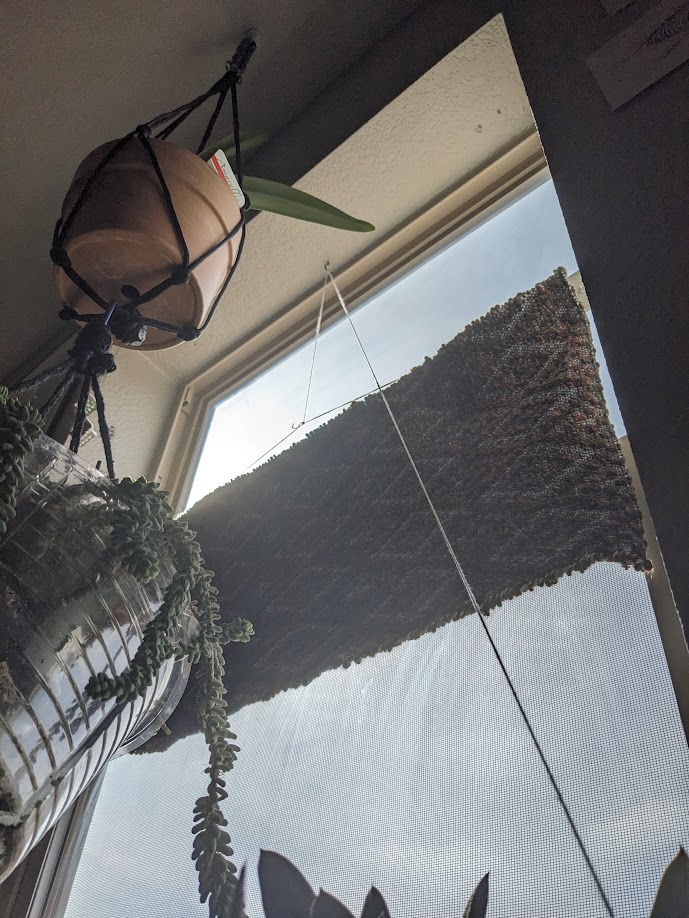
Then I had to do some yardstick-and-hot-glue engineering, and installed it in my window 🙂

blocking the sun 🙂

Project completed March 2025.
Second Adventures in Table Loom Weaving

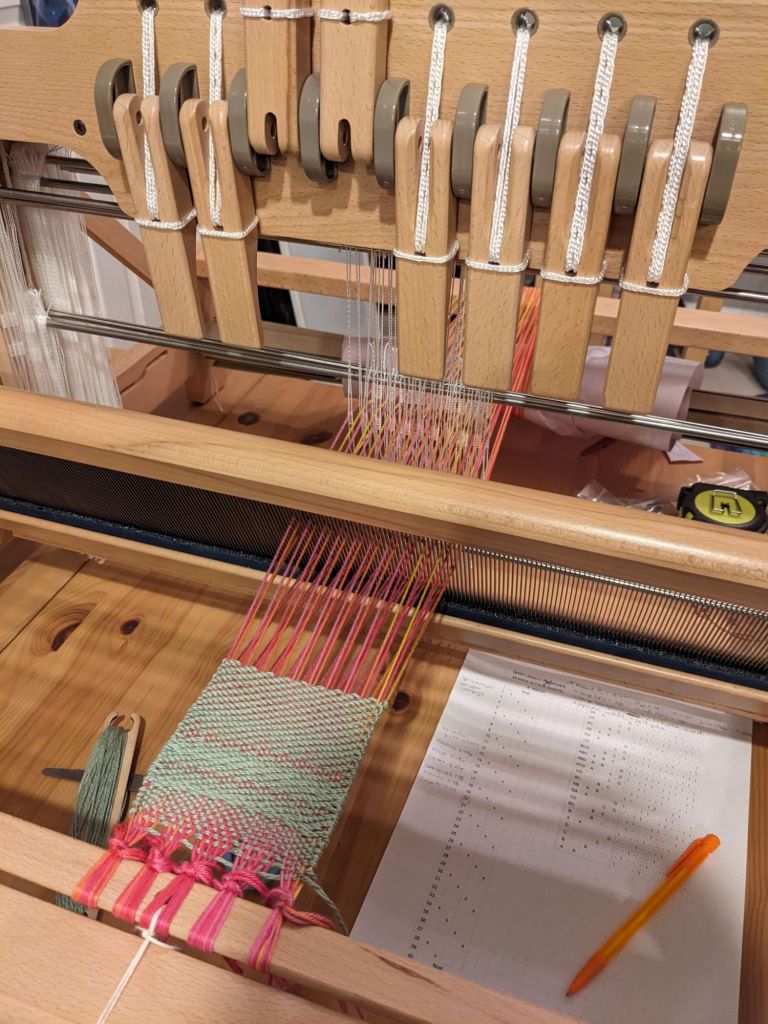
Twill towels

  • 3/2 cotton “Beam” thread from Gist Yarn warp and weft in three colors
  • Threading was by color, so I could experiment with different patterns and see the effect of the weave and the color 🙂 I planned to have all patterns be based in 2/2 twill, just different combinations and repeats
    • Pink – straight 12345678
    • Orange – point 12345678765432
    • Blue – broken
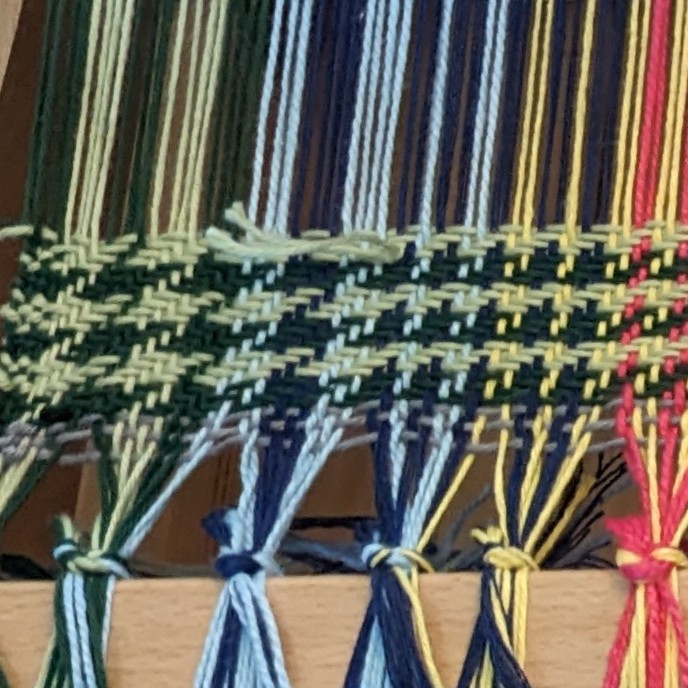
  • Warped between two chairs flipped upside down on a counter and table – did not work very well because they slid together over the warp, so the beginning threads were longer than the ending ones.
    • Also learned that I need to put more organizational ties on the warp so the threads don’t get tangled when transferring to the loom
    • I had to use a homemade pin loom as a makeshift raddle to separate the warp threads, and since I didn’t really keep the warp untangled… this was really annoying and I had to keep stopping to untangle the threads so they’d go through the raddle, and also the tension was really uneven throughout the winding of the warp.
  • One floating selvedge on each side to attempt to keep the edges straight and allow patterns that don’t always go over and under the outside threads
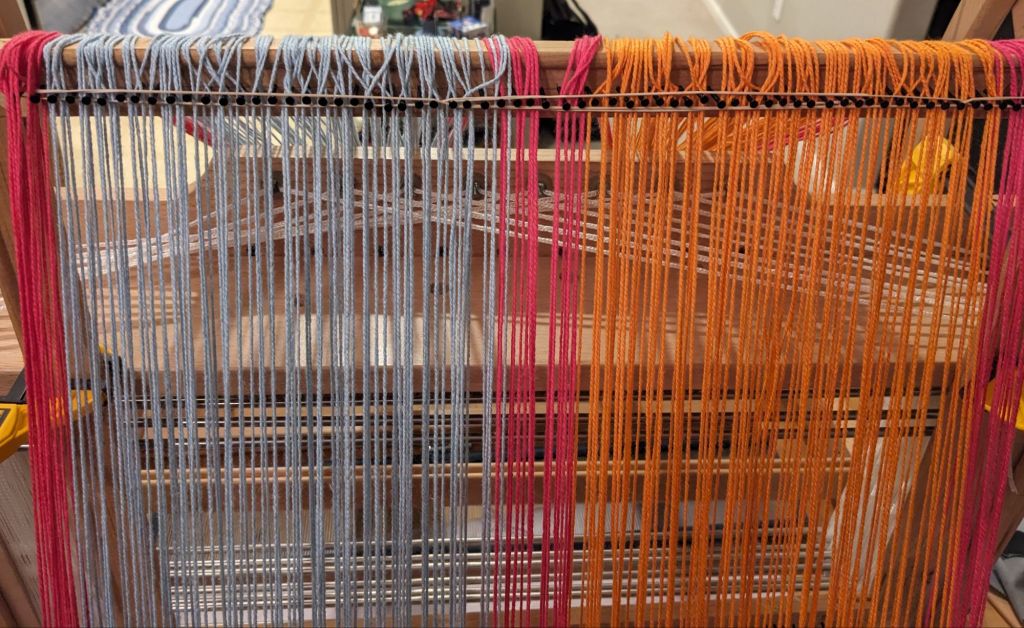
Note the tangled threads along the top as they enter the raddle… 😦
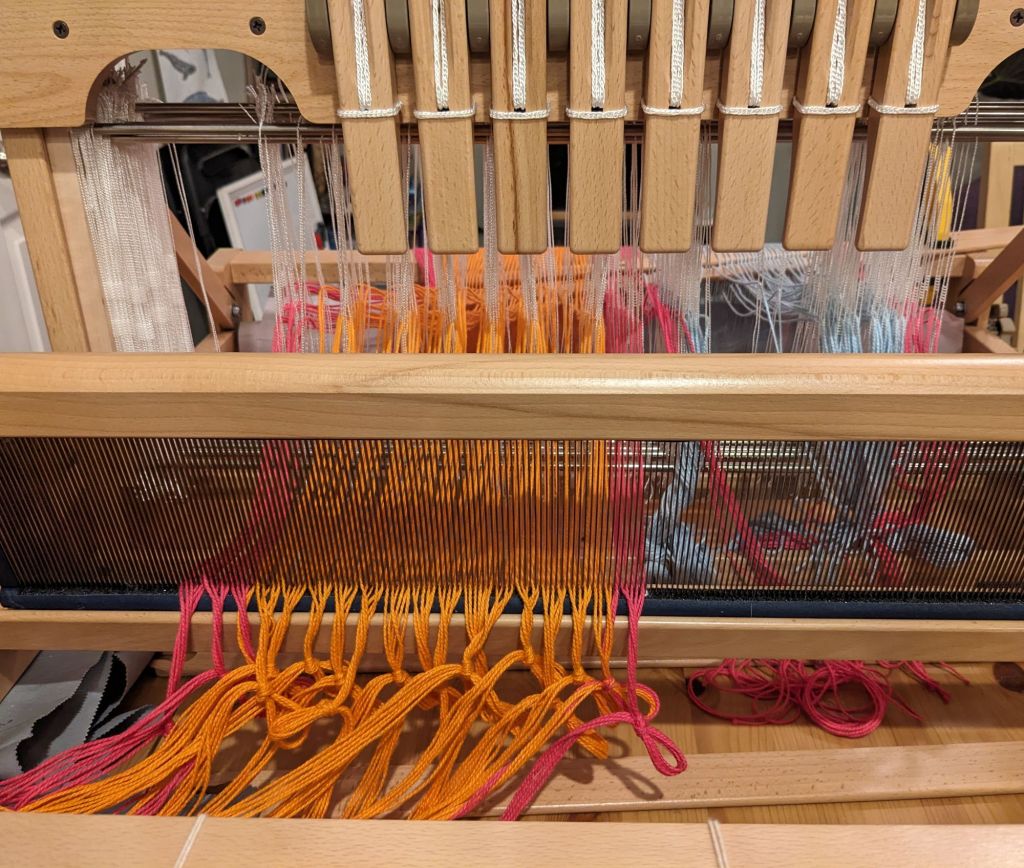
Sleying the reed
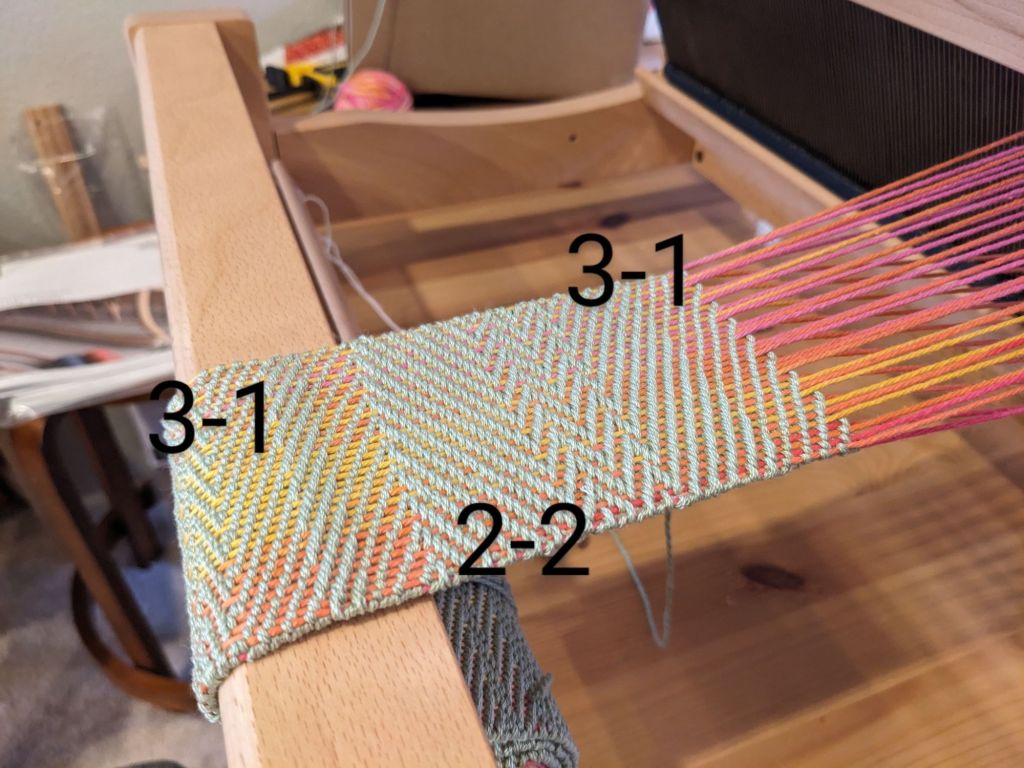
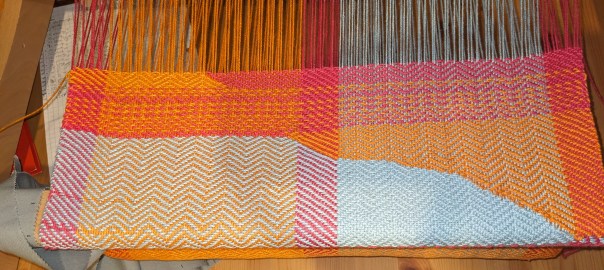
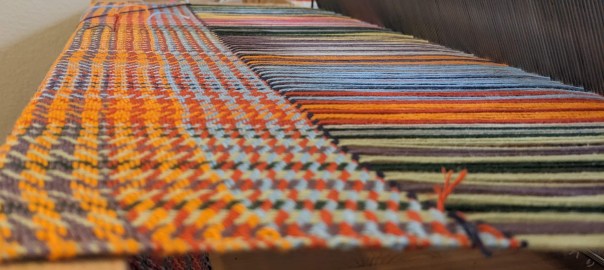
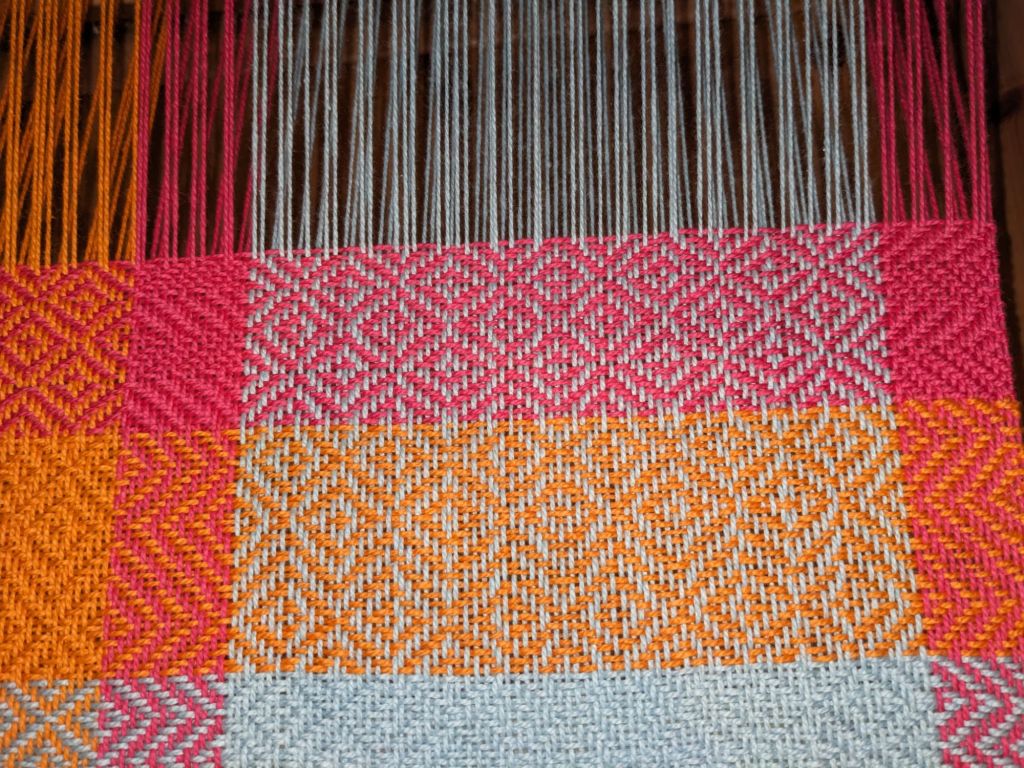
Blue and orange weft stripes at the bottom are point twill, pink weft at the top is the corresponding treadling to the blue warp threading (called “as drawn in”)
I called this blue weft pattern “ten jellyfish”, it is a 10 pick repeat and I think it looks like a bunch of jellyfish swimming up and down 🙂
I noticed that I was pulling the weft in more on the left passes than on the right passes – my right selvedge gradually comes in more and more, but my left selvedge is pretty consistent. I think this was also due to a lot of threads on my right side becoming looser as I wove, which I tried to weigh down but it wasn’t great.
I tried out some clasped weft – in the middle pink stripe I followed the twill line which was fun
  • Finished in the washer, dryer, and ironed, then used my sewing machine to make two kitchen towels and two napkins. It was a little intimidating to cut into my handwoven fabric, so I did a basting stitch on my machine on both sides of where I needed to cut.
😃

Pillow

  • Cotton warp, acrylic weft that I frogged from a sweater that I didn’t wear
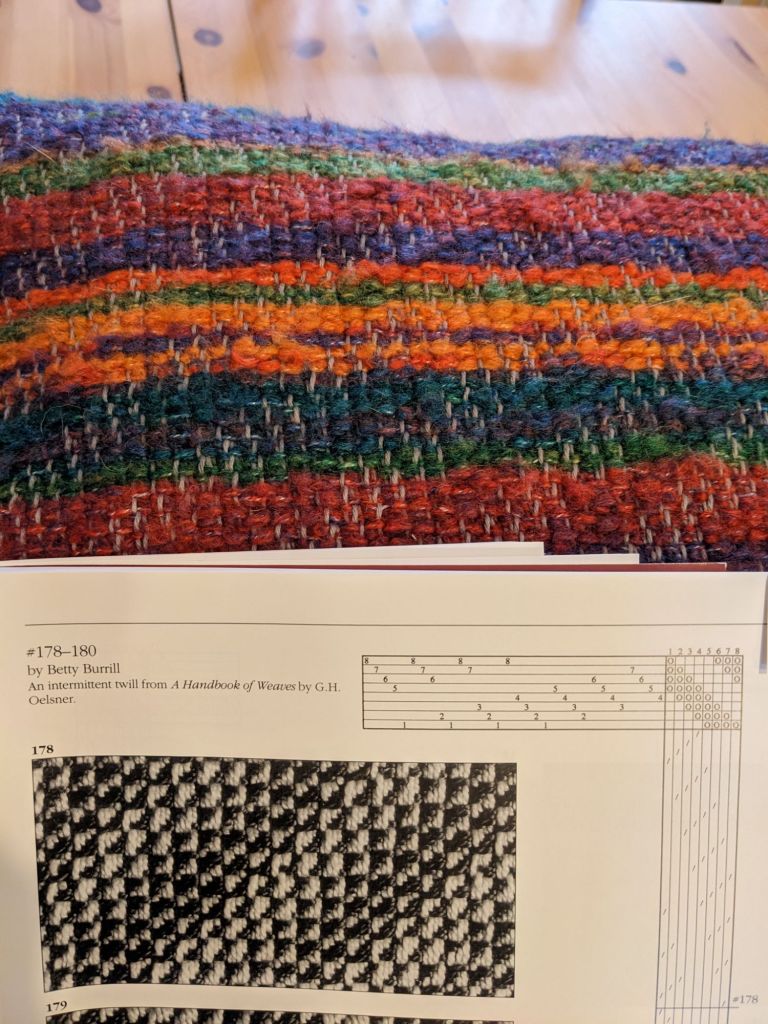
  • Wanted to try my hand at using one pattern for an entire project instead of having fun improvising. I used Carol Strickler’s #178 for threading and “treadling” – which on a table loom is levering, I guess?
  • Direct warped with a clamp on the *opposite* side of my kitchen island, which ensured the clamp couldn’t move or fall off. I warped a couple sets of threads instead of doing all ~360 threads at one time. This was better for me logistically and it reduced the effect of the warp building up on the clamp, making some threads longer because they’re more diagonal than straight to the clamp.
    • I mainly chose to direct warp because using the homemade raddle went so poorly on the towels, but I want to try “normal warping” again.
    • Two floating selvedges on each side just to see if it would help with straighter selvedges.
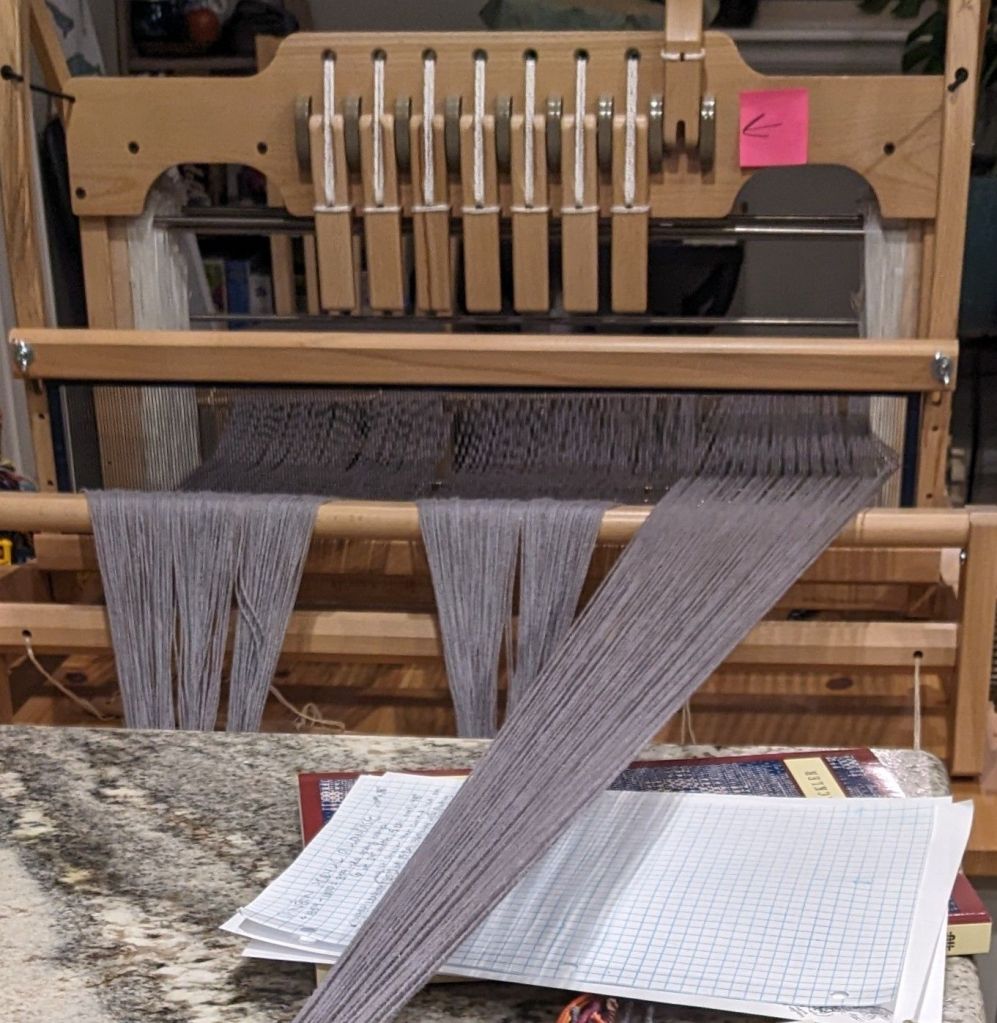
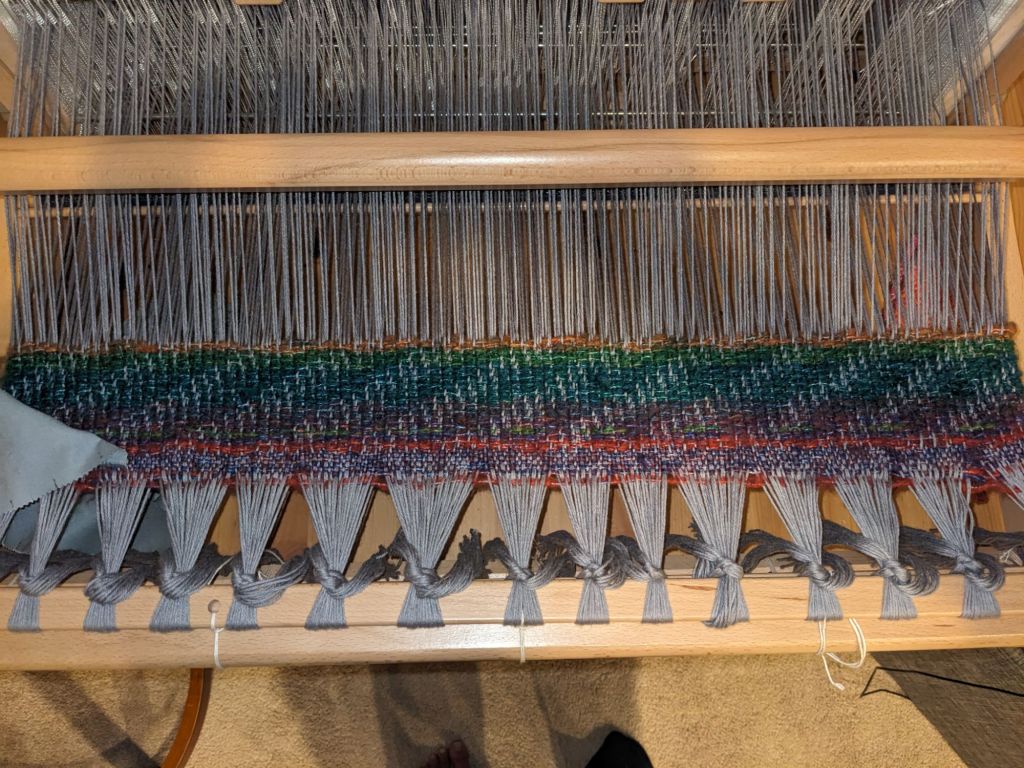
Two bundles of warp hanging, the right is finished, ready to be wound on using the reed to separate the warp
Since this weft is very fuzzy, the pattern is more muted, but I like the diagonal pattern with the vertical gray warp with the horizontal colored weft stripes. So many types of lines 🙂
Finished pillow next to the pattern and book sample
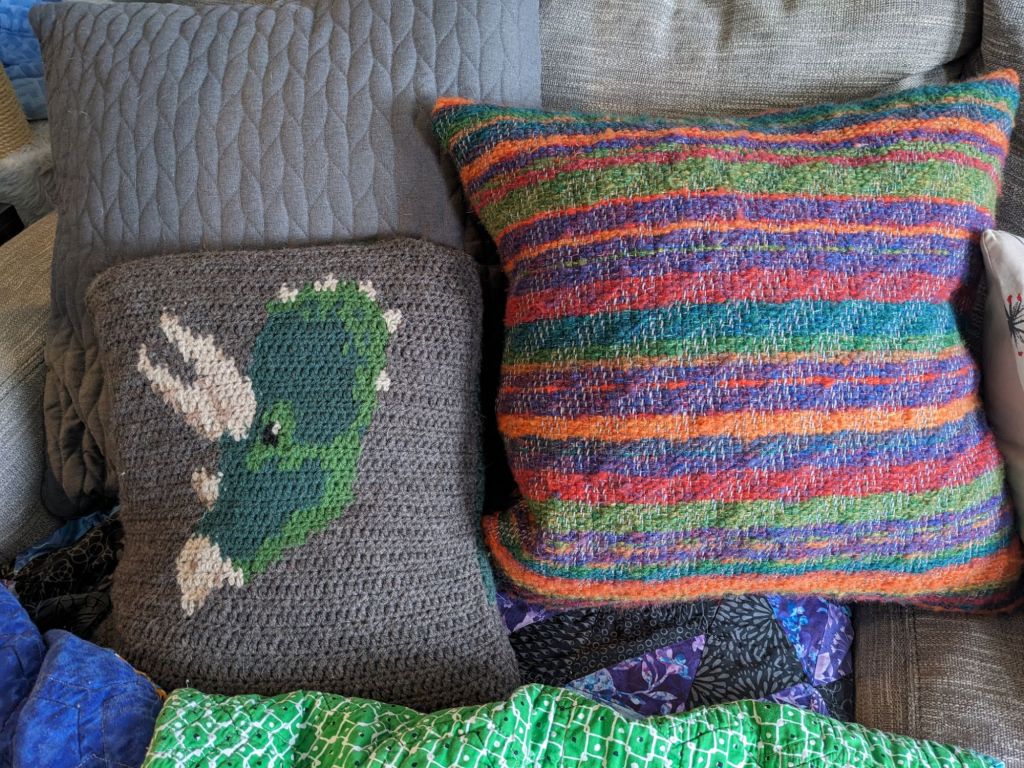
Finished woven pillow and I transformed my crocheted triceratops sweater into a pillow too!

It was very rhythmic, weaving the same pattern over and over again. I started using an eight-sided die to keep track of which line I was on, and just wove and wove and wove. And I used all the yarn I frogged!

Projects completed early 2025.