I started this project in the spring of 2023 as a way of using up scrap yarn and having a simple, easy hand-project for nights on the couch and zoom calls. I wanted to play with changing colors and having interesting color work while keeping the texture (crochet stitches) constant throughout. I did a simple (half double crochet, slip stitch) pattern and crocheted four panels of approximately the same size.
I think I miscounted the number of stitches when I started the second panel because one panel is ~50 stitches, one is ~42, and I had to make the other two match.
Sometimes I had plans. But as I grew in confidence, I let the plans go and just played with the yarn in hand.
It also served as a great place to put some of my first experiments in hand spinning, and transition into spinning yarn specifically to match the diameter of the commercial yarn so it would fit together well. I like how the final product showcases my first ever handspun (lumpy, bumpy, plied the wrong way) with my most recent handspun (consistent, soft, and so thin I had to double it to match the diameter of the rest of the yarn). I suppose it is a display of my crochet skill over two years and my handspinning skill over one and a half. 🙂
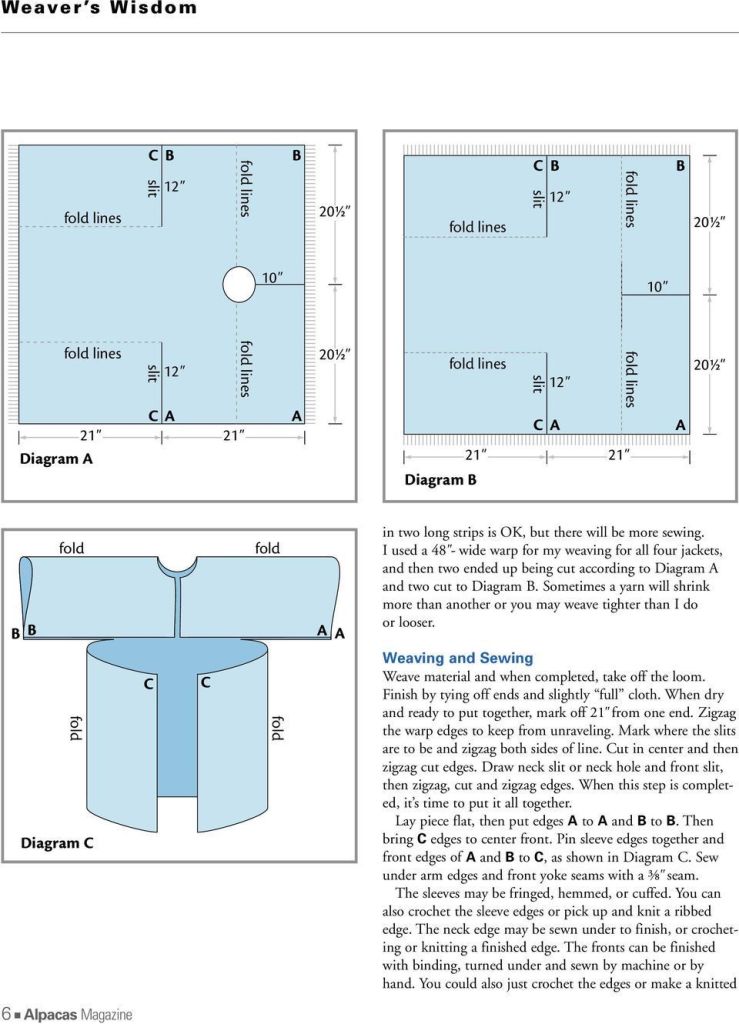
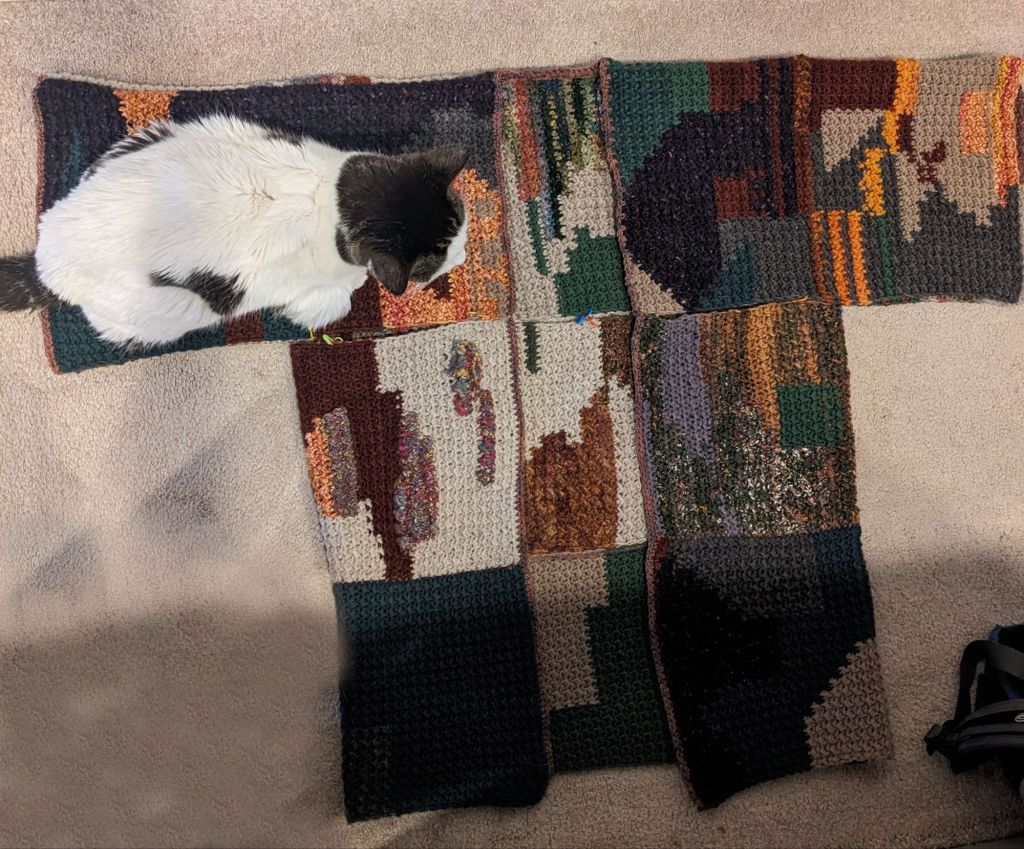
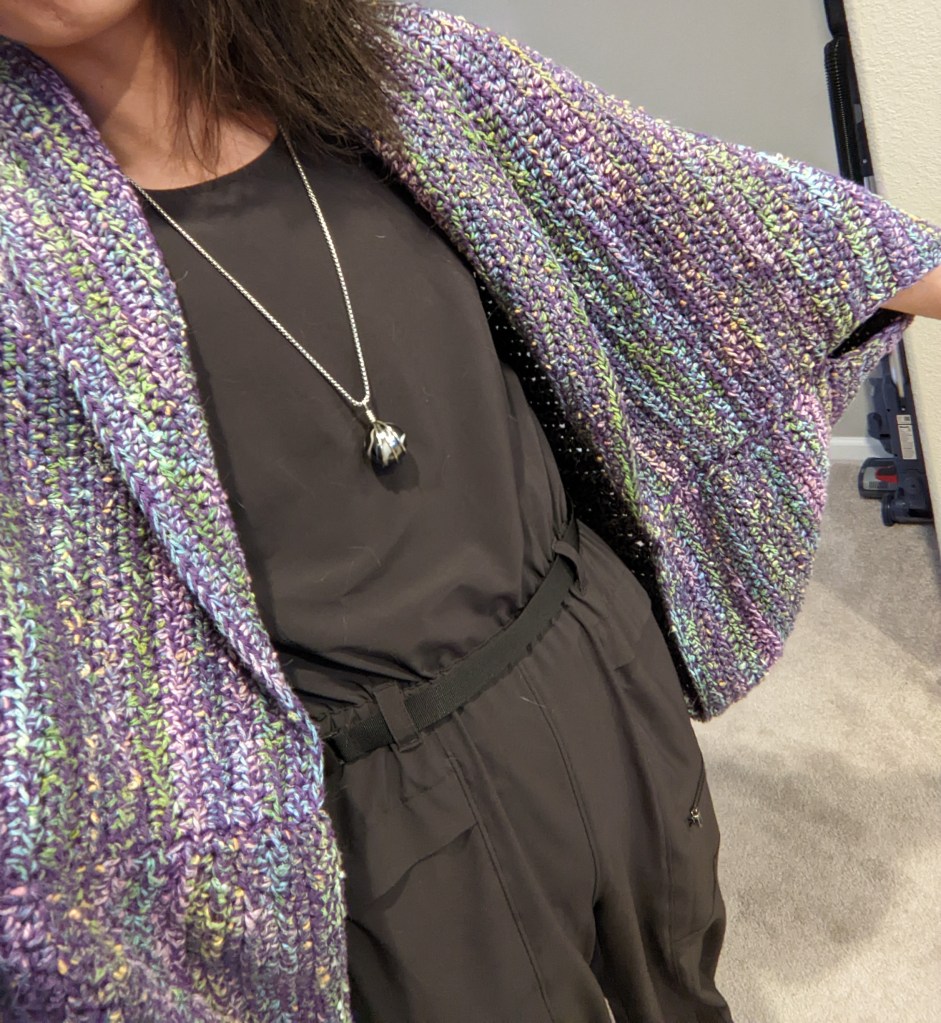
I planned on using these panels in a vertical layout as a long vest, but once I half-assembled it, I realized it was somehow simultaneously too long and too short for what I wanted. So I pivoted to making a bog sweater (see below). I love how big the sleeves are, and they’re kind of a perfect length, somewhere between short and long sleeves. I did have to cut apart one panel to make the opening, which was stressful, but I just went slow and hurriedly crocheted a border around it.
I used two panels, folded, for the top/sleeves portion, and two panels for the bottom/body portionBefore sewing the seams, but after cutting apart the opening. Obviously the friendly helper is helping 🙂
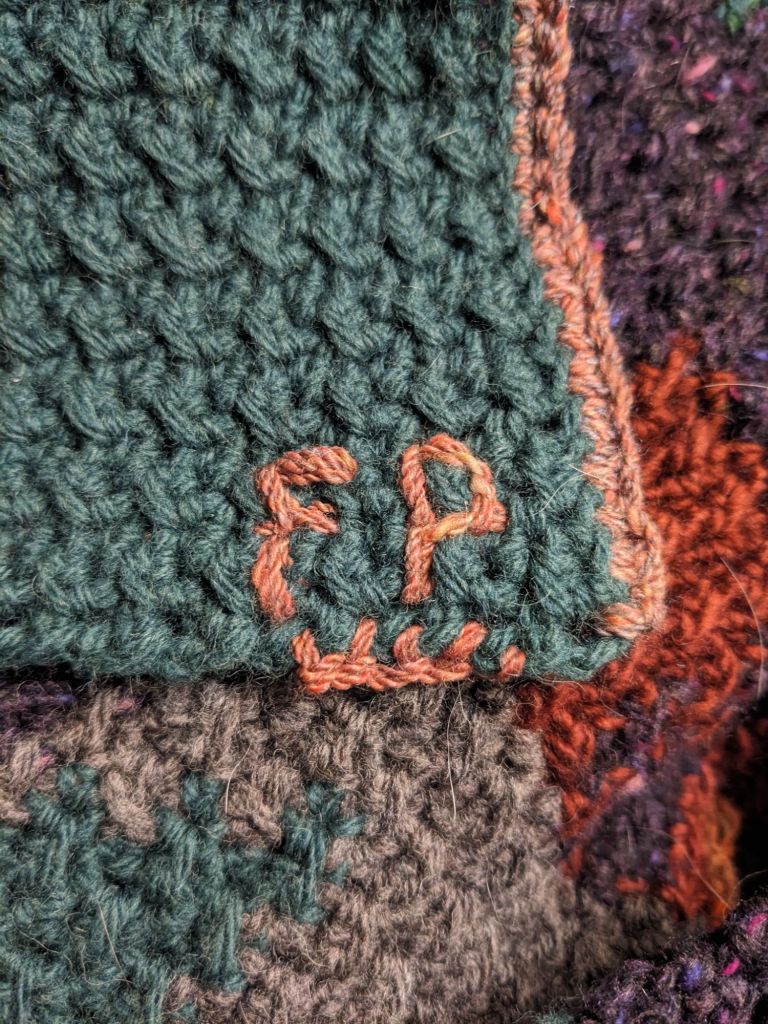
I’m very pleased with my final result, despite it not being my plan. It’s warm, but not hot because of the large, open sleeves. I even signed it, with 5 stitches for 2025.
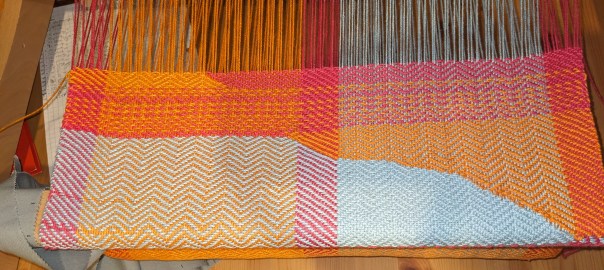
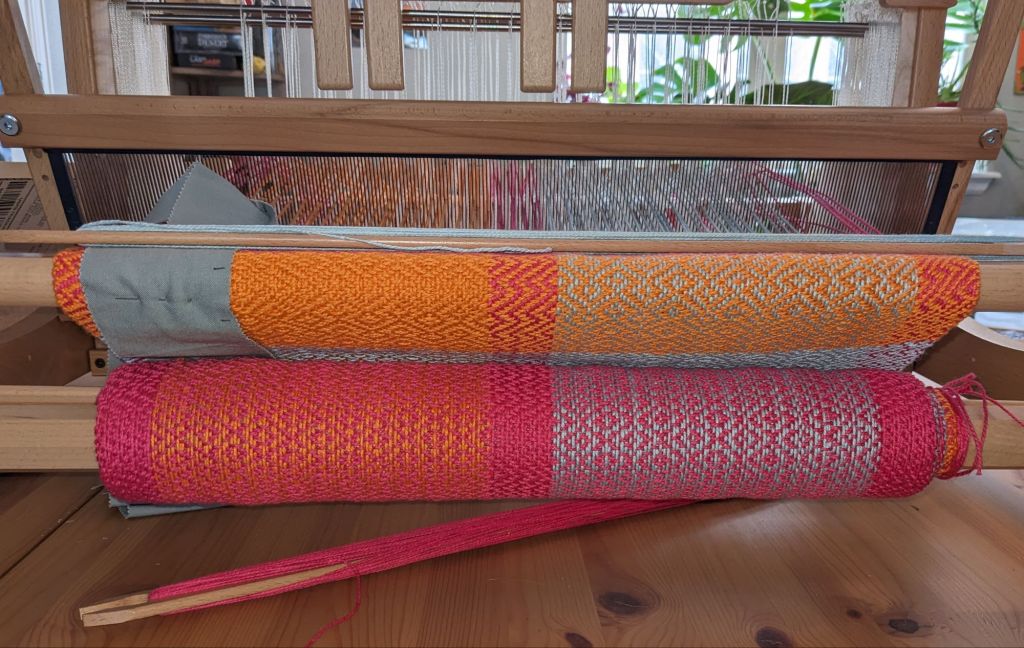
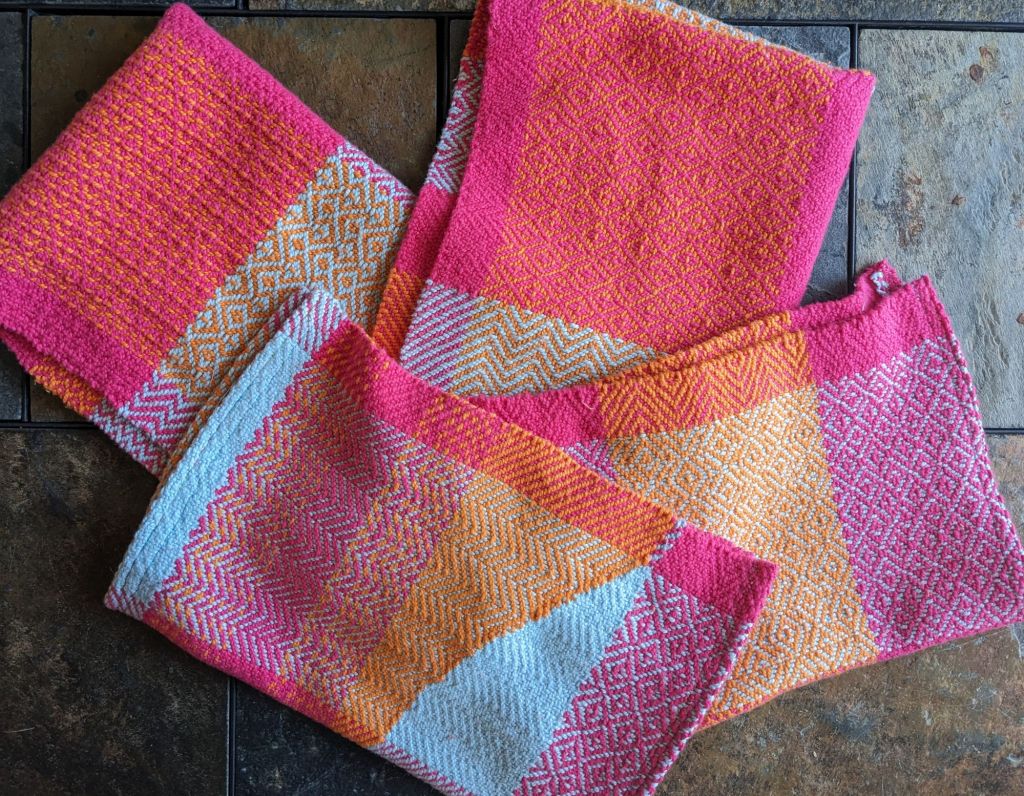
3/2 cotton “Beam” thread from Gist Yarn warp and weft in three colors
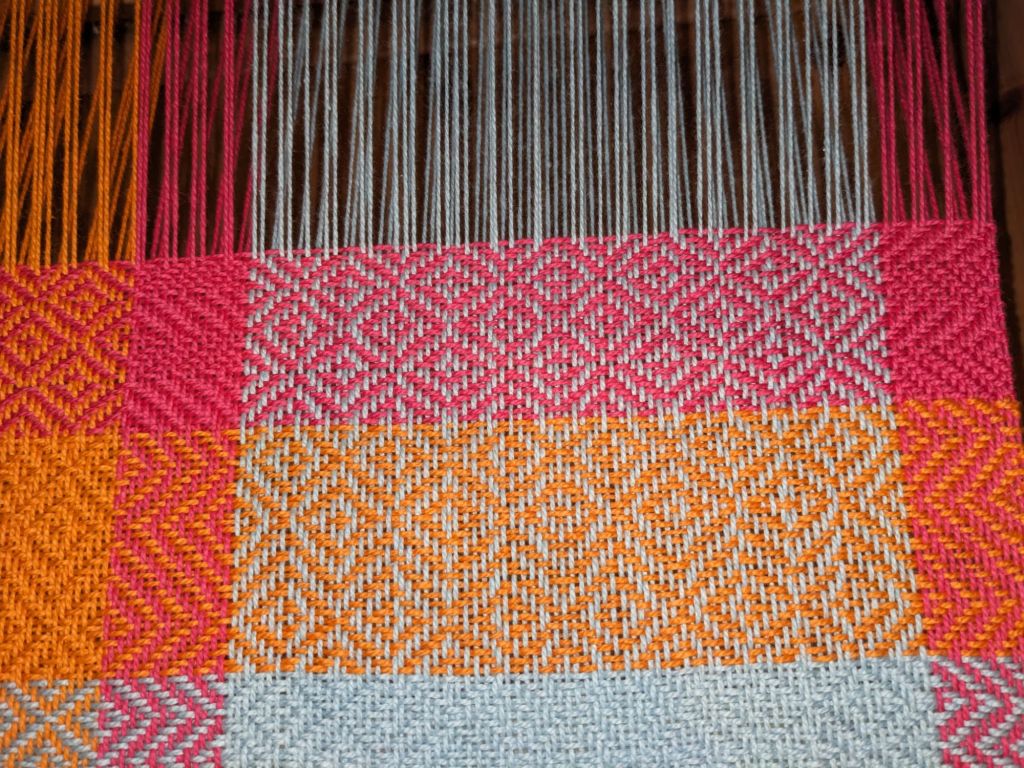
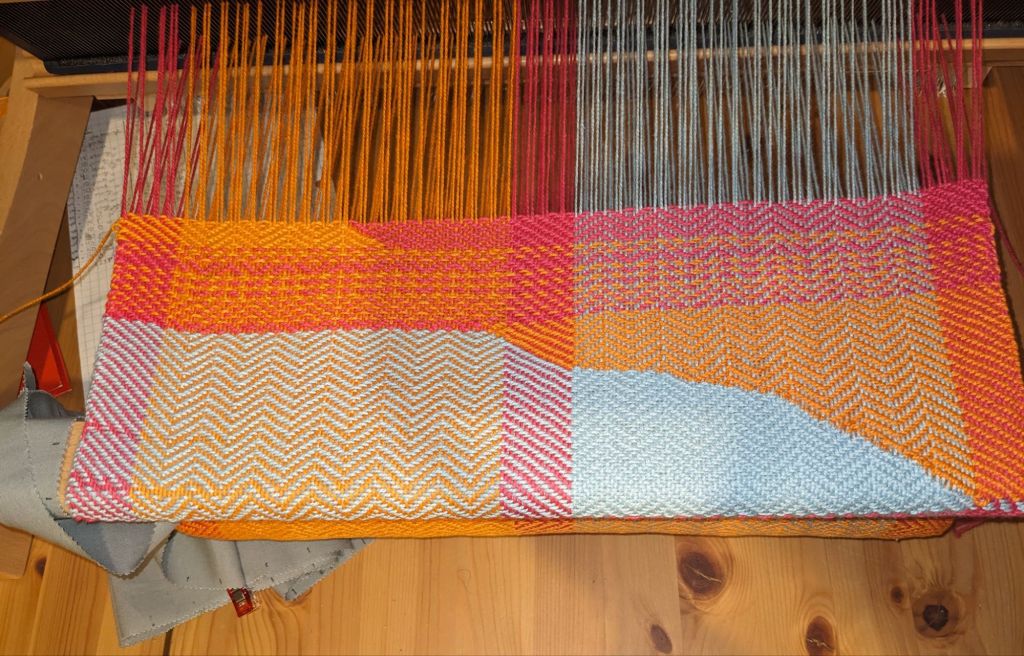
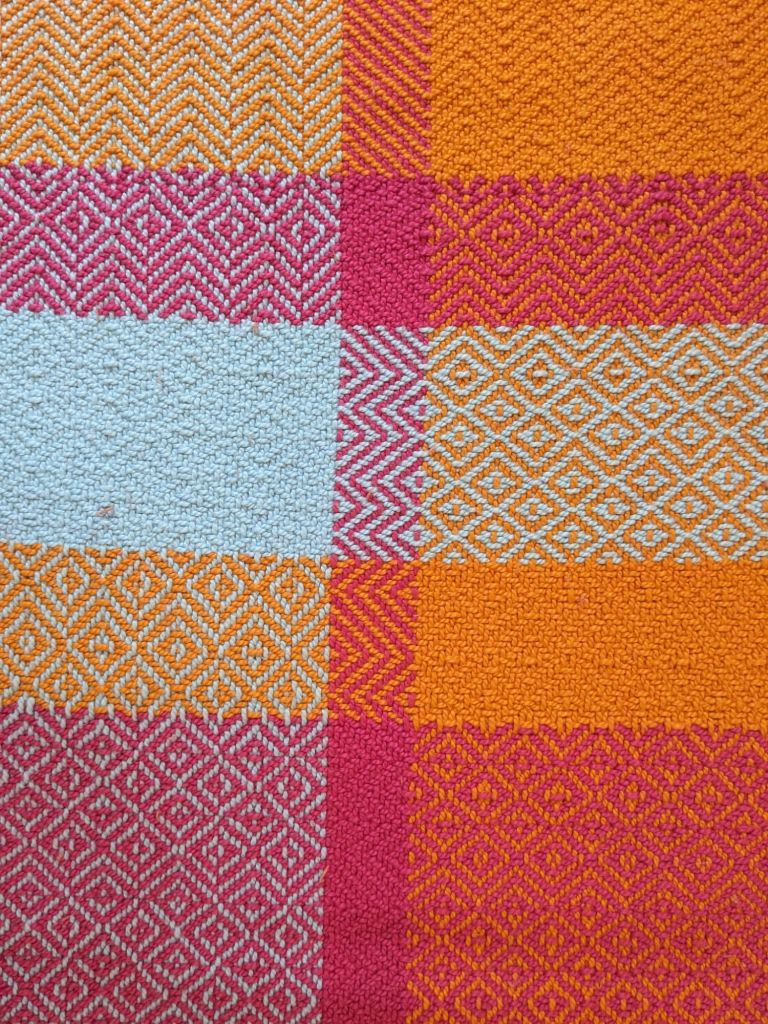
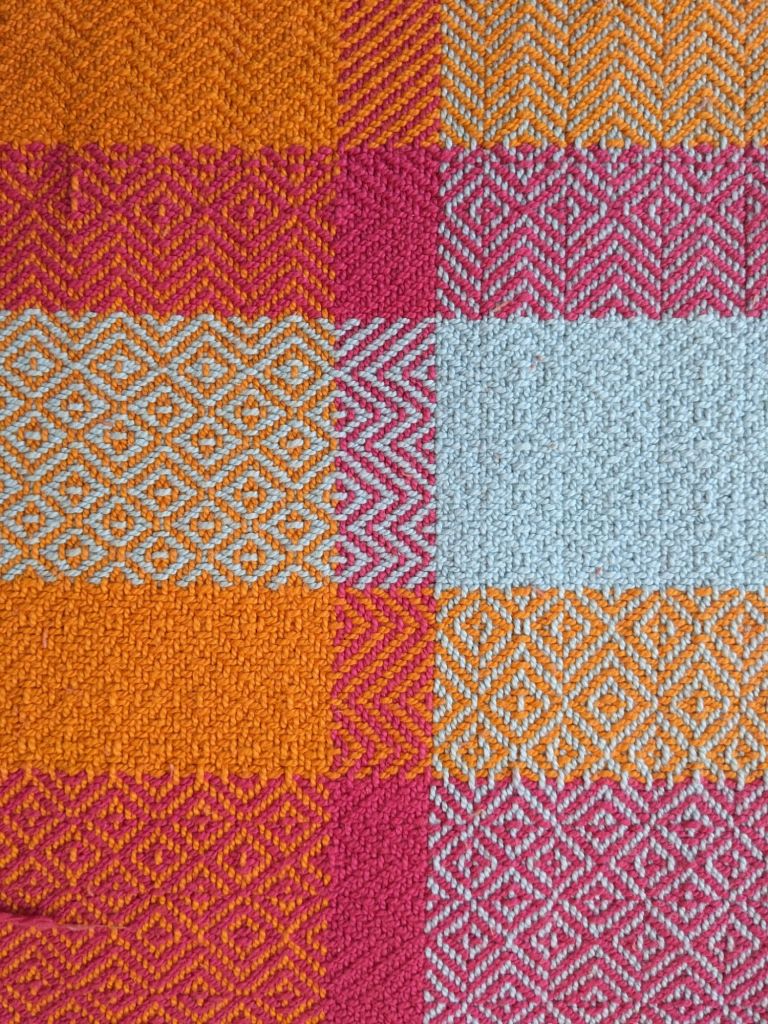
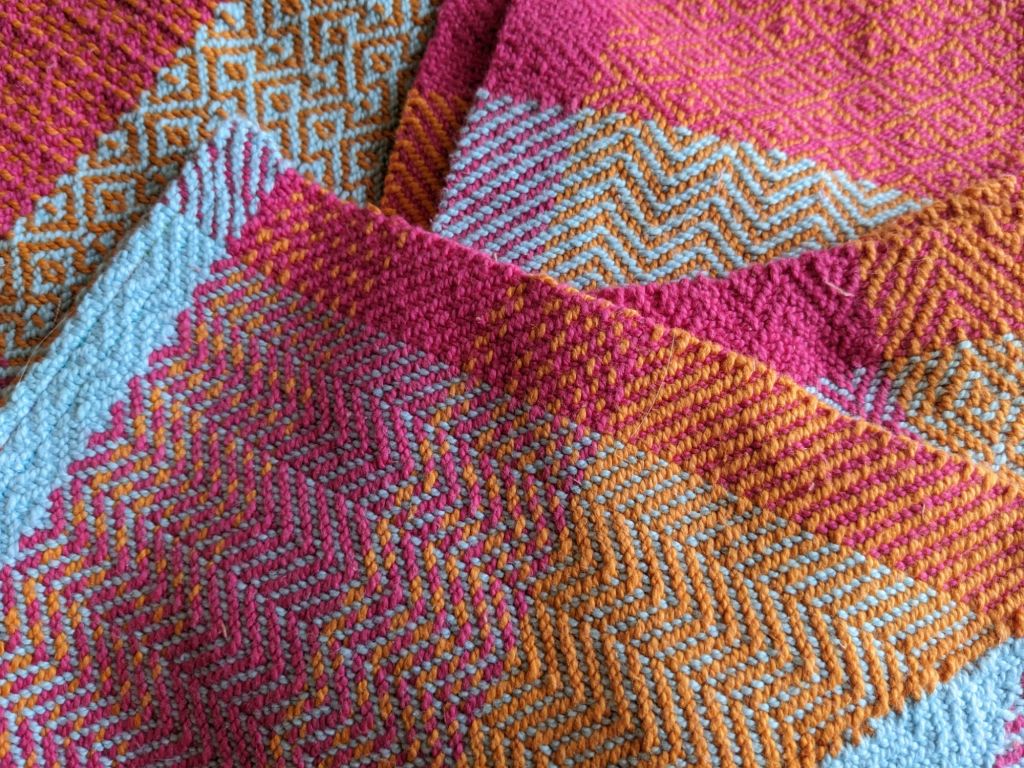
Threading was by color, so I could experiment with different patterns and see the effect of the weave and the color 🙂 I planned to have all patterns be based in 2/2 twill, just different combinations and repeats
Pink – straight 12345678
Orange – point 12345678765432
Blue – broken
Warped between two chairs flipped upside down on a counter and table – did not work very well because they slid together over the warp, so the beginning threads were longer than the ending ones.
Also learned that I need to put more organizational ties on the warp so the threads don’t get tangled when transferring to the loom
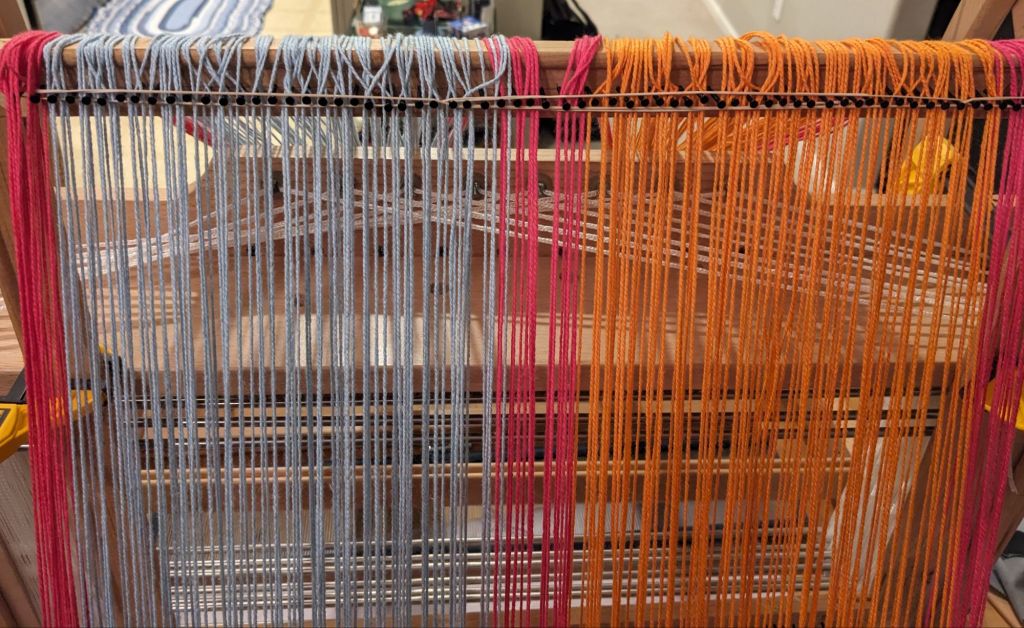
I had to use a homemade pin loom as a makeshift raddle to separate the warp threads, and since I didn’t really keep the warp untangled… this was really annoying and I had to keep stopping to untangle the threads so they’d go through the raddle, and also the tension was really uneven throughout the winding of the warp.
One floating selvedge on each side to attempt to keep the edges straight and allow patterns that don’t always go over and under the outside threads
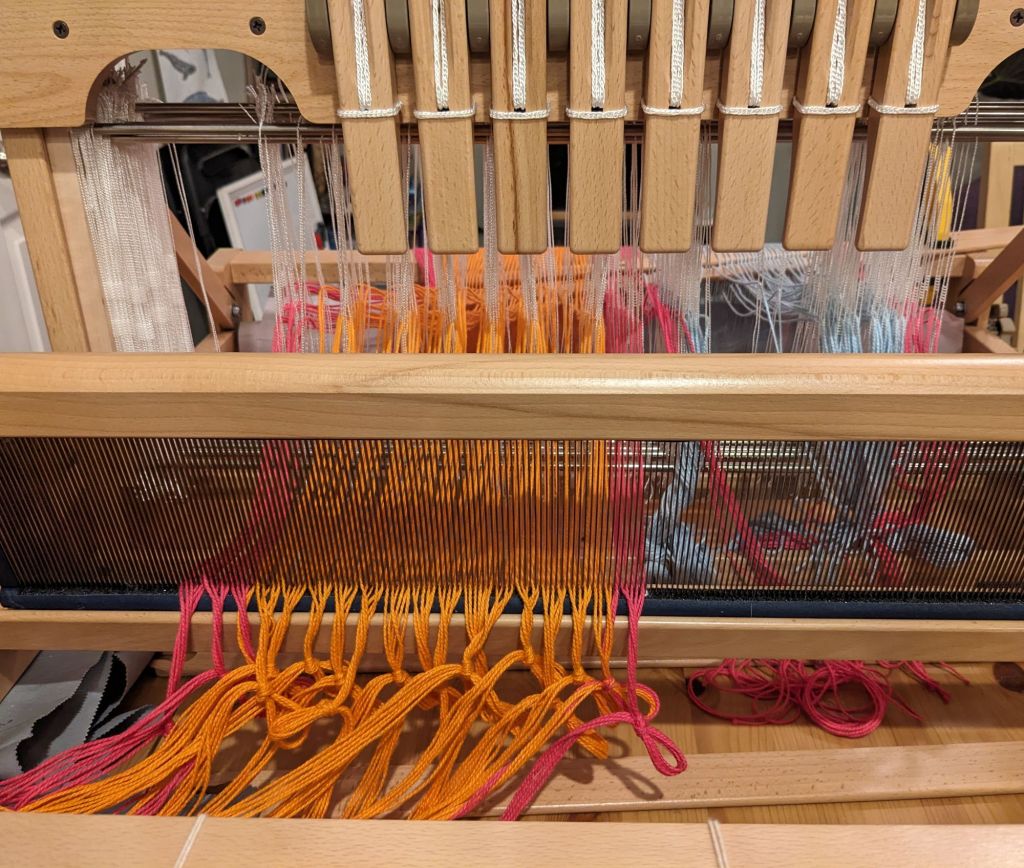
Note the tangled threads along the top as they enter the raddle… 😦Sleying the reedBlue and orange weft stripes at the bottom are point twill, pink weft at the top is the corresponding treadling to the blue warp threading (called “as drawn in”)I called this blue weft pattern “ten jellyfish”, it is a 10 pick repeat and I think it looks like a bunch of jellyfish swimming up and down 🙂I noticed that I was pulling the weft in more on the left passes than on the right passes – my right selvedge gradually comes in more and more, but my left selvedge is pretty consistent. I think this was also due to a lot of threads on my right side becoming looser as I wove, which I tried to weigh down but it wasn’t great. I tried out some clasped weft – in the middle pink stripe I followed the twill line which was funFrontBack
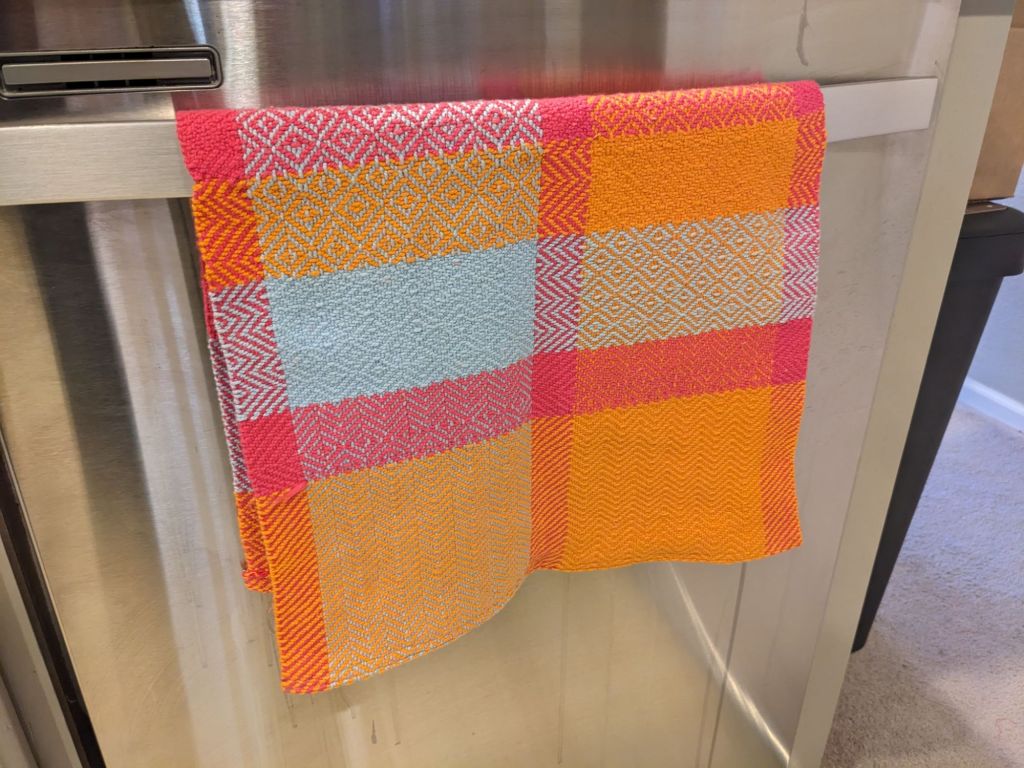
Finished in the washer, dryer, and ironed, then used my sewing machine to make two kitchen towels and two napkins. It was a little intimidating to cut into my handwoven fabric, so I did a basting stitch on my machine on both sides of where I needed to cut.
😃
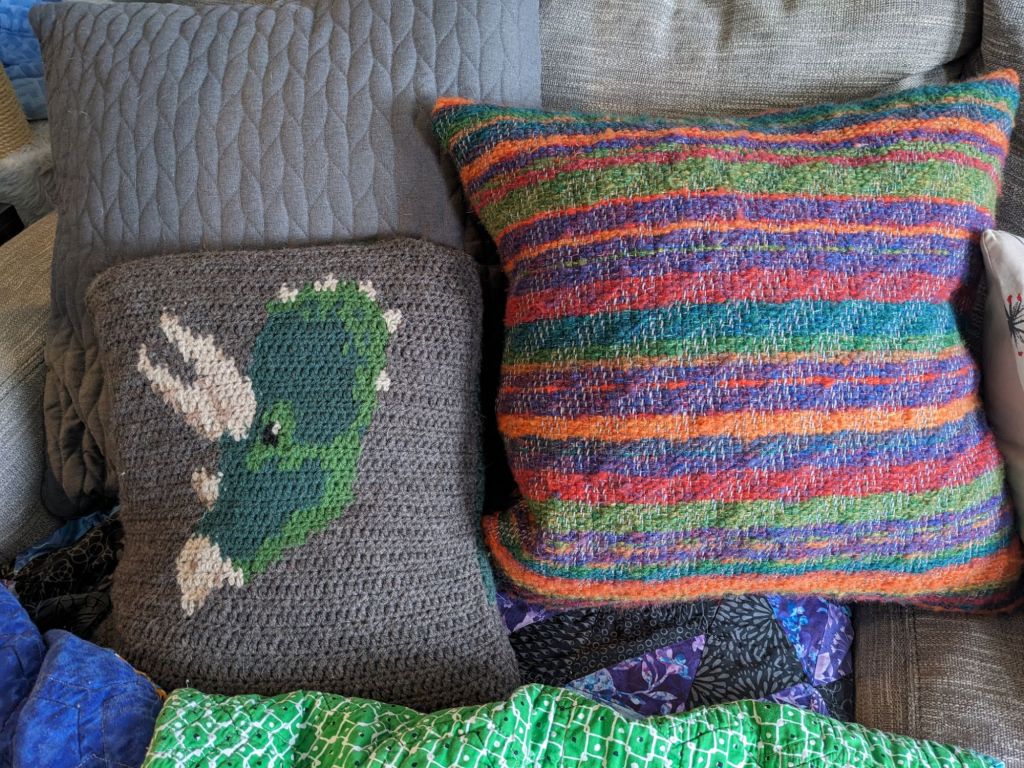
Pillow
Cotton warp, acrylic weft that I frogged from a sweater that I didn’t wear
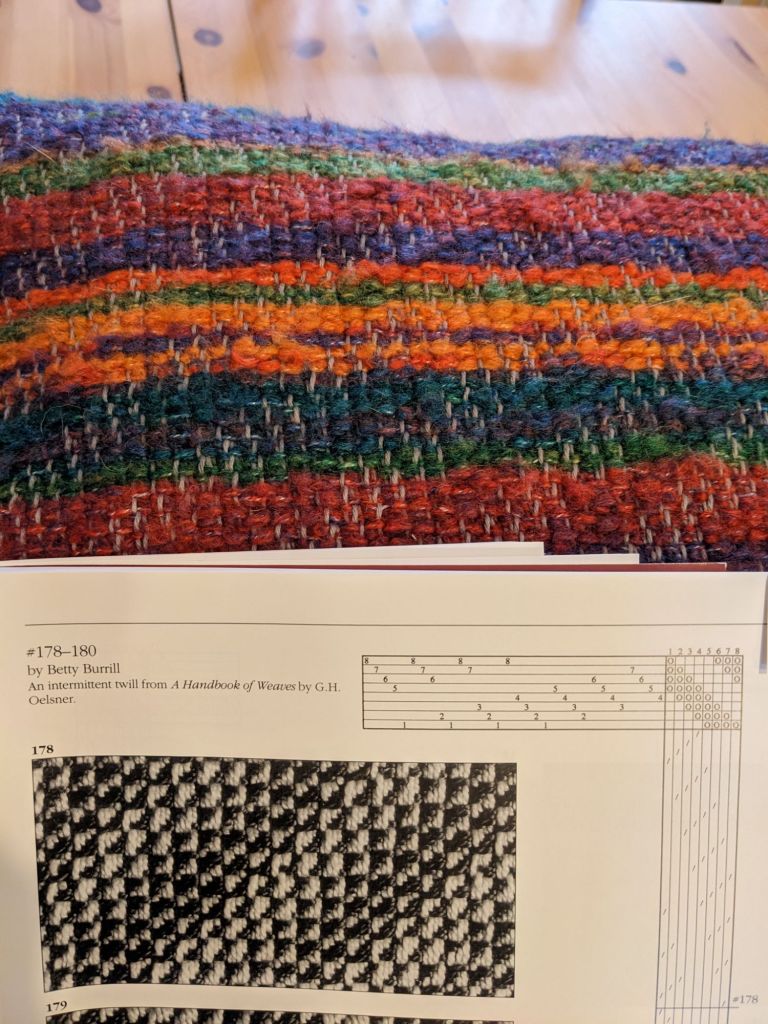
Wanted to try my hand at using one pattern for an entire project instead of having fun improvising. I used Carol Strickler’s #178 for threading and “treadling” – which on a table loom is levering, I guess?
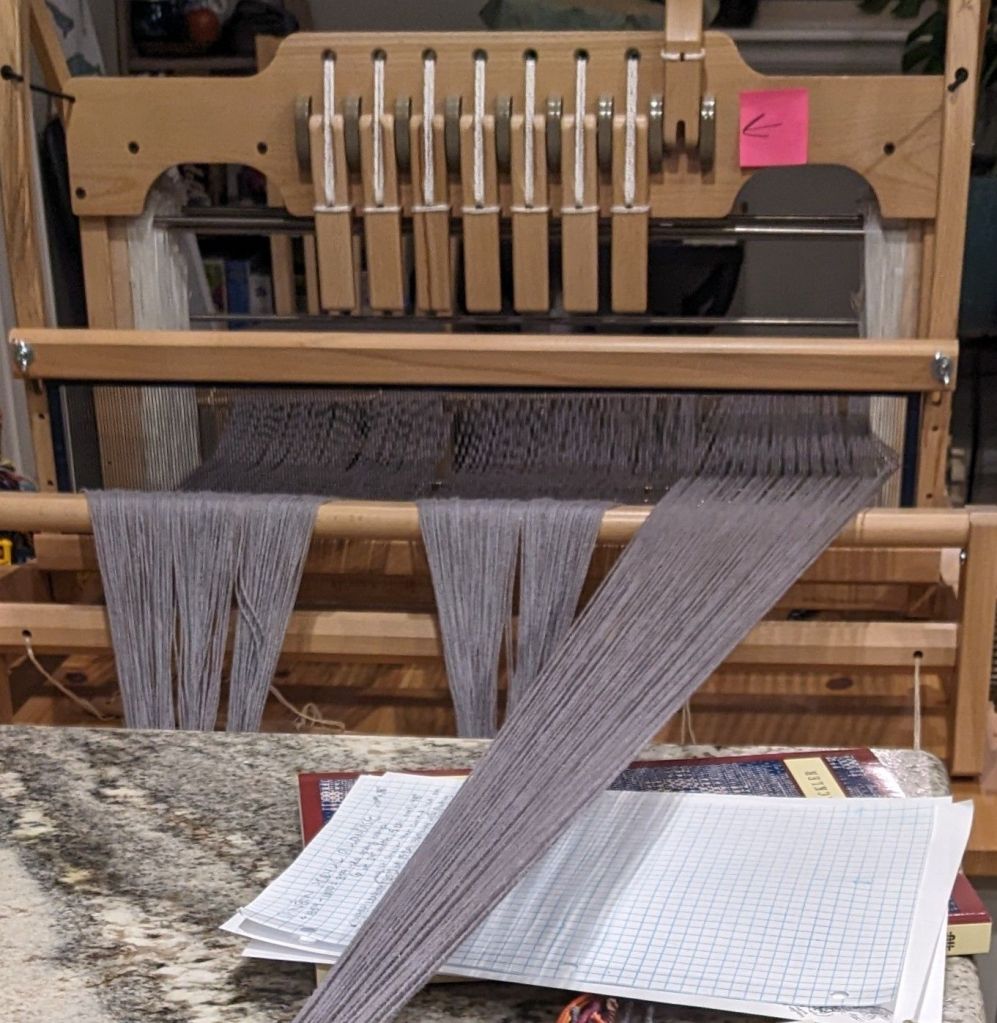
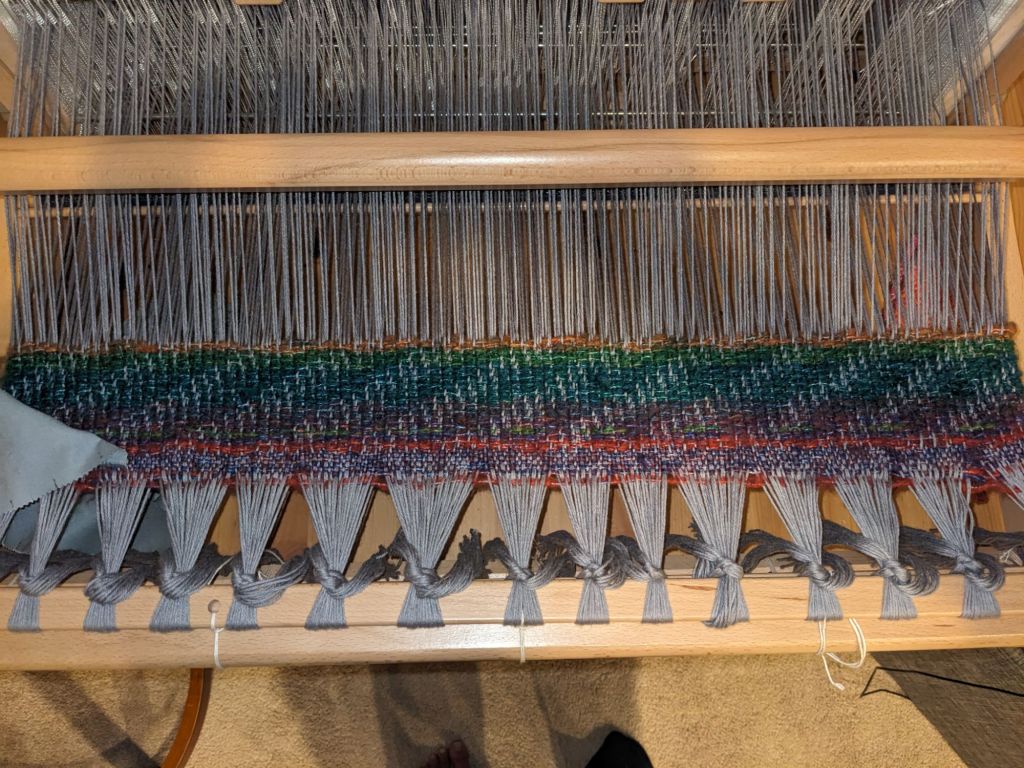
Direct warped with a clamp on the *opposite* side of my kitchen island, which ensured the clamp couldn’t move or fall off. I warped a couple sets of threads instead of doing all ~360 threads at one time. This was better for me logistically and it reduced the effect of the warp building up on the clamp, making some threads longer because they’re more diagonal than straight to the clamp.
I mainly chose to direct warp because using the homemade raddle went so poorly on the towels, but I want to try “normal warping” again.
Two floating selvedges on each side just to see if it would help with straighter selvedges.
Two bundles of warp hanging, the right is finished, ready to be wound on using the reed to separate the warpSince this weft is very fuzzy, the pattern is more muted, but I like the diagonal pattern with the vertical gray warp with the horizontal colored weft stripes. So many types of lines 🙂Finished pillow next to the pattern and book sampleFinished woven pillow and I transformed my crocheted triceratops sweater into a pillow too!
It was very rhythmic, weaving the same pattern over and over again. I started using an eight-sided die to keep track of which line I was on, and just wove and wove and wove. And I used all the yarn I frogged!
Late 2023 I was in a yarn store with a friend, and they had “learn to spin” kits with a drop spindle on a table display. She gestured to me and said “look, you could learn how to spin!” and I said, immediately, “I DON’T NEED ANOTHER CRAFT!!!!”
Yeah so I have four spindles, a spinning wheel, and I’ve completed whole projects with my handspun yarn ❤
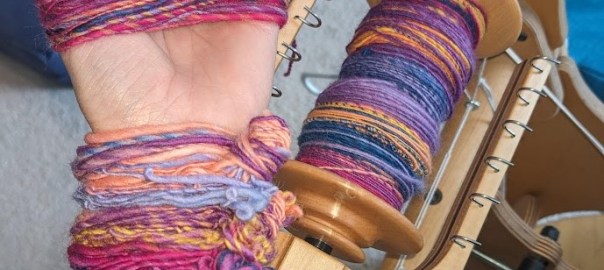
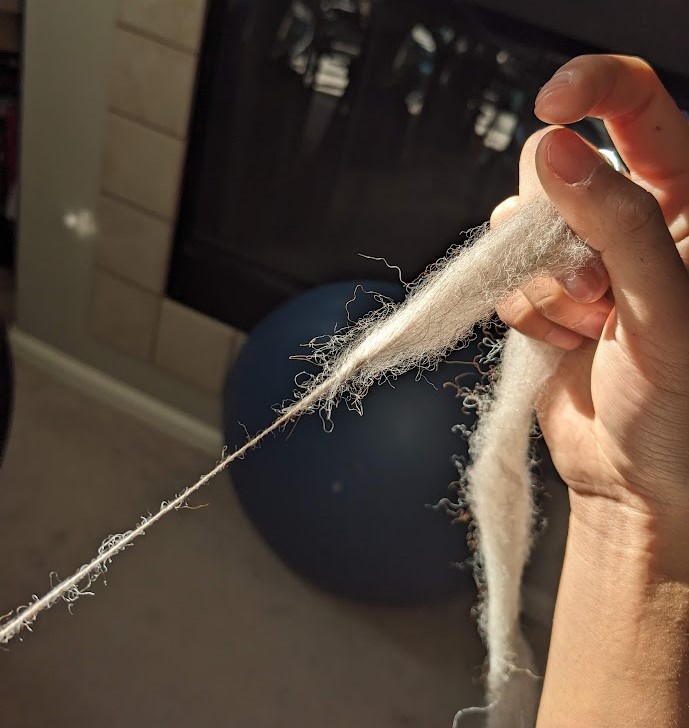
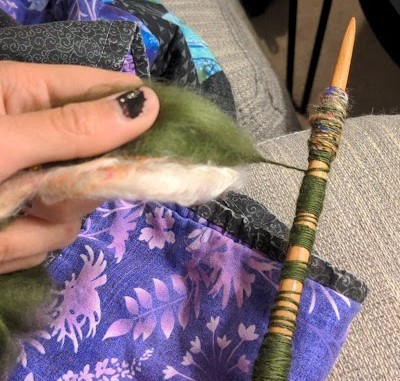
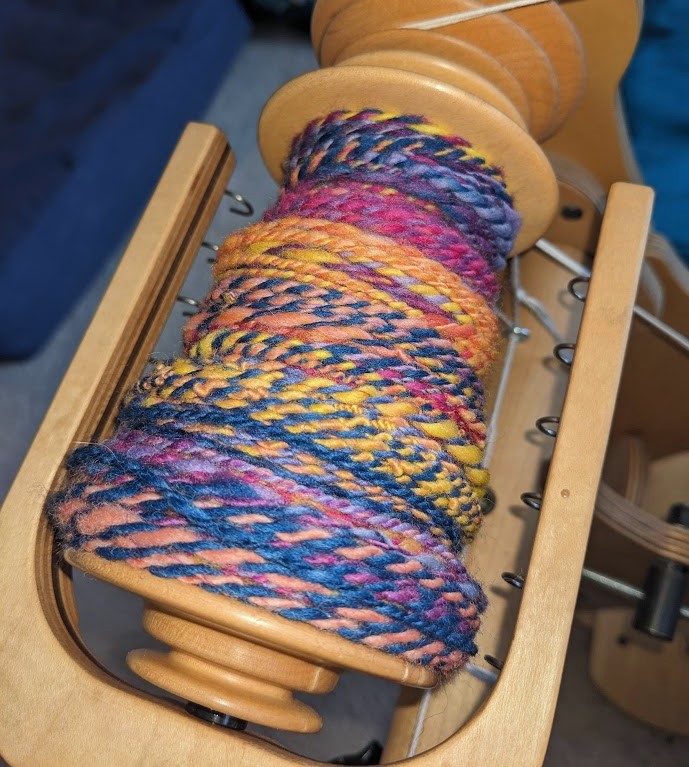
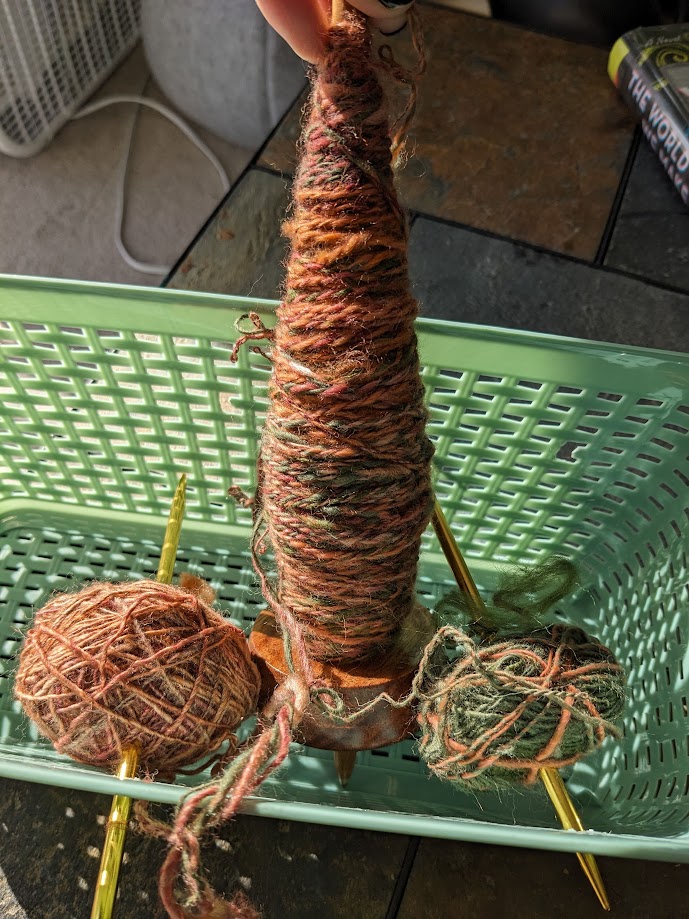
Spinning yarn is simply… simple. It’s putting twist in some strands of fiber, and holding that twist “energy” in the yarn. And it’s ancient. We’ve been spinning as long as there have been nets to hold and trap things, clothes to wear, and bags to weave. I find spinning with the spindle to be the ultimate, original fidget spinner (literally), and with a bonus that I’ve created something! It’s a great hand activity for podcasts and audio media.
Twist (left) travels up to the fiber (right)
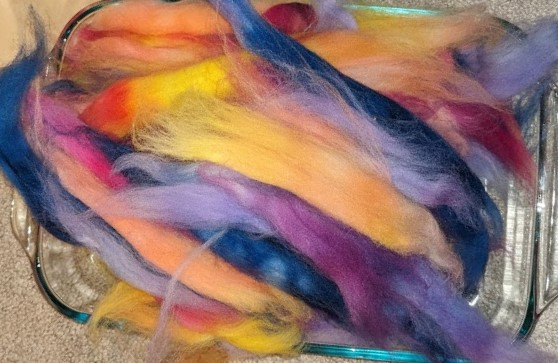
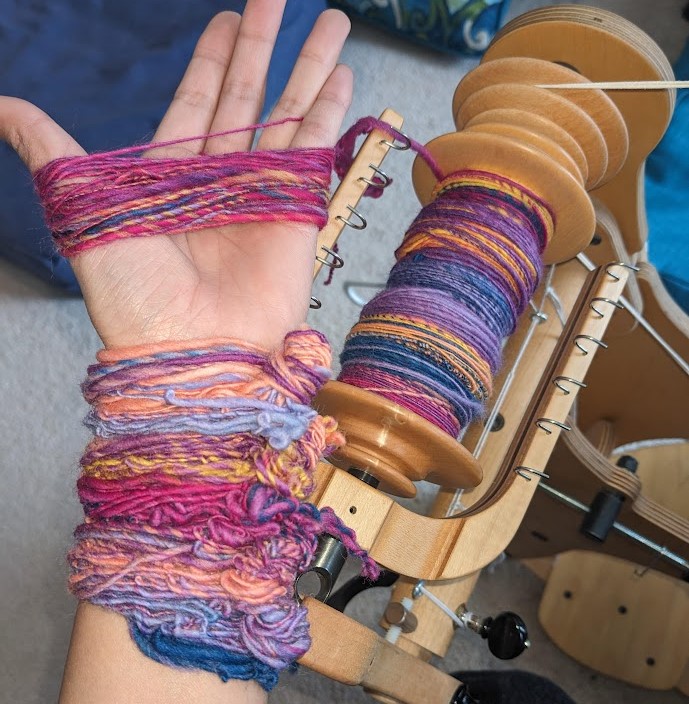
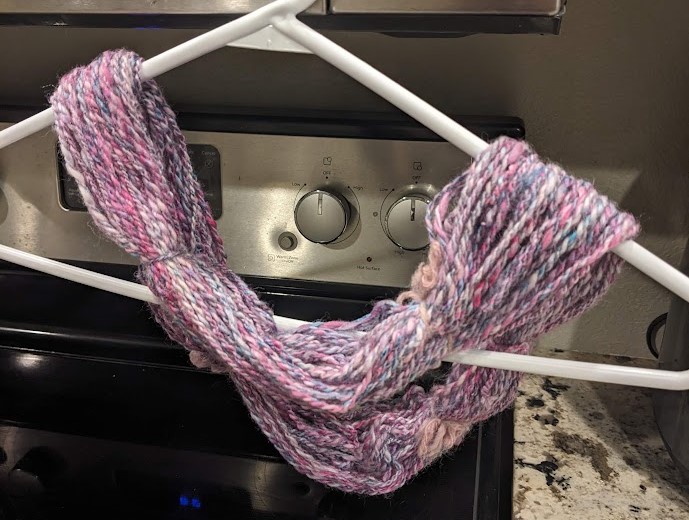
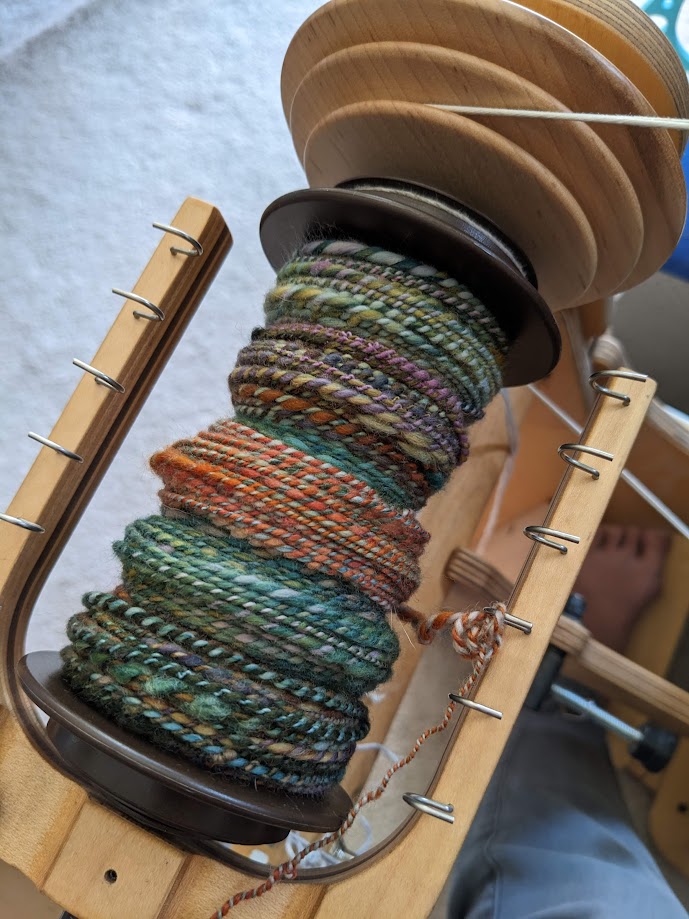
I find the color blending is like doing watercolor “wet on wet” – you can have plans, but the medium itself executes the plan and introduces beautiful randomness that I couldn’t have made myself. This is especially true when doing a two-ply yarn – I spin one long string and (systematically) fold it in half, not knowing what the middle is going to look like at all!
Plus, I can make a lot of different textures – wiry, fluffy, thick, thin, varied, consistent… just a lot of experimentation and fun.
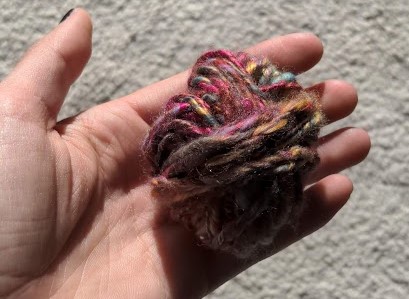
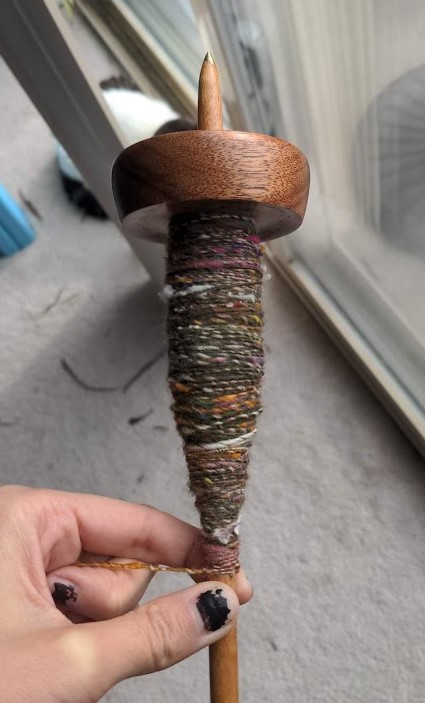
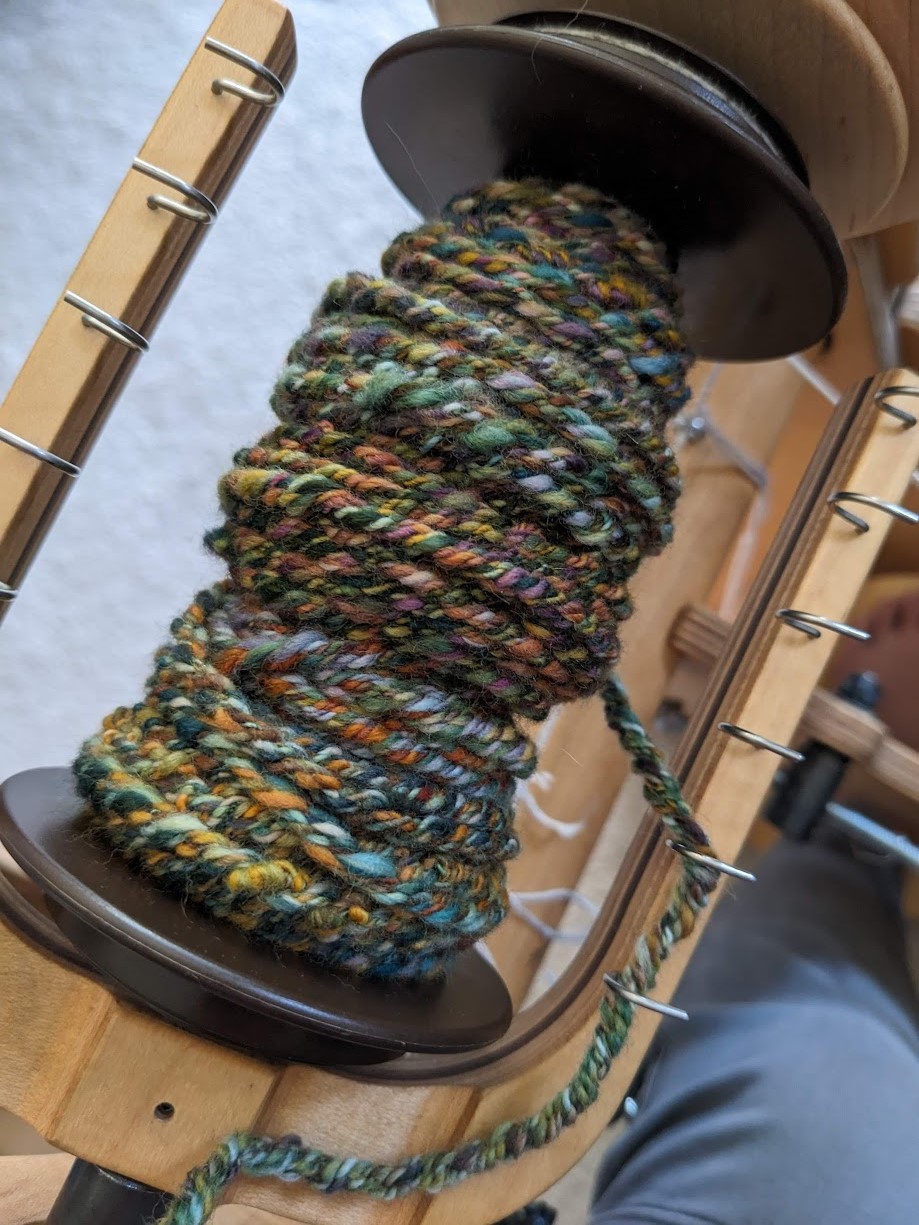
Fluffy yarn from my early spinning days
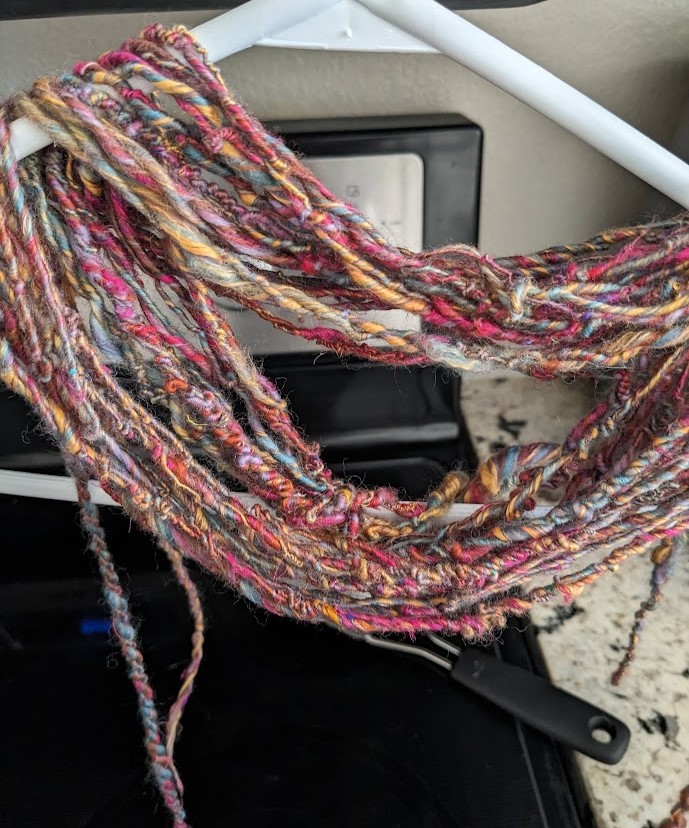
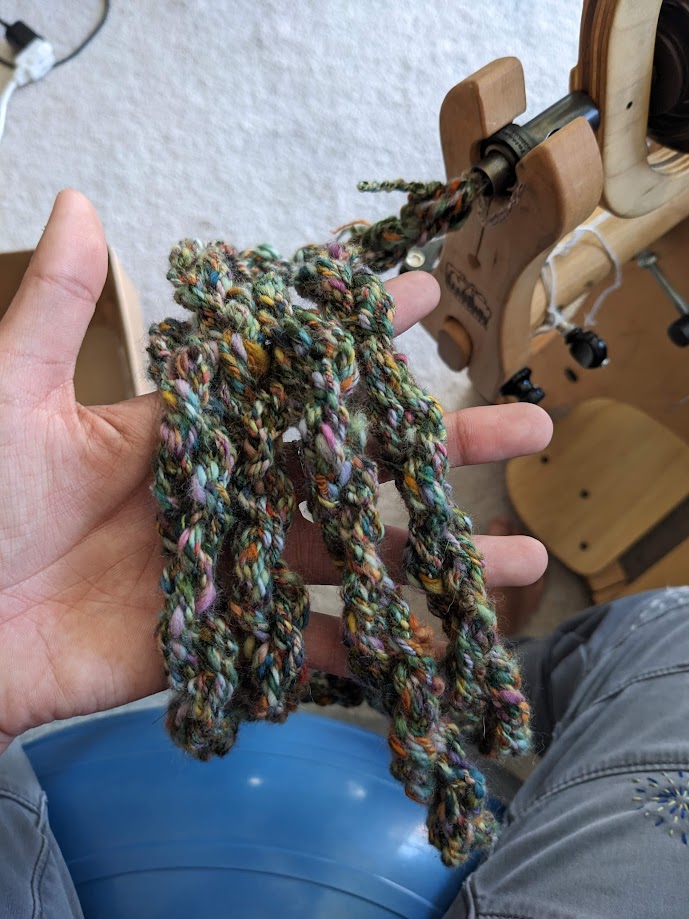
I plied this yarn a bunch of times to make a strap for a bag 🙂 It was some leftover fiber from my Tetons Extravaganza and it was just so colorful and green/flowery that I wanted to use it in a different way.
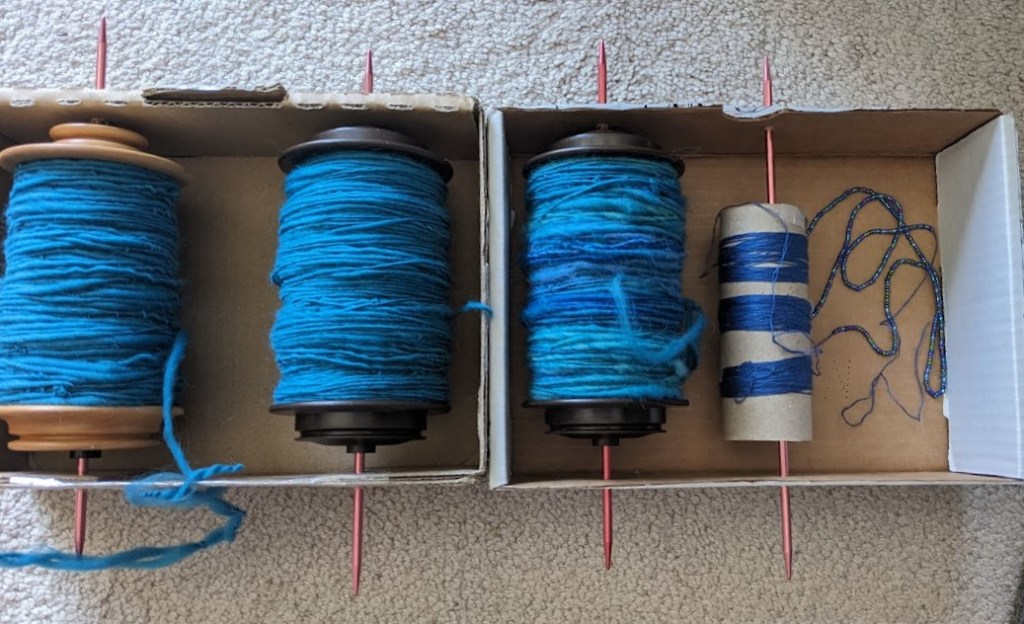
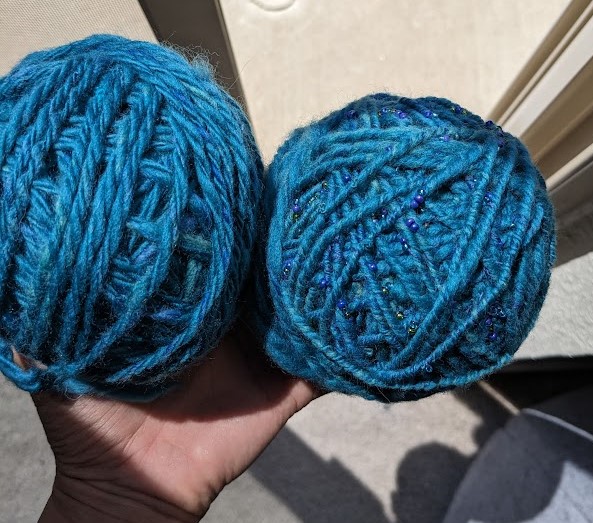
And then I got crazy and started adding beads!! 🙂 So shiny and fun. It was kind of annoying putting all the beads on the thread, but super worth it.
Plying setup with three normal plies and beads!
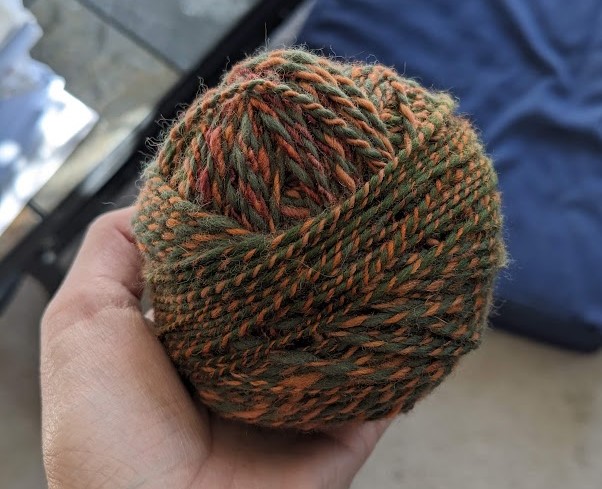
And of course, making things with the yarn I make. 🙂 crochet, weaving, I have even spun yarn thin enough to embroider with.
I’m figuring out how to walk around my house and spin, and my next data metric is figuring out how much yarn I can get from a given weight of fiber – which is a test of consistency, and makes the final fabric more even and less lumpy.
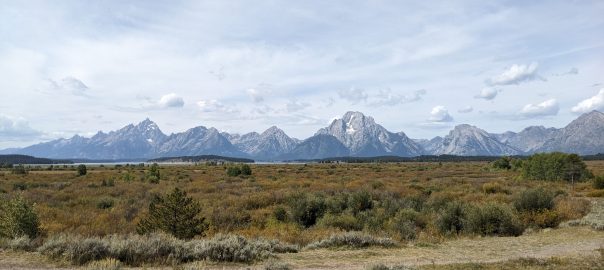
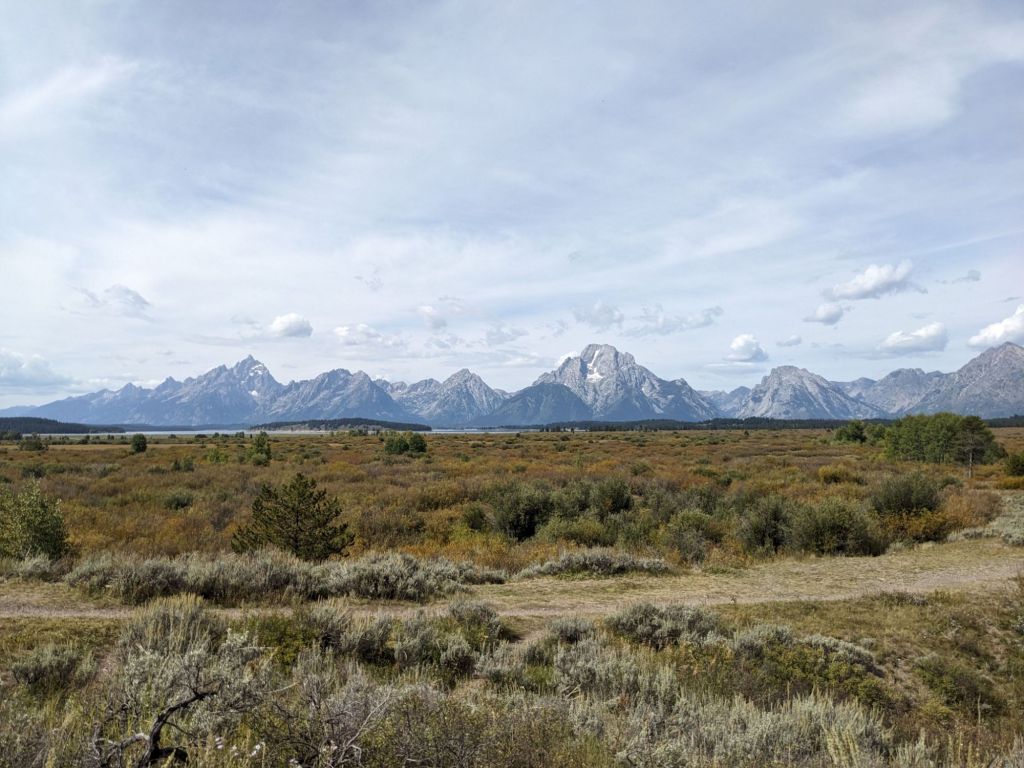
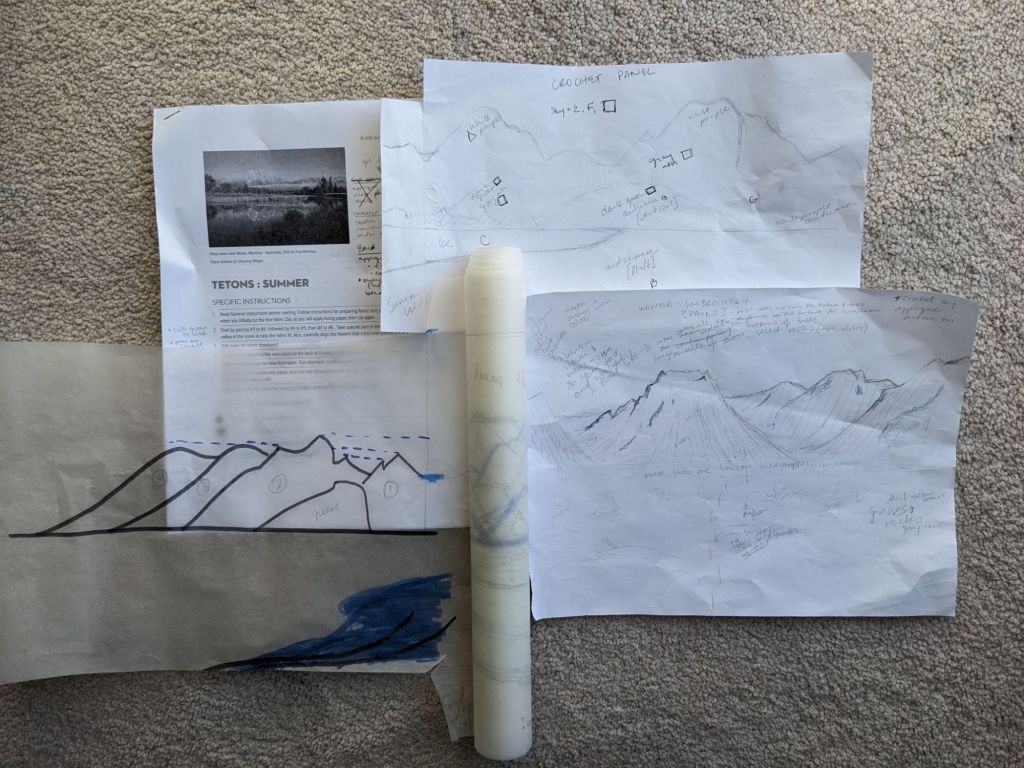
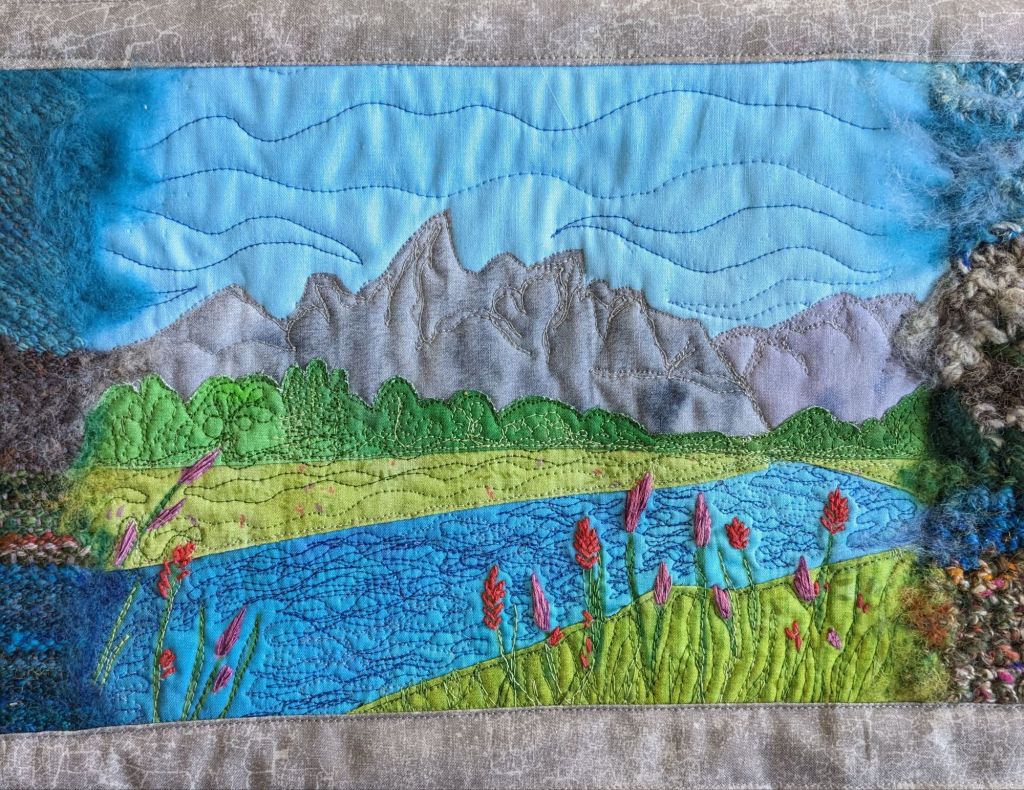
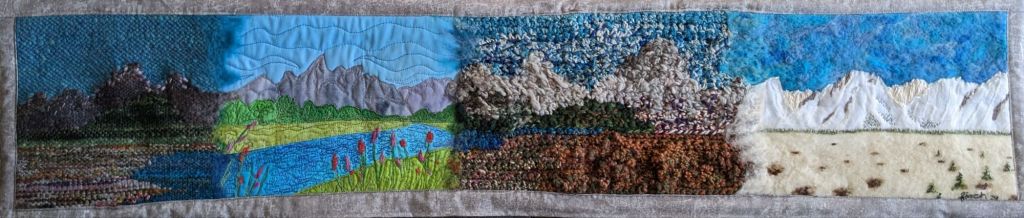
So I’ve collected a lot of skills 🙂 and after picking up a “summer” quilting kit from the Grand Tetons last year, I wanted to expand that project into a Whole Big Thing. The kit references the possibility of doing the same scene but with different fabrics for different seasons, but I wanted to do a full panorama with different peaks, depicting as much as I could of the Teton Range. I used some tracing paper to plan out panels for each of the four seasons, scaled so they’d match up with the quilted panel. My main reference photo is from Willow Flats Overlook when I visited in 2023. The perspective of the quilt is a bit different, but I kind of… made it work.
Main reference photo from Willow Flats OverlookPlans! The tracing paper rolls out into the whole panorama but having individual pieces was better while I worked.
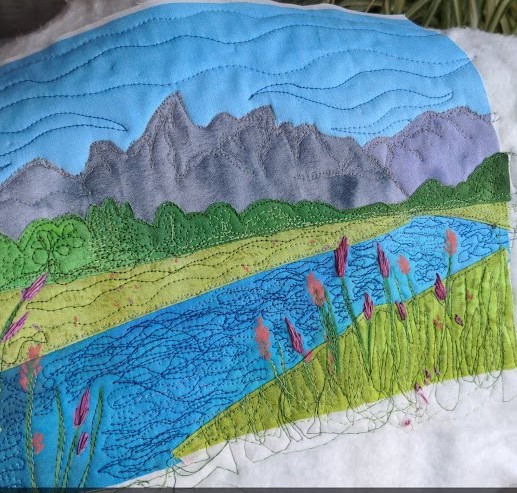
I started off with the applique quilting kit and added some free motion quilting for details. It was really fun to work on things on a smaller canvas and be able to do details without getting overwhelmed. I also added some hand embroidery for the flowers because I wanted them to pop out 🙂
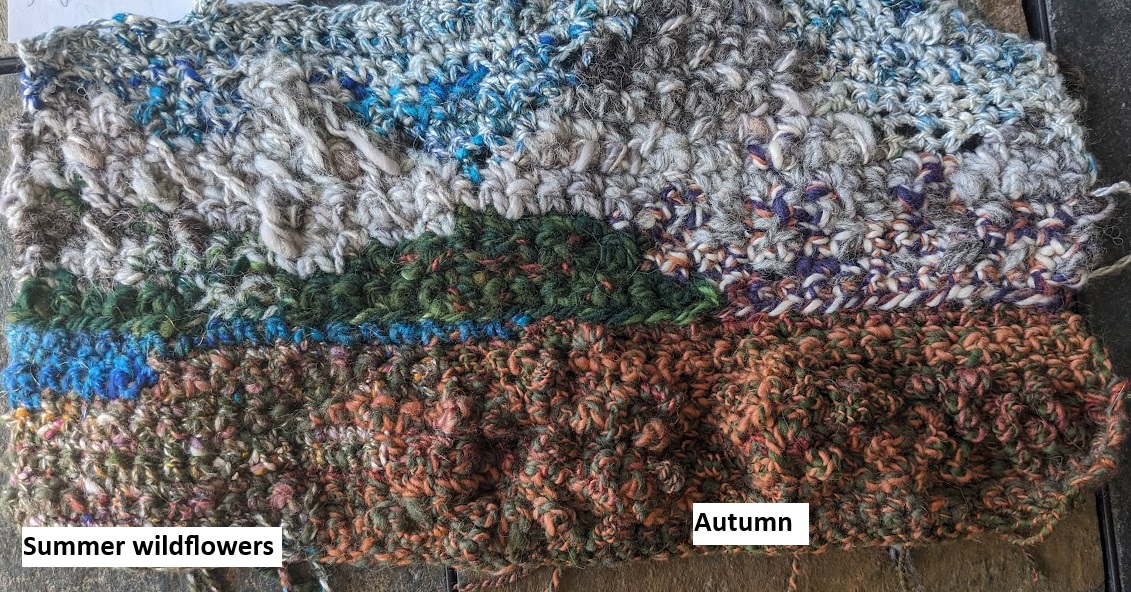
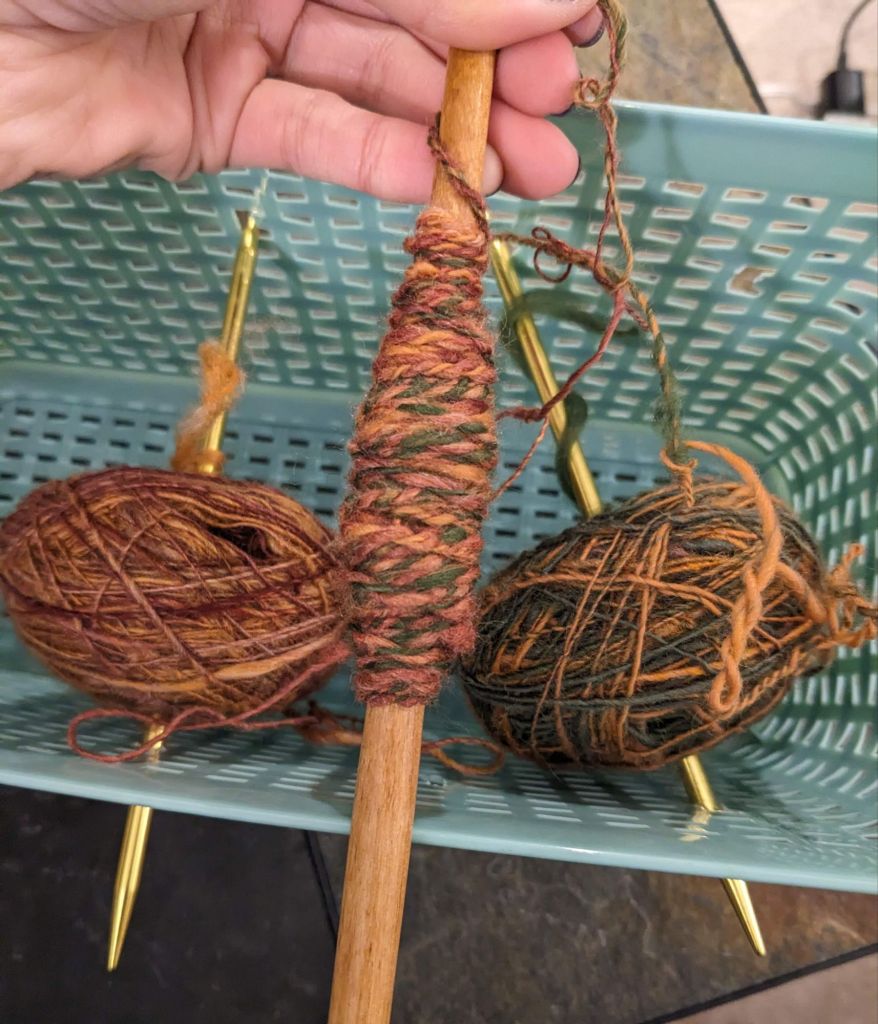
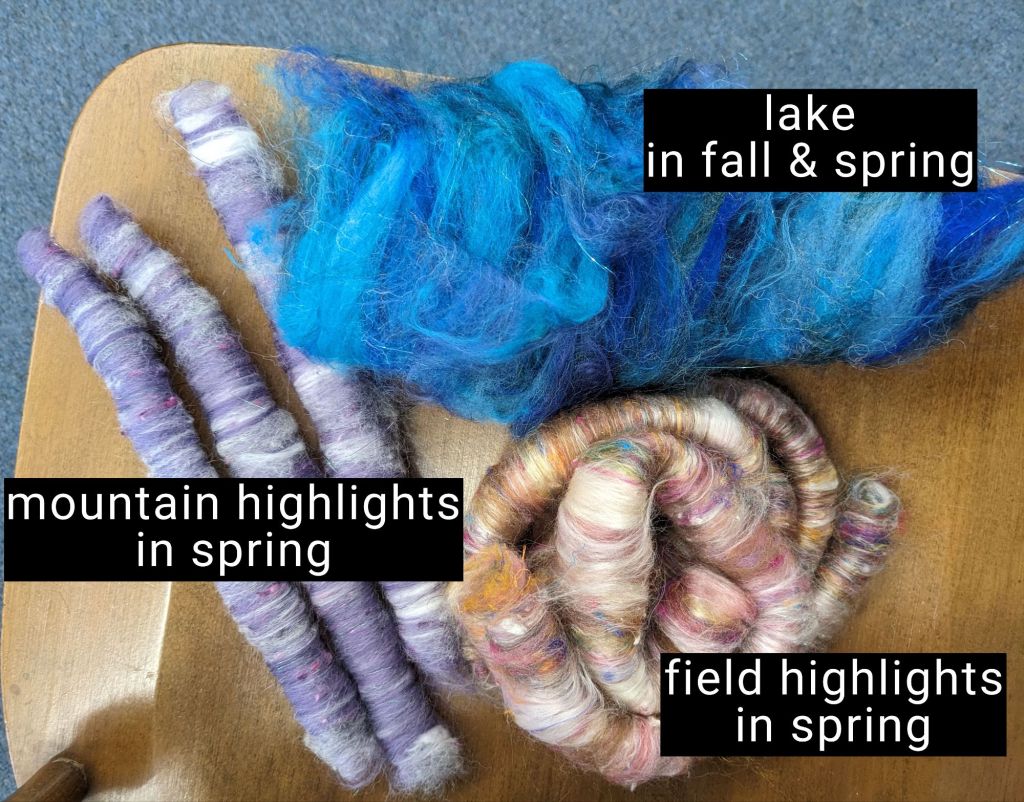
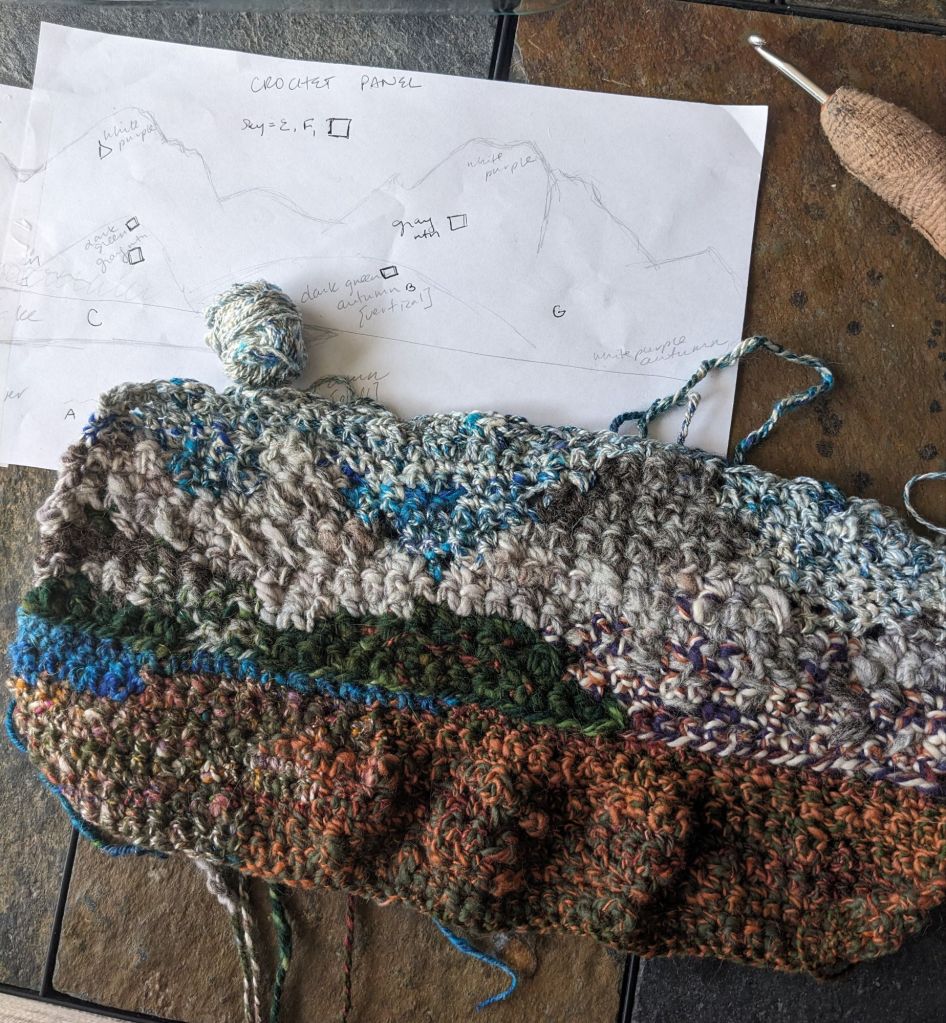
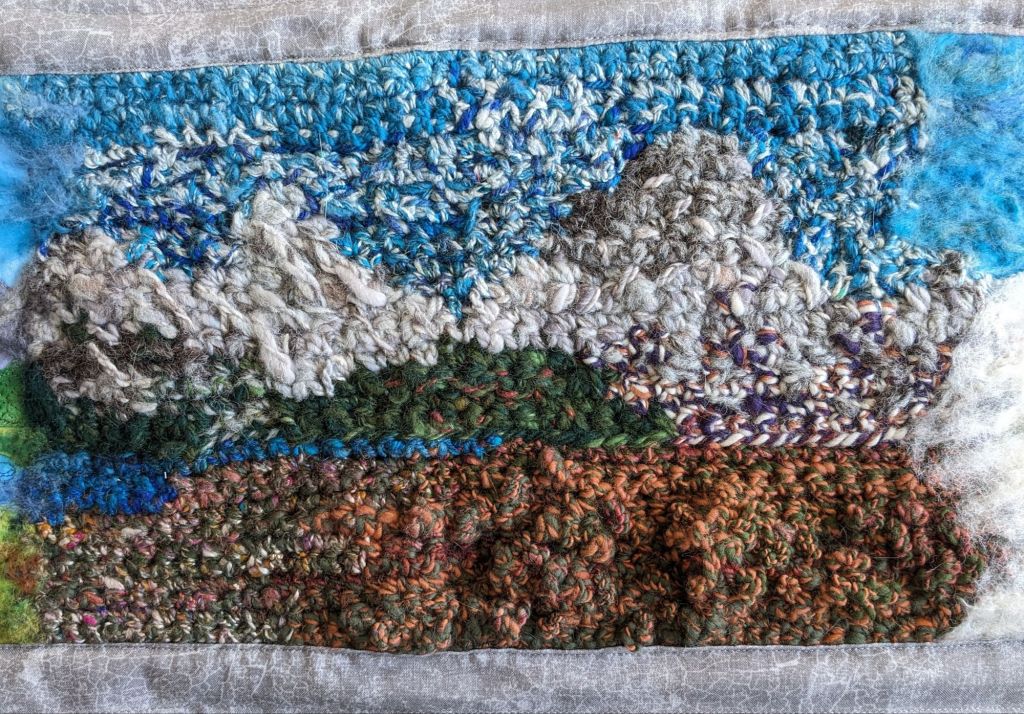
My first instinct for the next panel was to use crochet, using some funky colorwork and textured stitches. I spun up yarn for each of the different sections: sky, lake, mountains of various white and gray mixes, and autumn-y colors for the sagebrush.
a yarn I called “Autumn” 🙂
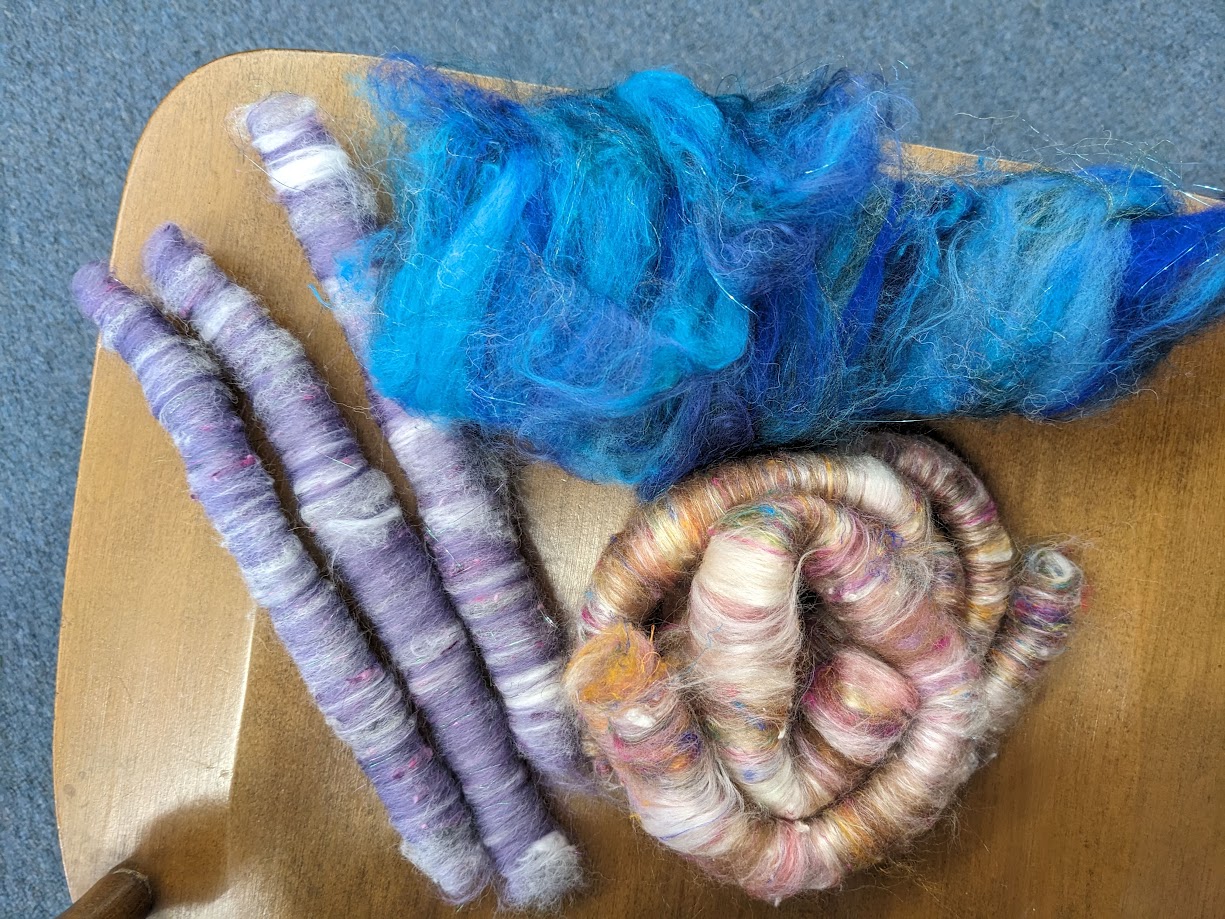
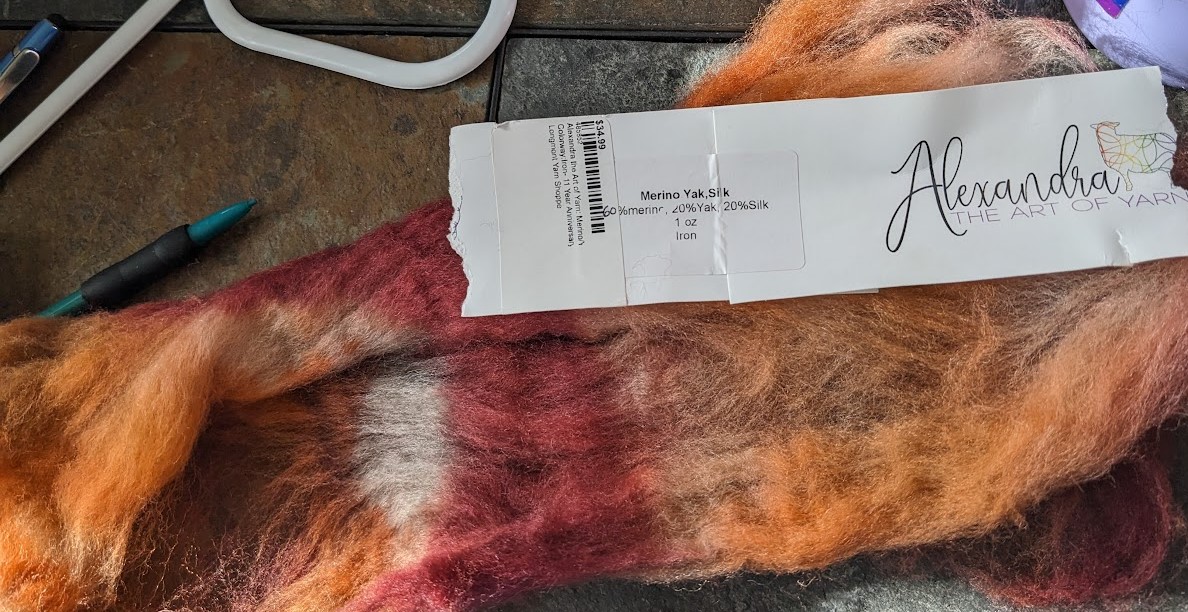
fiber blends I made at a workshop
I added some weird bumpy parts and extra stitches in the foreground to mimic the fluffy sagebrush 🙂
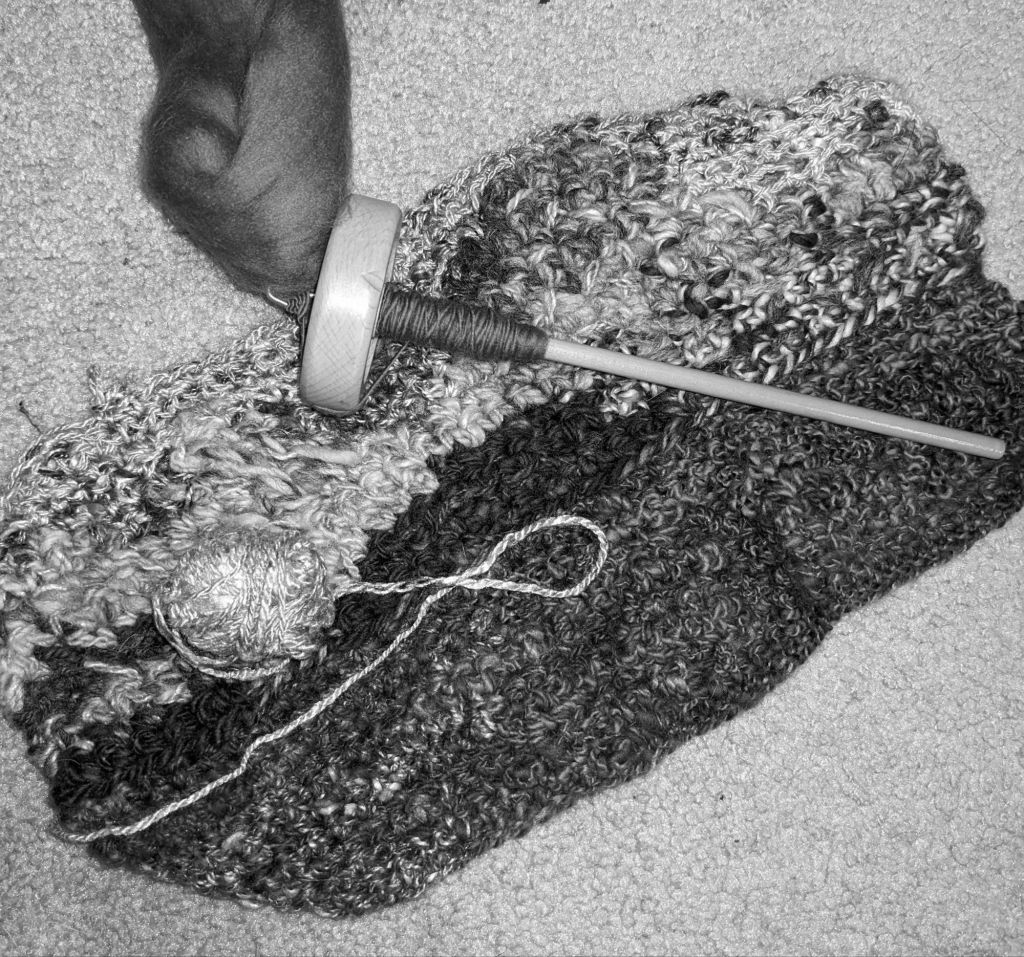
I struggled with getting enough contrast between the gray of the mountains and the blue of the sky, so I took a black and white picture and spun up some darker blue that I could blend into the existing sky.
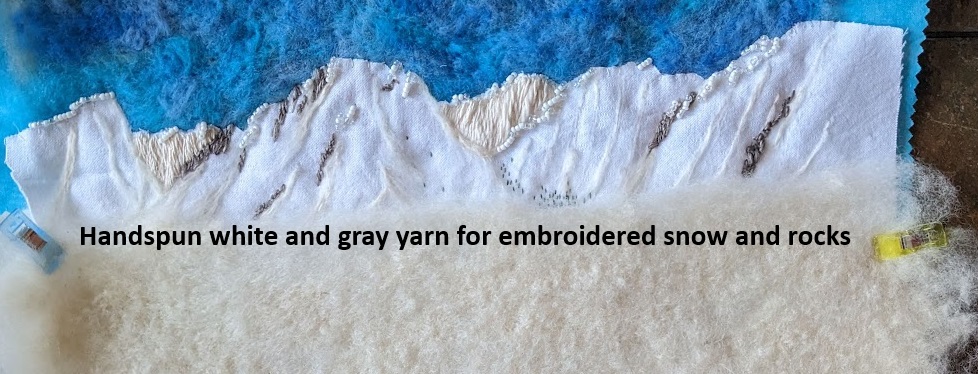
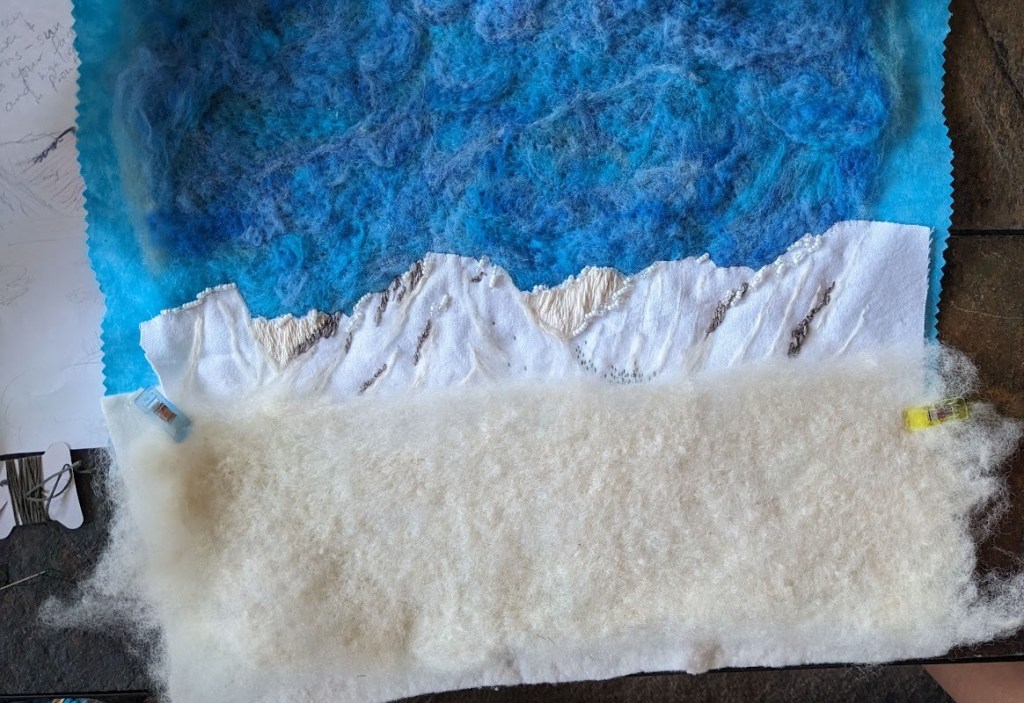
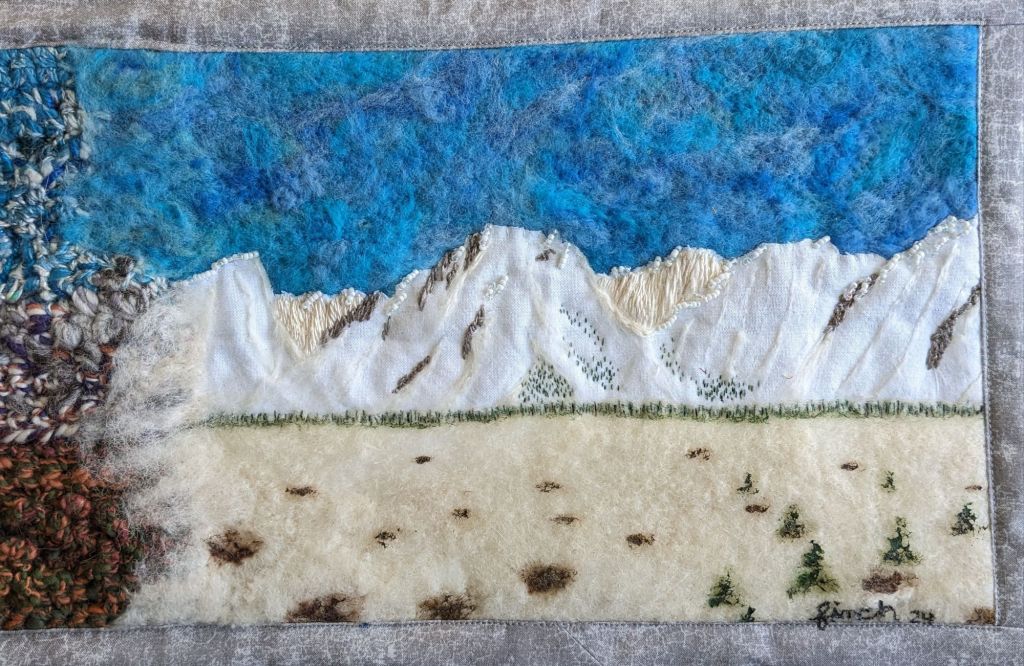
After I had summer and autumn, I struggled with what to do next. I knew I wanted an embroidery panel and a woven panel, but I wasn’t sure which should be spring and which should be winter. I talked it over with a friend and we decided that the crochet shouldn’t be next to the weaving, since they have similar textures and detail resolution. So winter was embroidery! I started by needle felting the background sky and foreground, to automatically add texture that I didn’t need to stitch. I spun some thin yarns of cream/white and rock gray, which was a fun challenge to spin thin enough and consistently enough that I could use it with a normal sized needle. I also thought some beads would be fun for the shininess of the snow 🙂
Winter embroidery in progress
I was planning to do the winter foreground details with embroidery, but I realized I wanted to incorporate paint into this project, so I used acrylic paint to add trees, bushes, and rocks. It was difficult to paint onto the felted surface because the brush strokes pick up fibers from the felt, but it was doable.
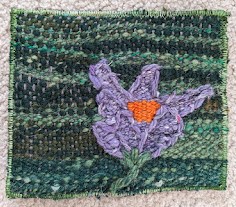
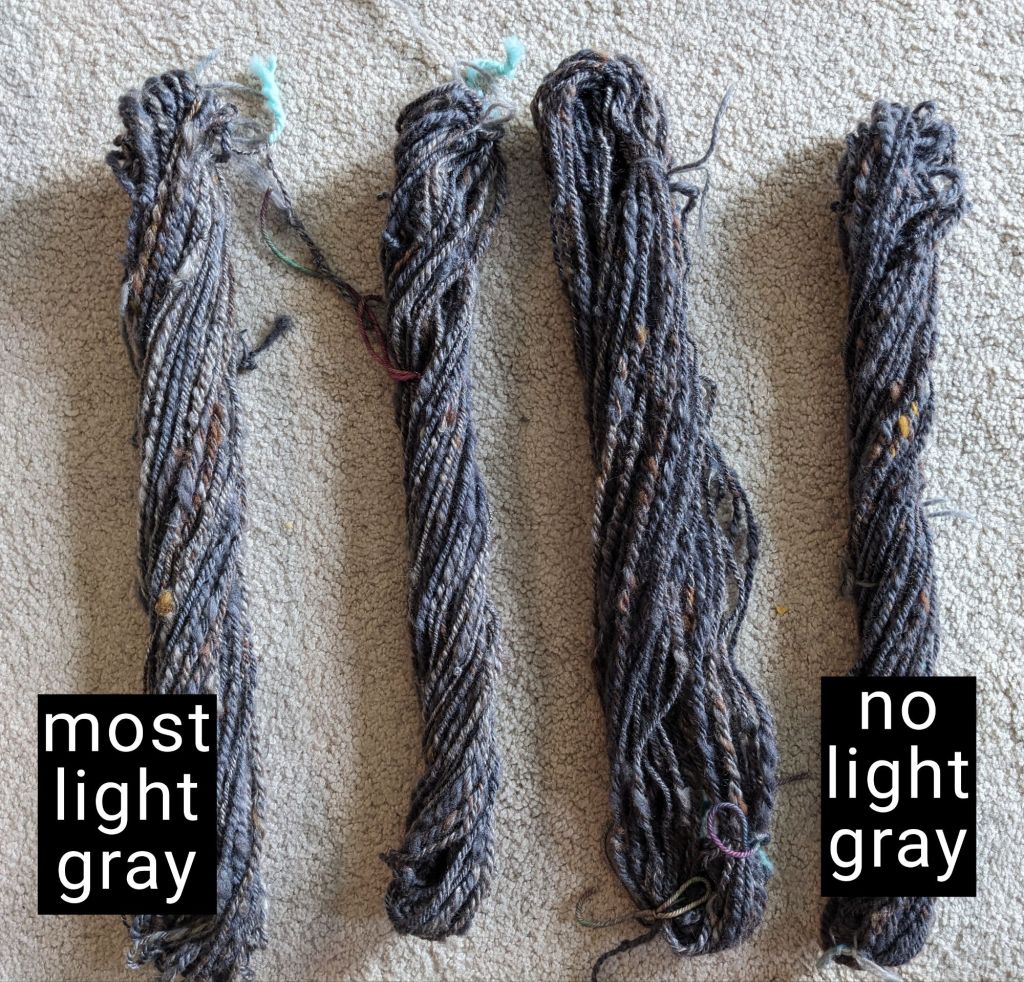
Then I needed a tapestry weaving for spring. Just like with the crochet, I only used yarns I’ve spun, and spun up a few more just for this. I had four different mountain-y layers that I wanted to represent, so I spun four different grays with graduated levels of light gray. In hindsight, I made WAY TOO MUCH, but it was fun. And now I have more mountain gray for later.
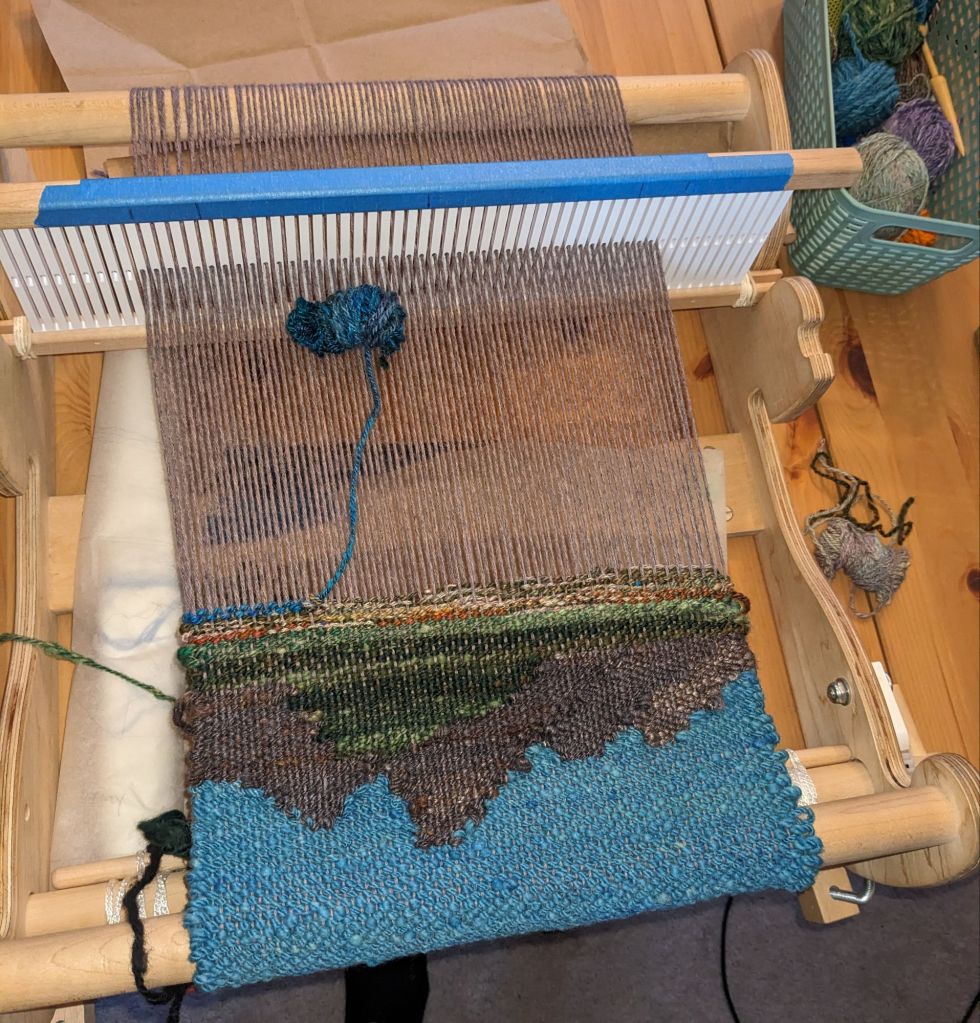
I took a weaving class where we were able to take the loom home for a week, and capitalized on this moment to (a) finish this project, and (b) see if this type of loom is useful for tapestry weaving (that’s not its primary use). It was a successful proof of concept for using this type of loom for tapestry, but I think I’m going to pursue purchasing a different kind of loom for some more flexibility and growth potential.
upside down on the loom! I wove the sky first because I knew it would be a solid weaving instead of doing a bunch of color changes… and weaving upside down made me less stressed about getting it perfect
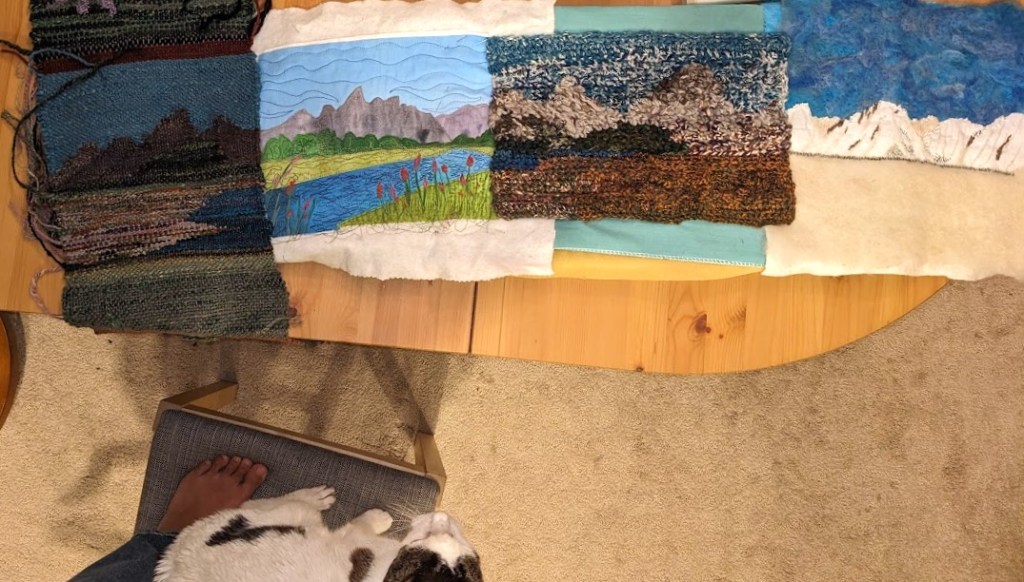
this is the first time I saw all four panels together, they’re pinned to a mini ironing board 🙂
I used some extra fiber to needle felt over the seams between the panels, and then did a border to secure everything together.
My main challenge in finishing this up was getting the crochet to sit the way I wanted it to. I ended up gluing it to some stiff scrap fabric to stabilize it, which went well…. Until I started sewing the fabric frame on. Hot glue and sewing machine needle is not a good pair. 🙂 But I took my time, learned my lesson, and got it done.
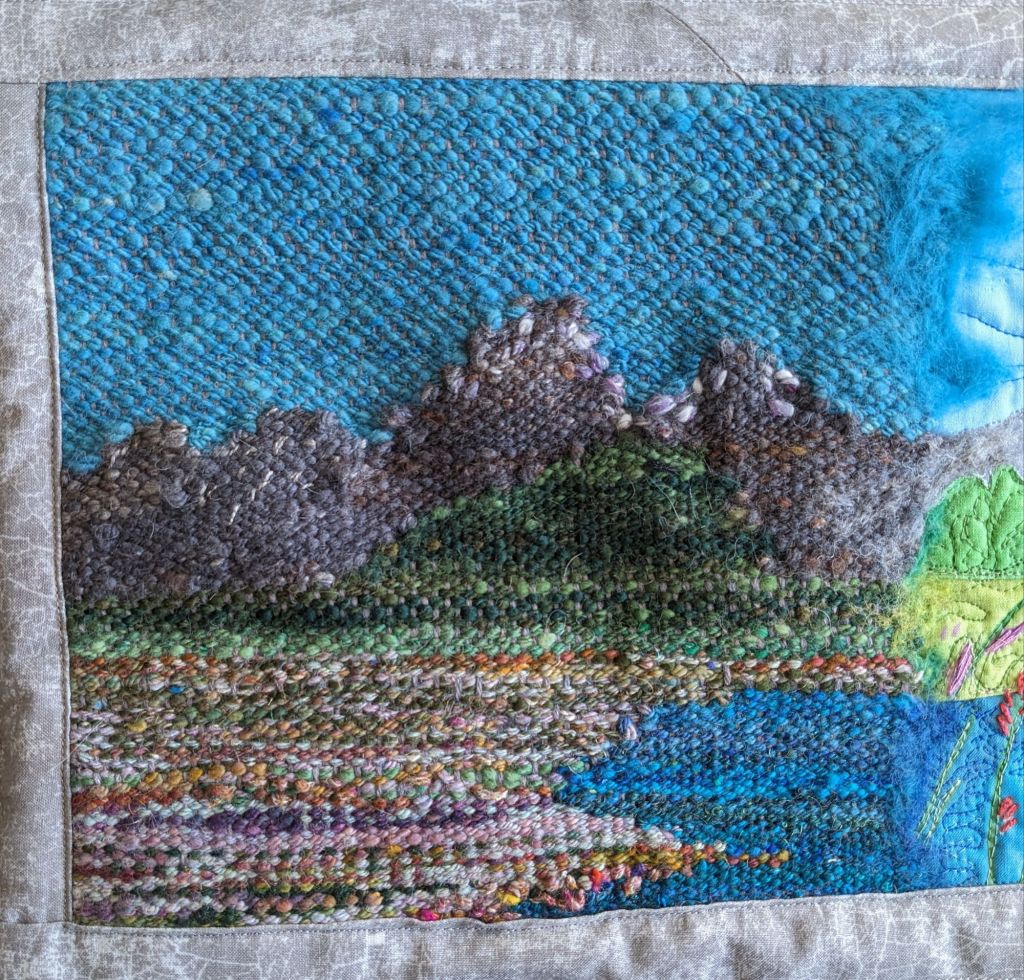
Spring! My favorite part to make was the field in the foreground, I improvised all of the color changes and just had a good timeSummer 🙂 so glad I bought this and kicked off this project. I really like the wavy lake quilting with variegated threadAutumn! I really enjoyed spinning all this yarn, and I have a lot left over for future projects. I’m pretty happy with the shading on Mt. Moran (on the right) and the weird bumpy texture of the sagebrush in the foreground Winter! I really like the contrast between the line-y-ness of the embroidery and the fuzzy needle felting, and I proved to myself that I can spin yarn to embroider with🙂 finished
Been making a lot of different kinds of things! I’m reaching into multimedia and experimenting with new materials and techniques. 🙂
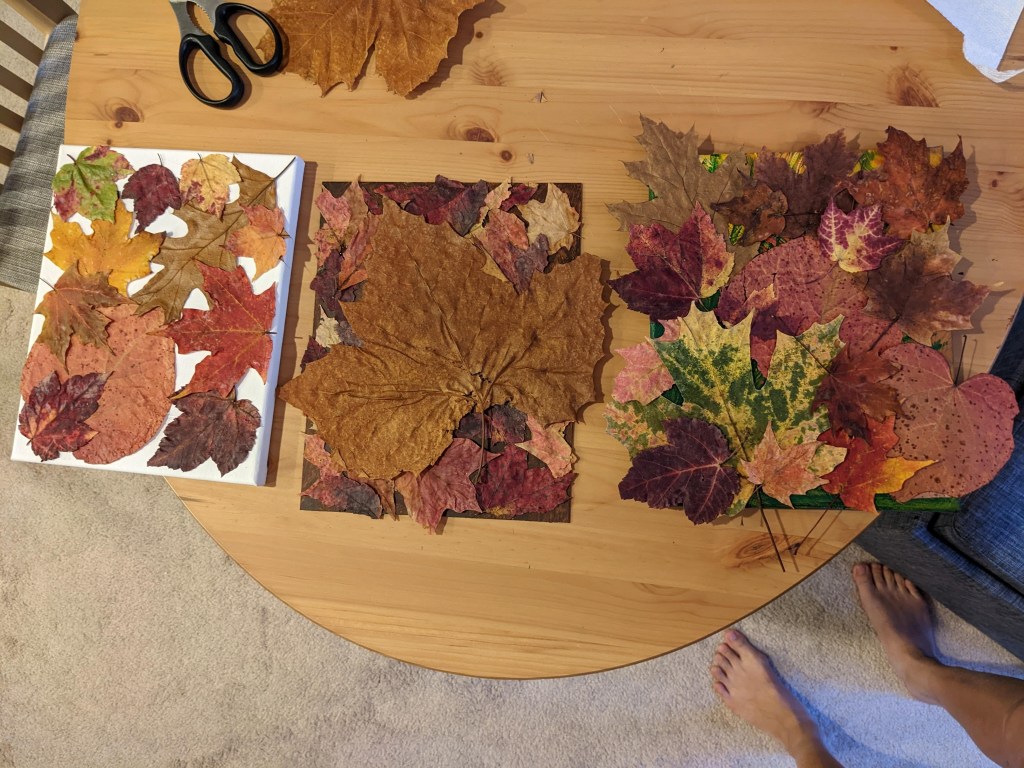
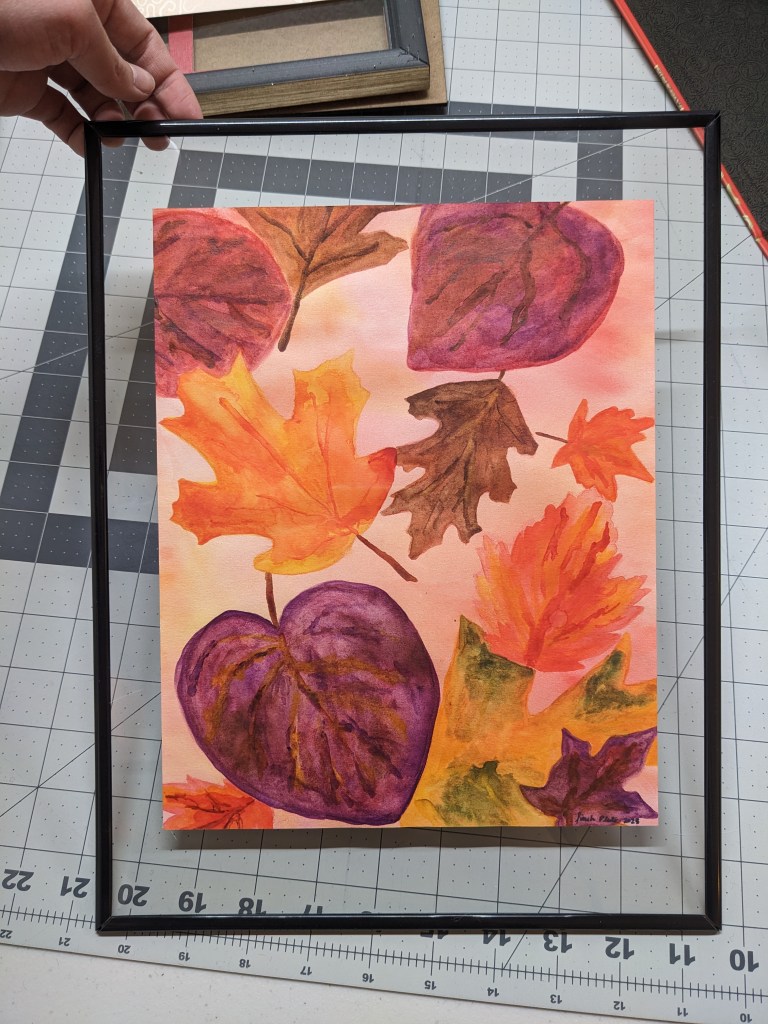
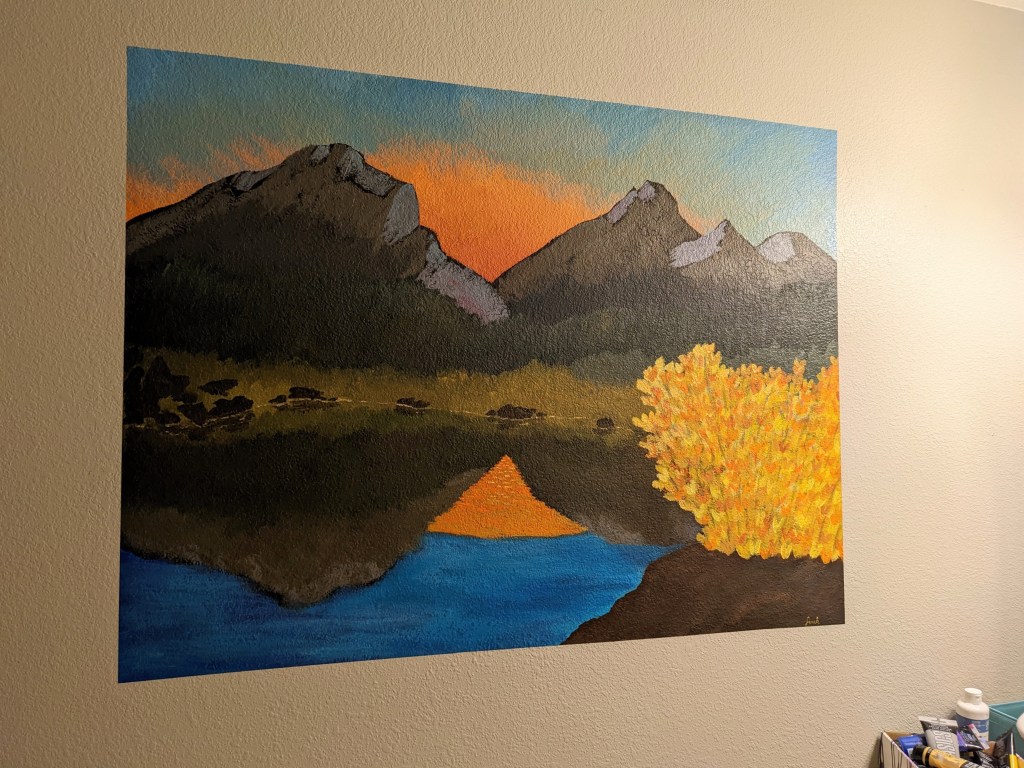
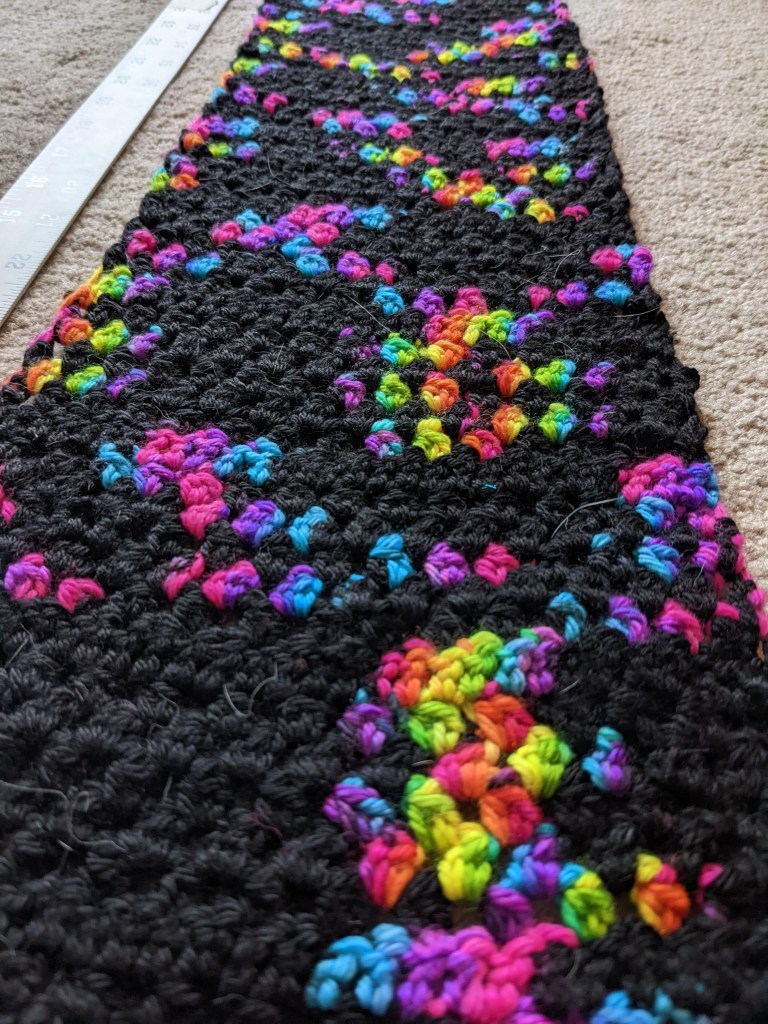
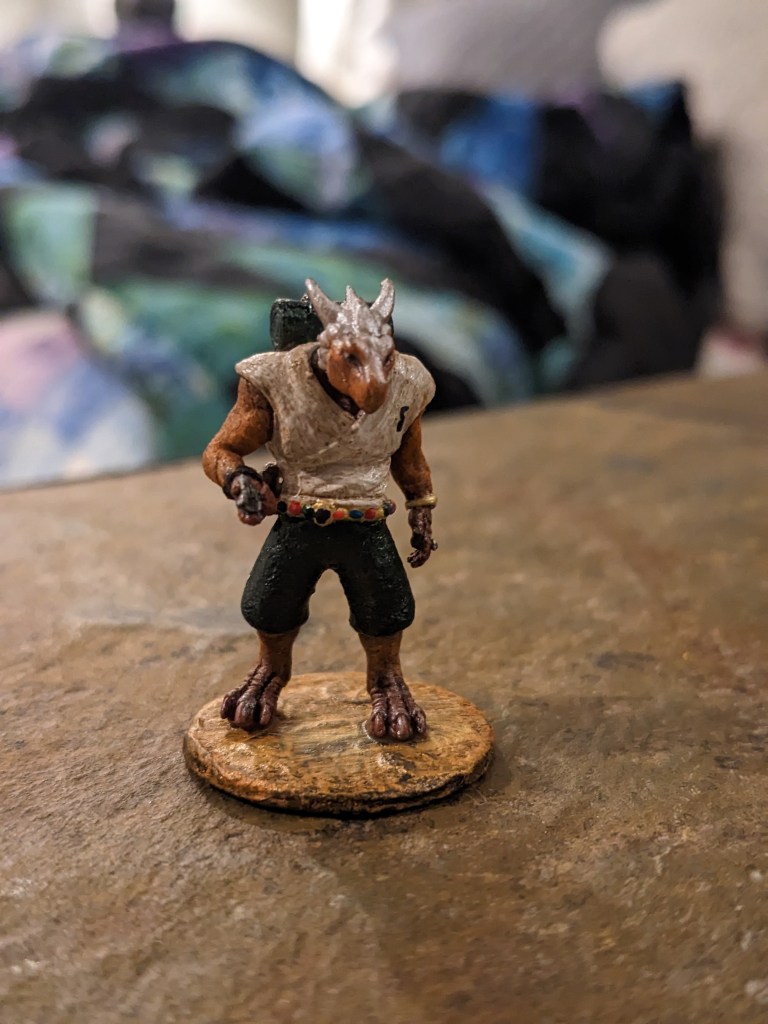
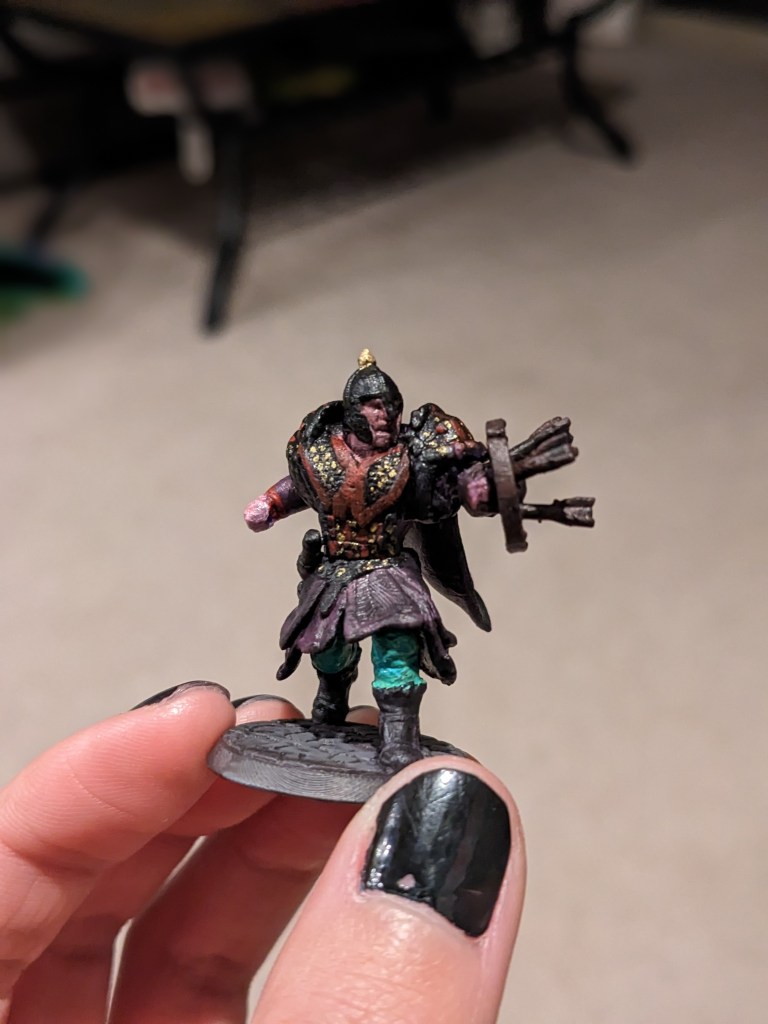
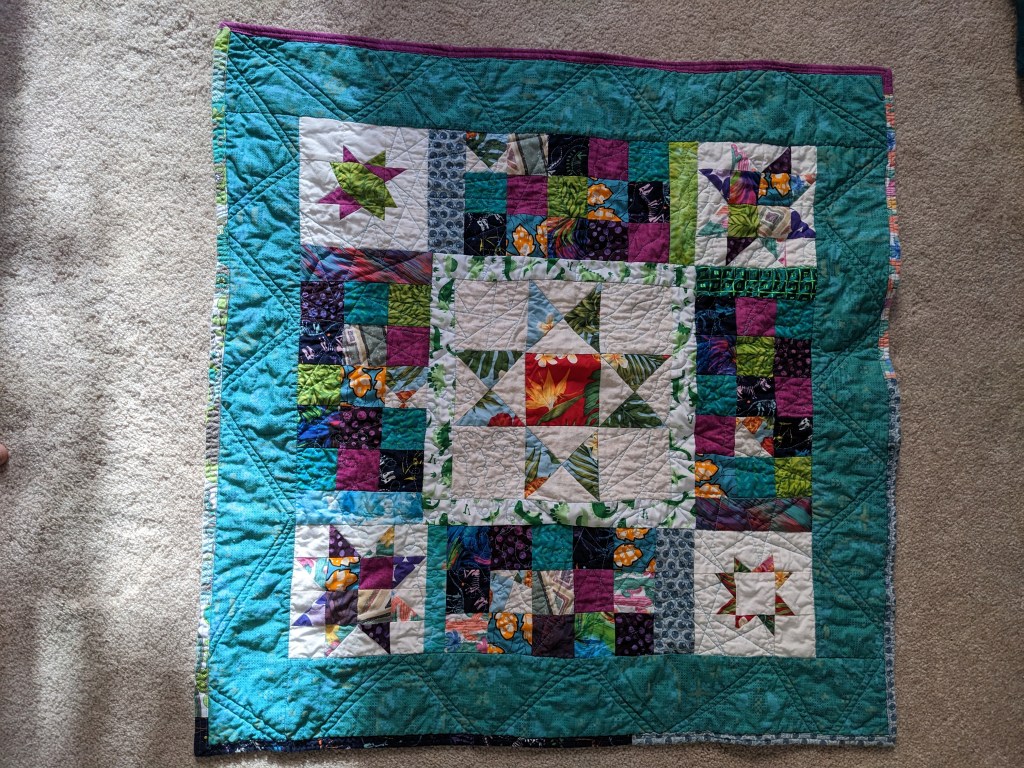
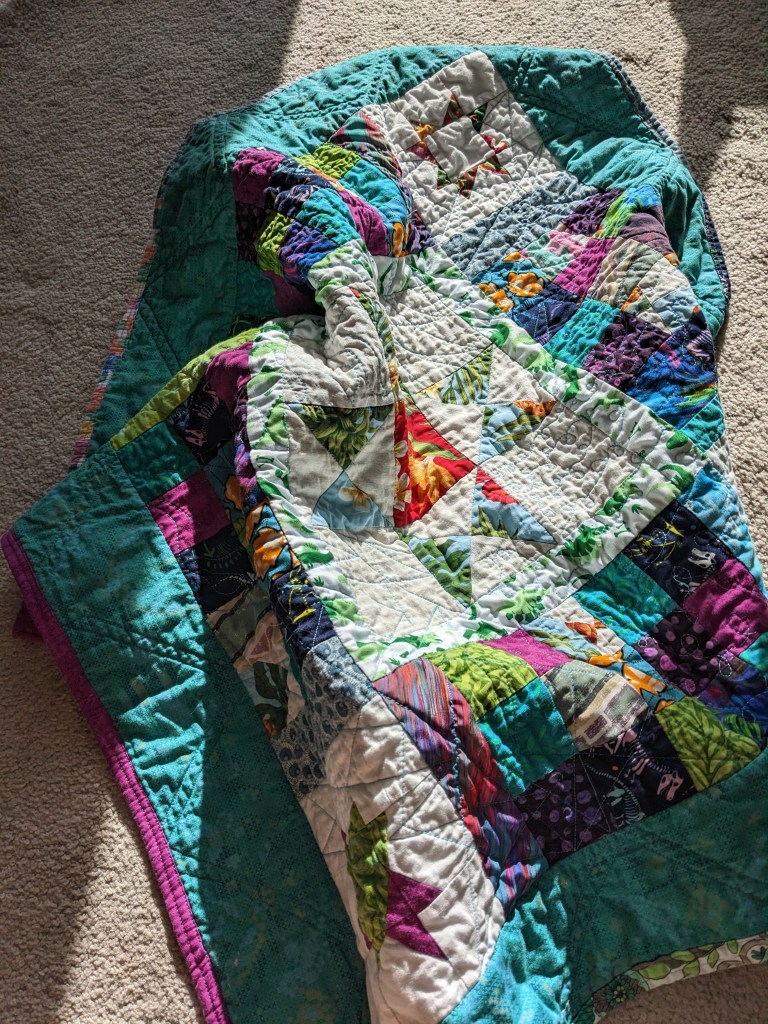
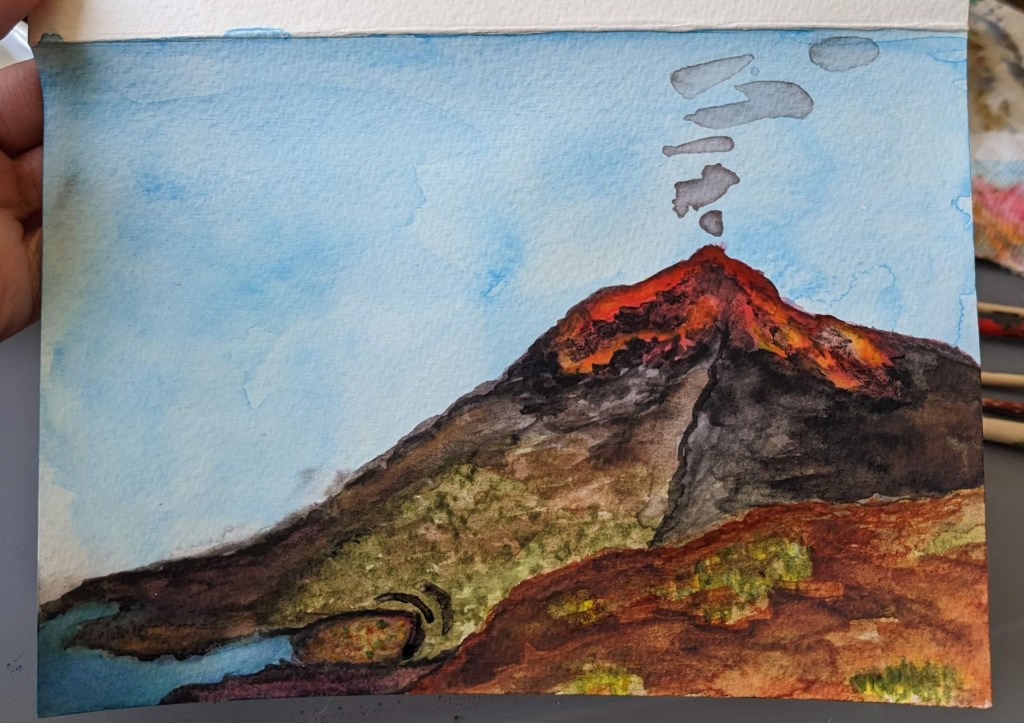
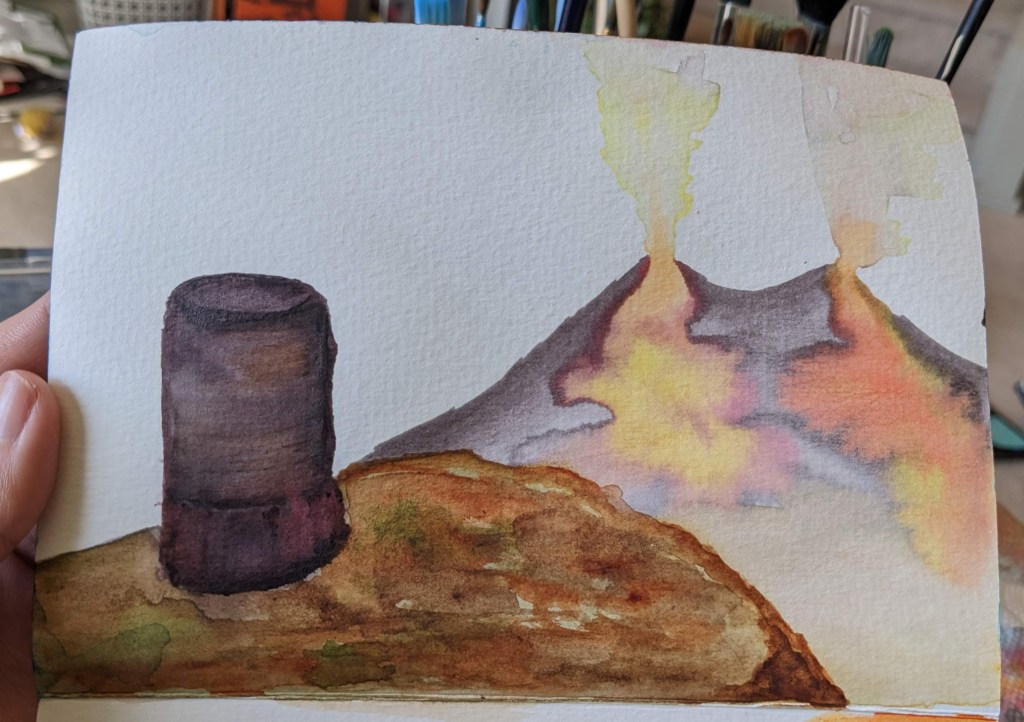
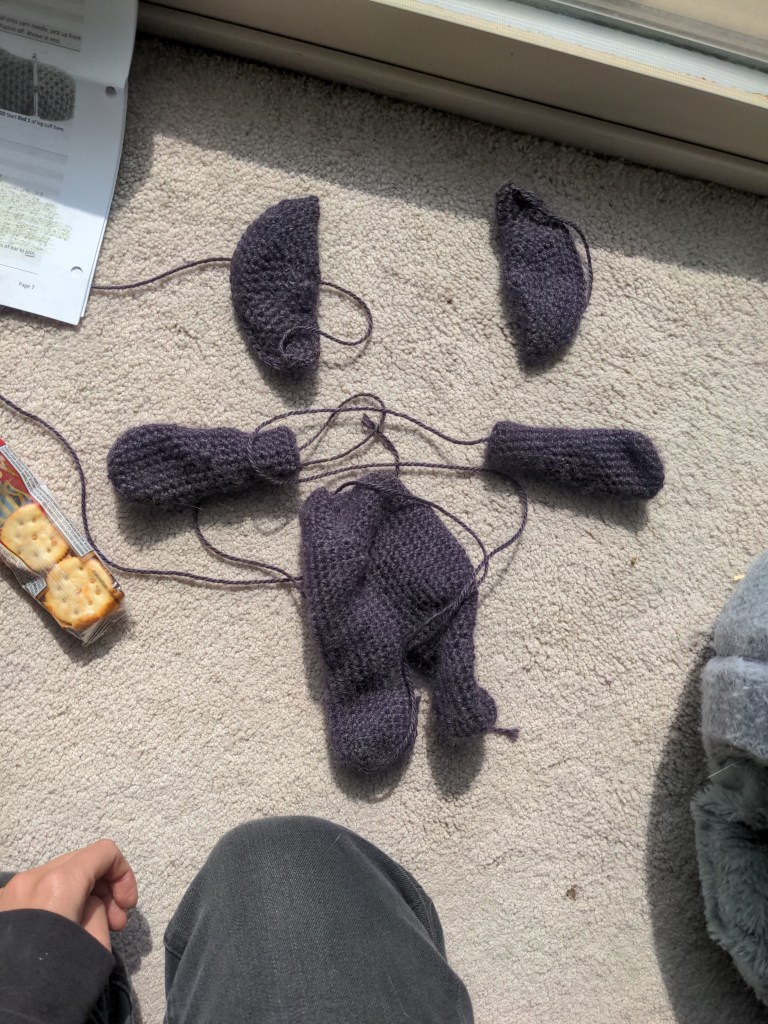
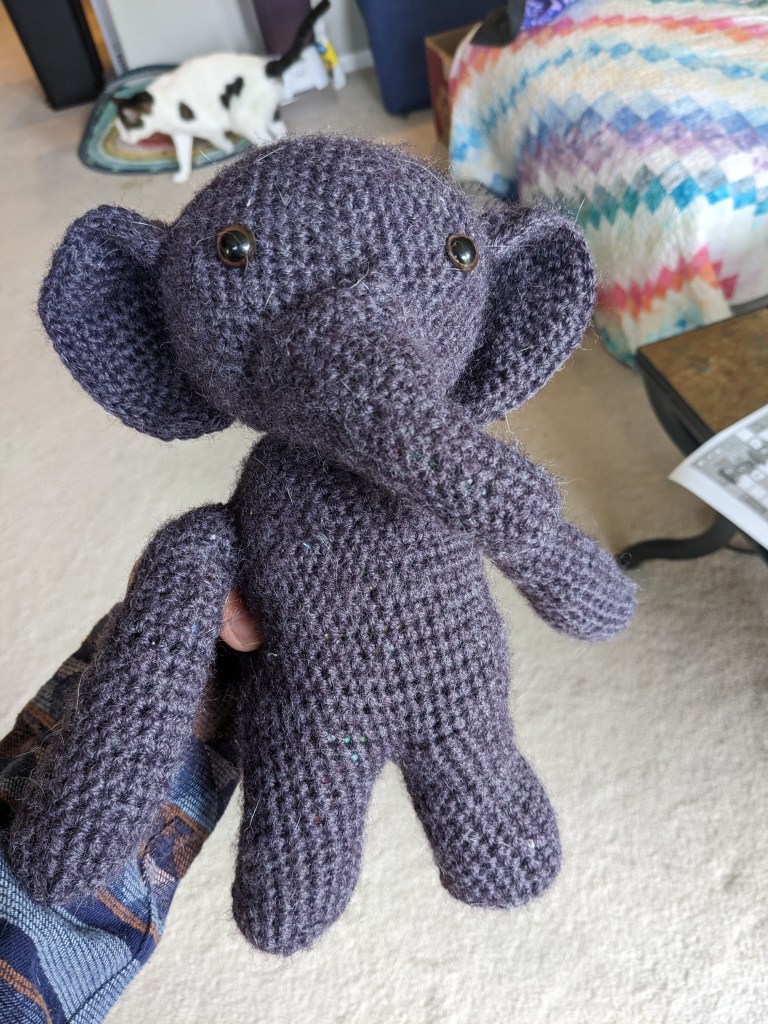
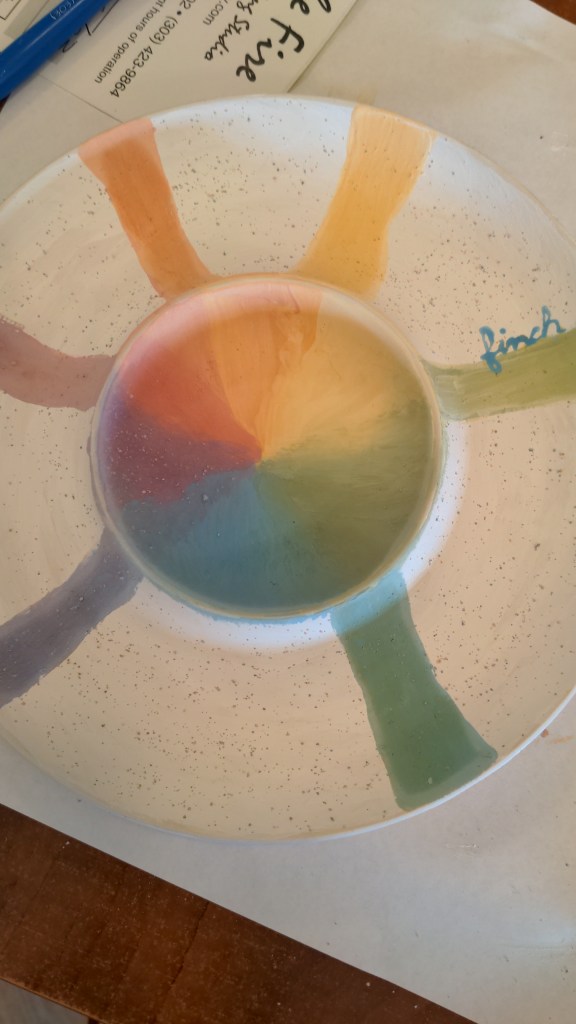
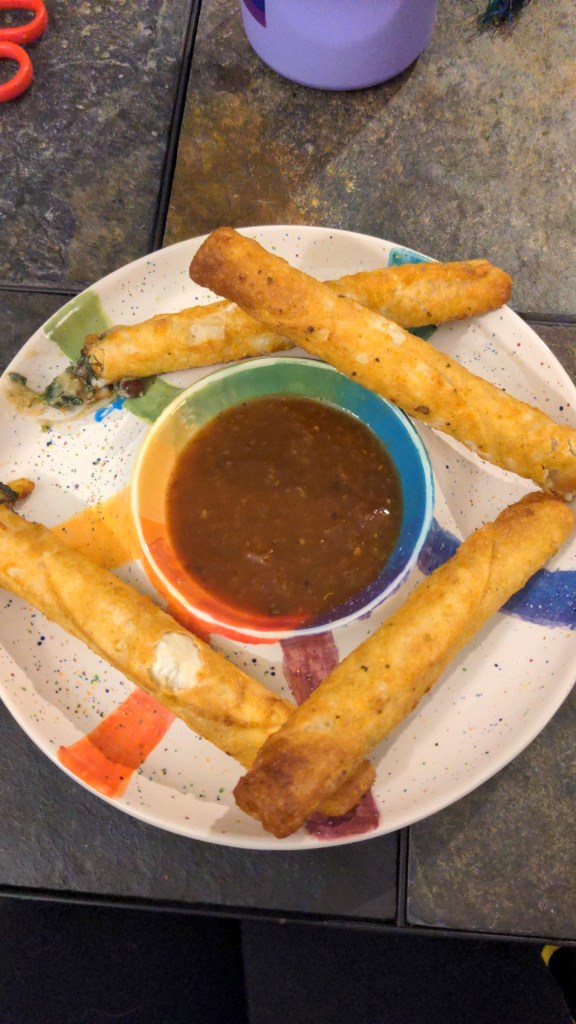
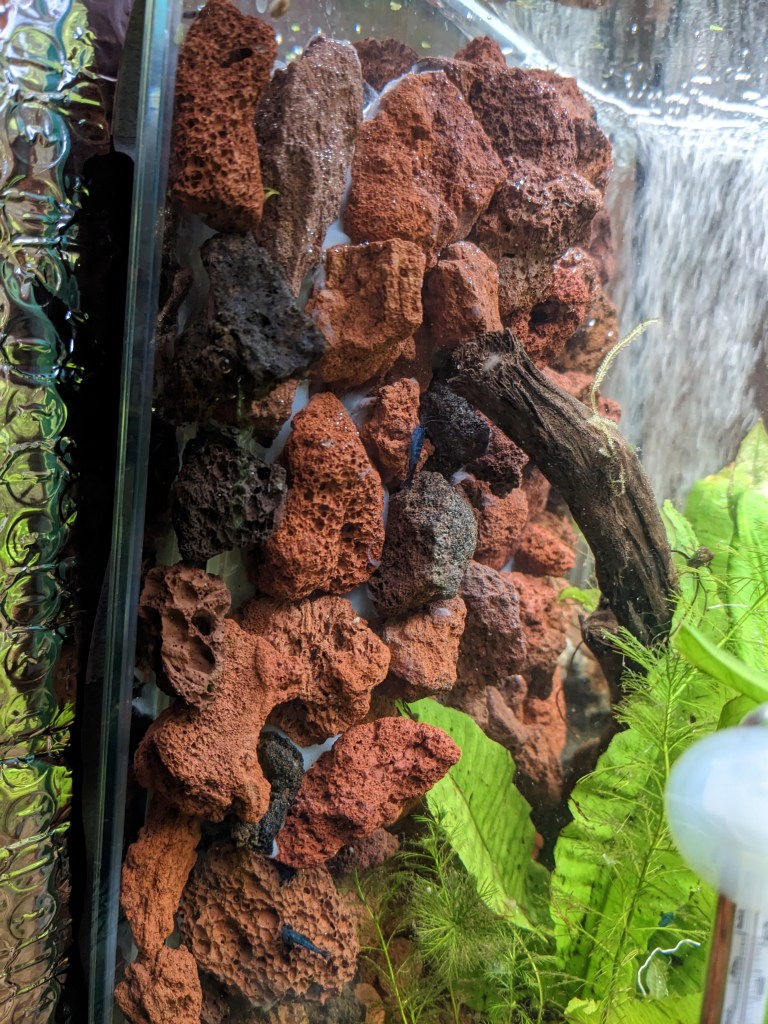
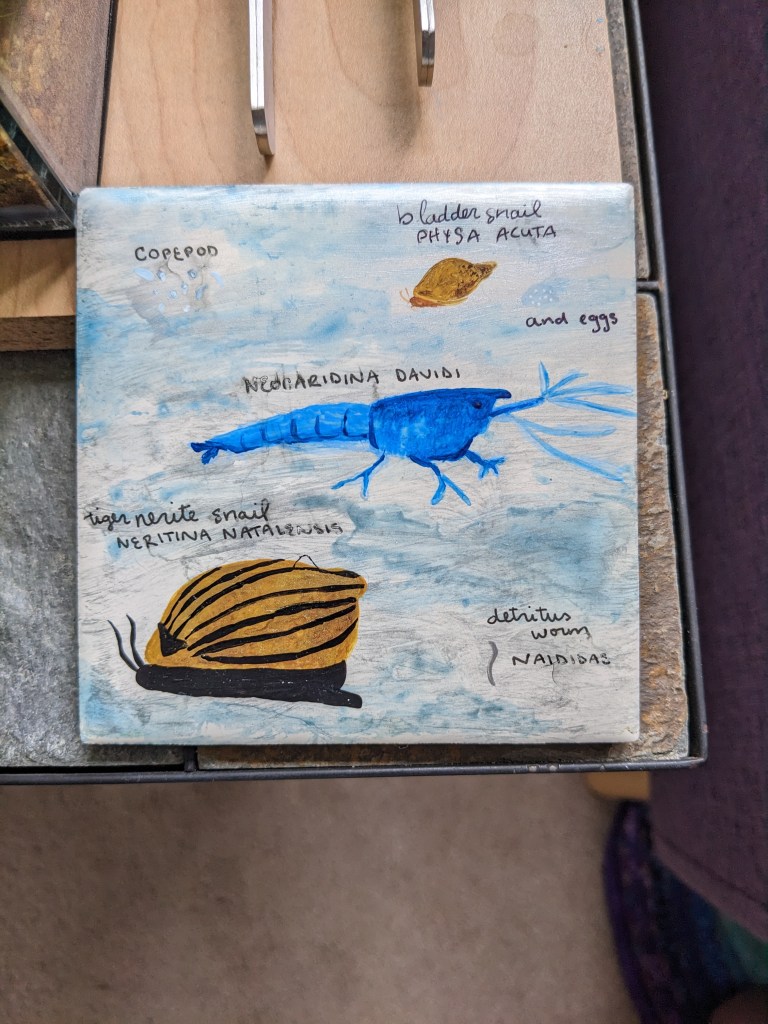
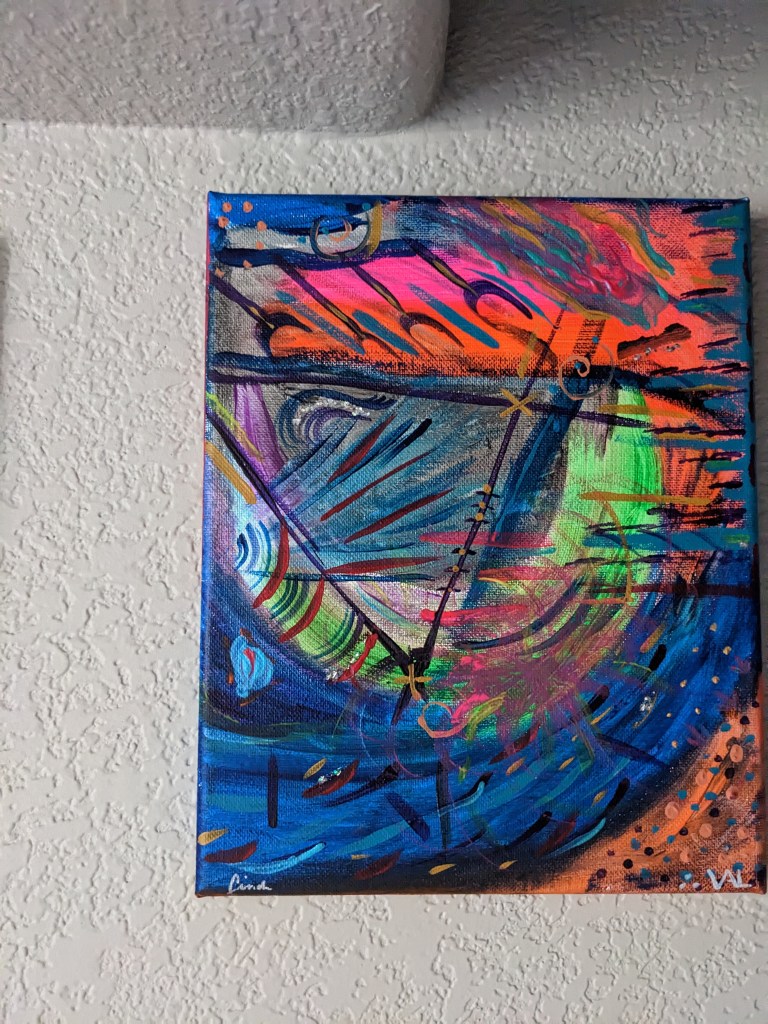
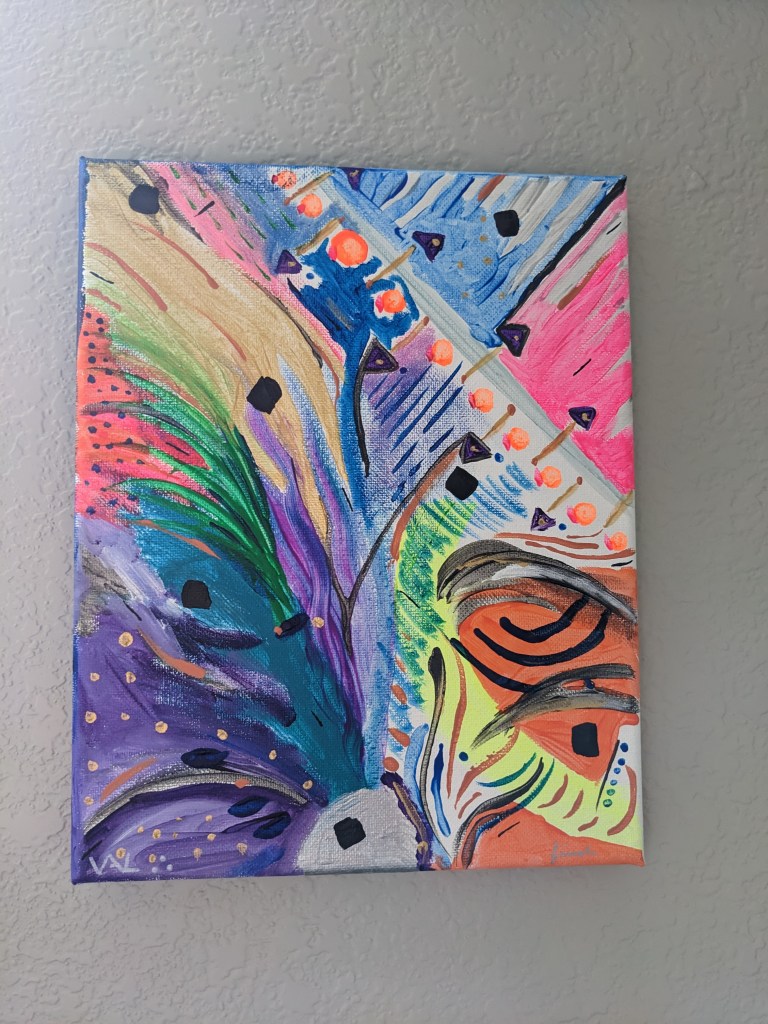
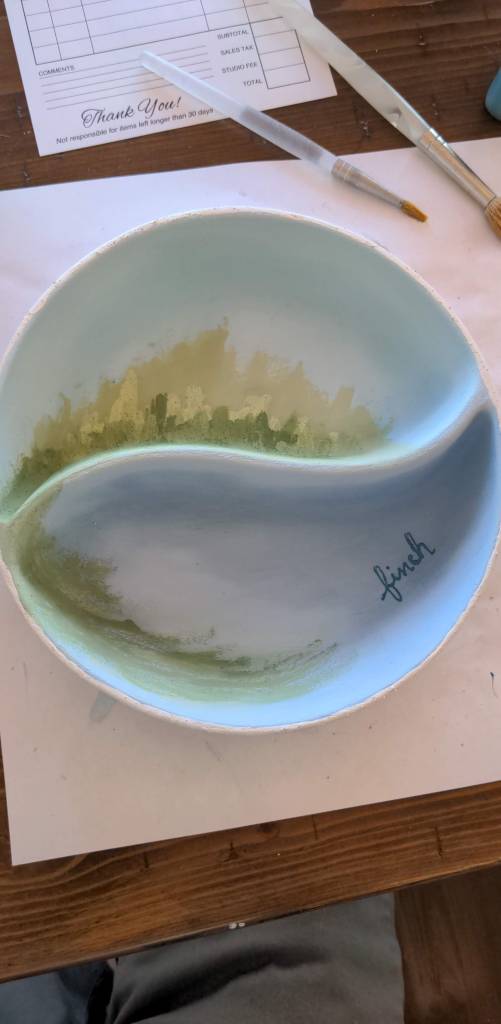
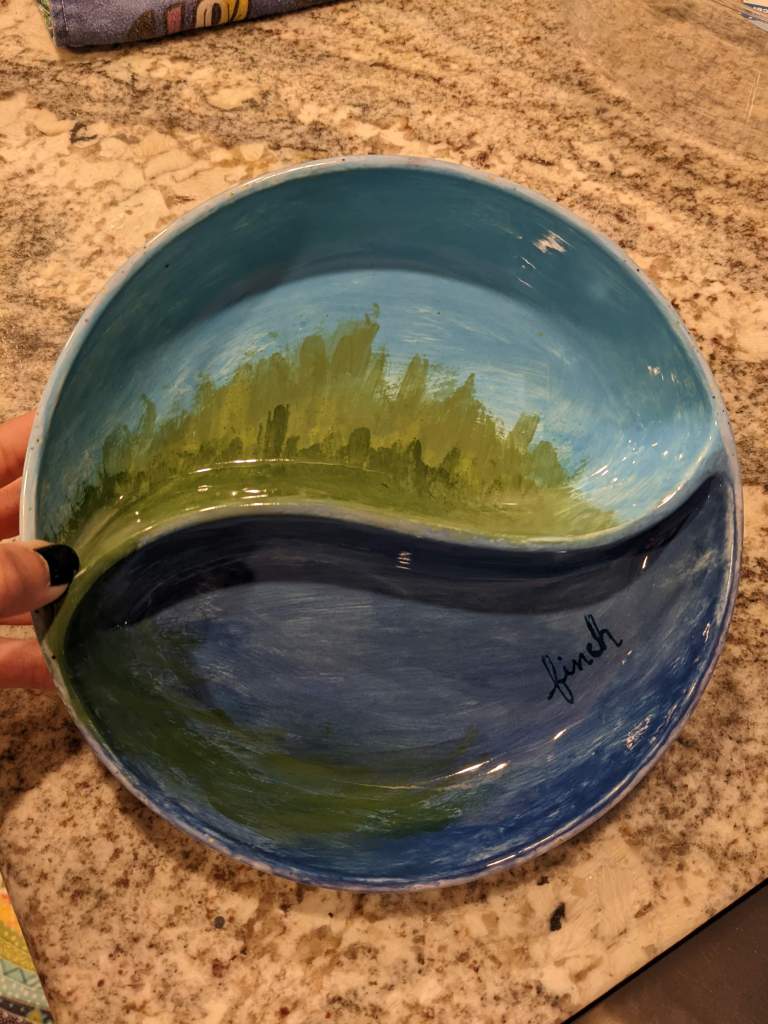
Leaf collages with my cousinLeaf watercolor for my auntAdded the reflection to this muralRainbow crochet scarf for my friendPainted the mini for my character in Dungeons & Dragons (dragonborn sorcerer named Taro)Company sent me this mini on accident, painted it to look like a solider from the Xi’an terracotta excavationBaby quilt for my friendsBaby quilt for my friendsVolcano for a D&D settingVolcanoes and observatory for D&D settingCrochet elephant partsCrochet elephantPottery painting beforeAnd after, featuring taquitosLava rock wall for my shrimp tankSpecies sign for my shrimp tankAcrylic paint collab with my friendAcrylic paint collab with my friend
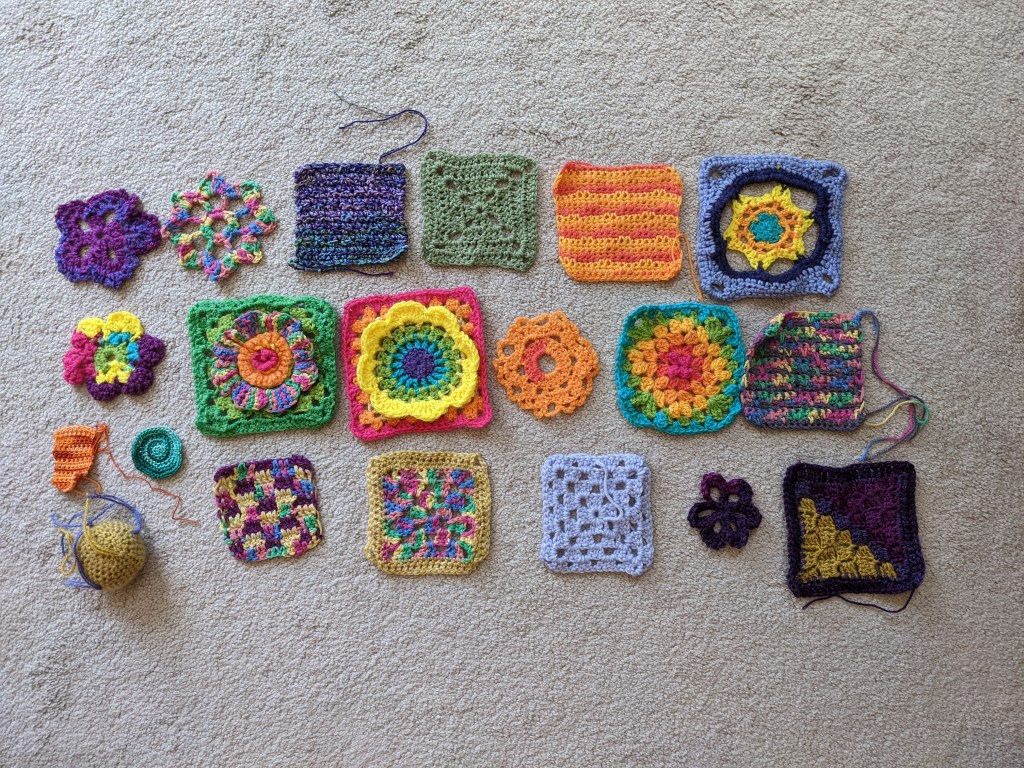
After the most recent quilt I made, I didn’t spend much time in the sewing room for various reasons, and picked up crochet! I’ve been trending towards things that are more “by hand”, like English paper piecing, and embroidery, so it made sense for me to get into crochet or knitting. I chose crochet because it seemed easier to get into and has the capability for making three dimensional objects.
I started off as I usually do, on YouTube and with books from the library, and immediately gave myself tendonitis from crocheting for too long and holding the yarn too tight. Now, I try to cap crochet sessions at two hours, or else I’ll go on crocheting forever and hurt my hands and wrists.
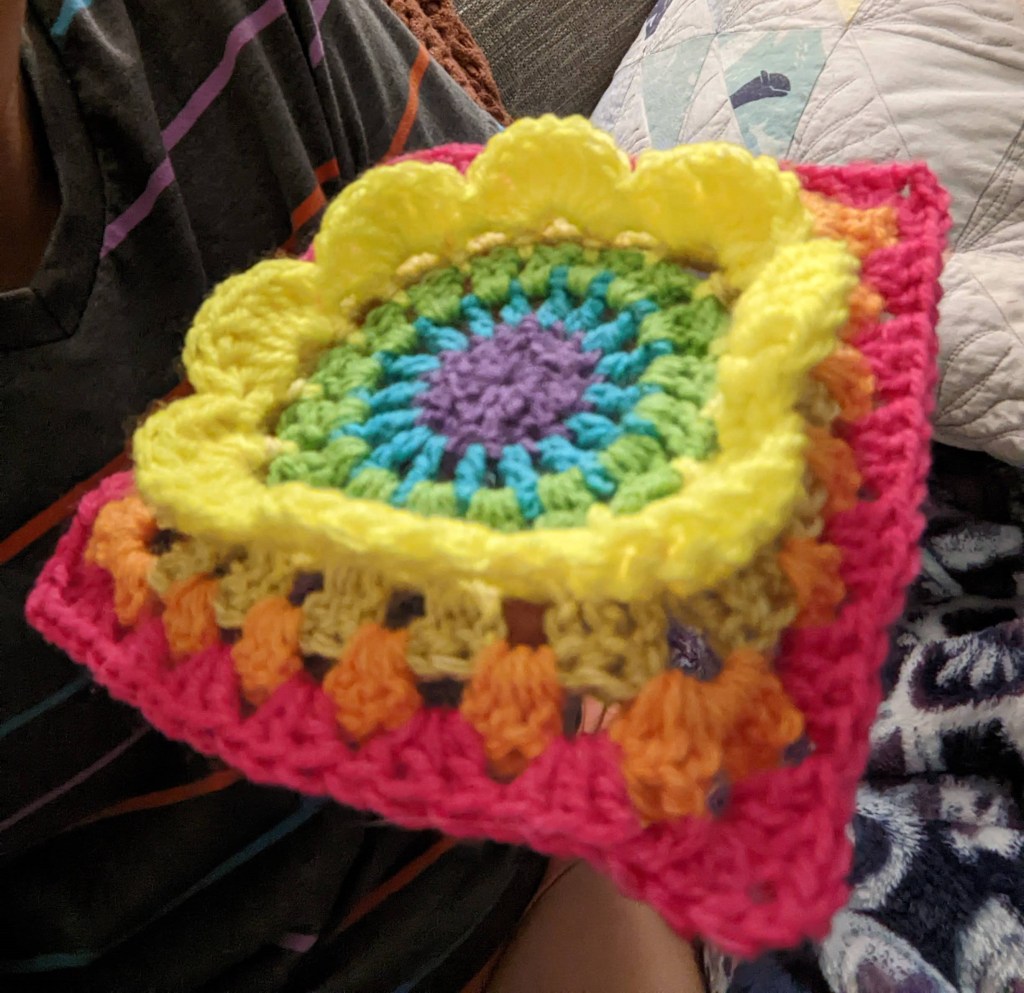
I started off with granny squares and little flower motifs 🙂 and a catnip ball for my friendly helperThe three dimensional granny squares were really fun 🙂
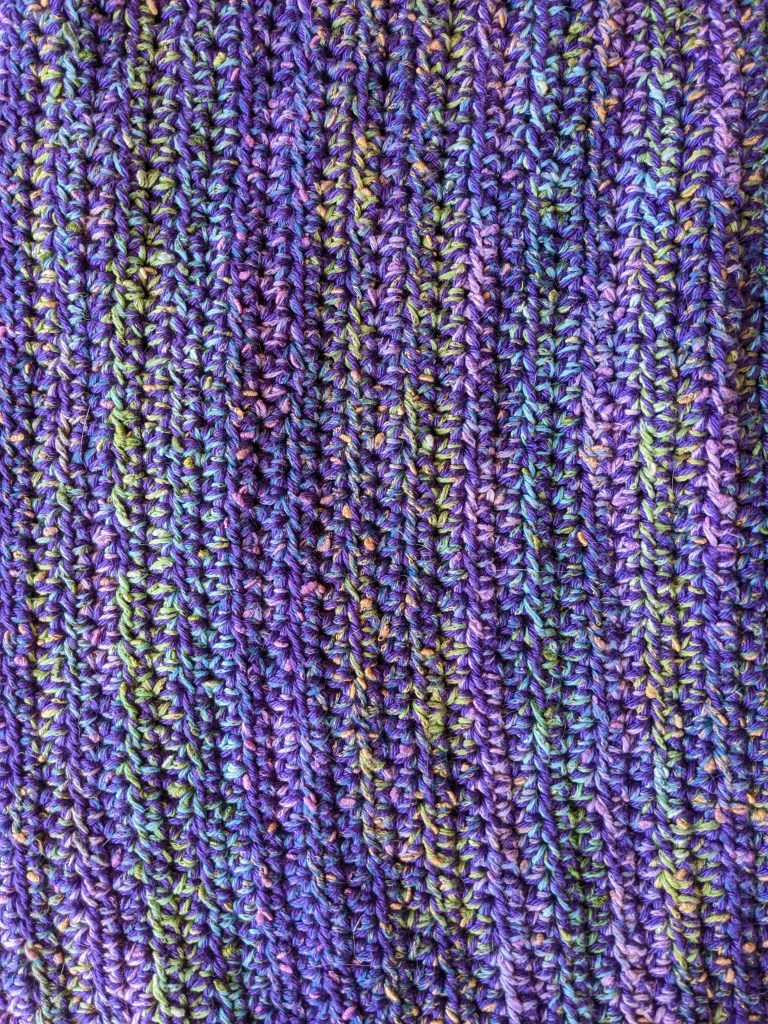
Then I wanted to make a sweater, but a super easy one. This sweater is based off a blanket sweater pattern, which consists of a rectangle with the corners folded in to make sleeves 🙂 I used two yarns at the same time to create a textured/blended effect.
Closeup for the texture 🙂
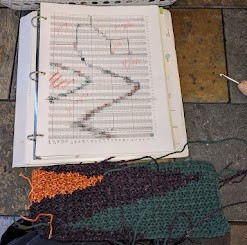
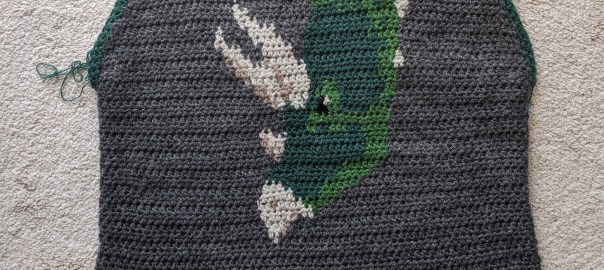
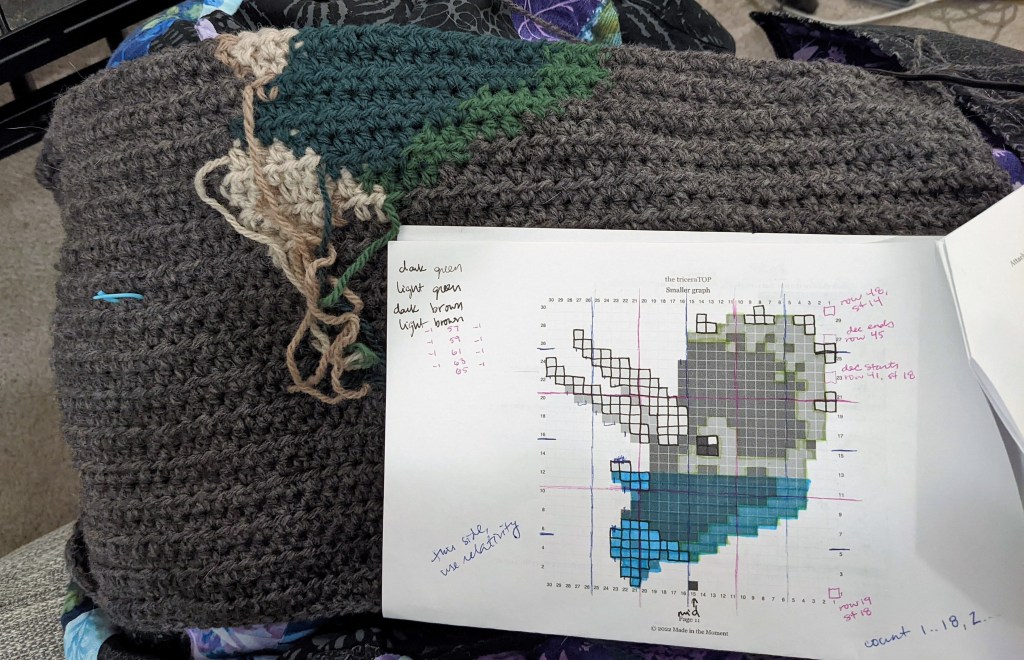
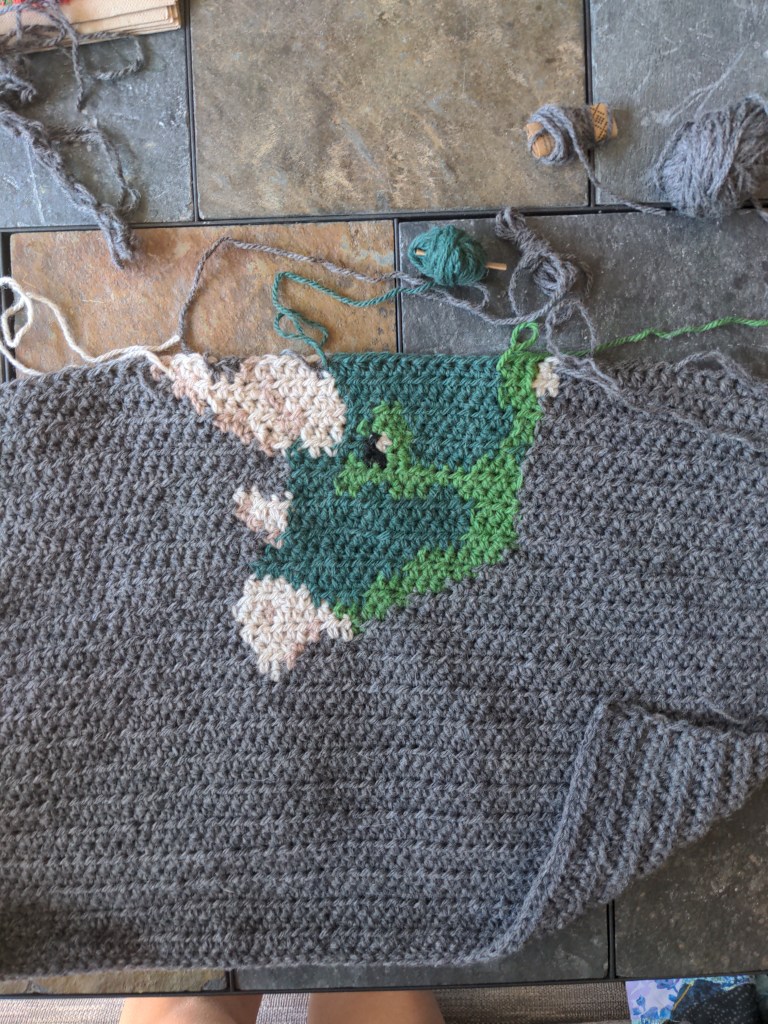
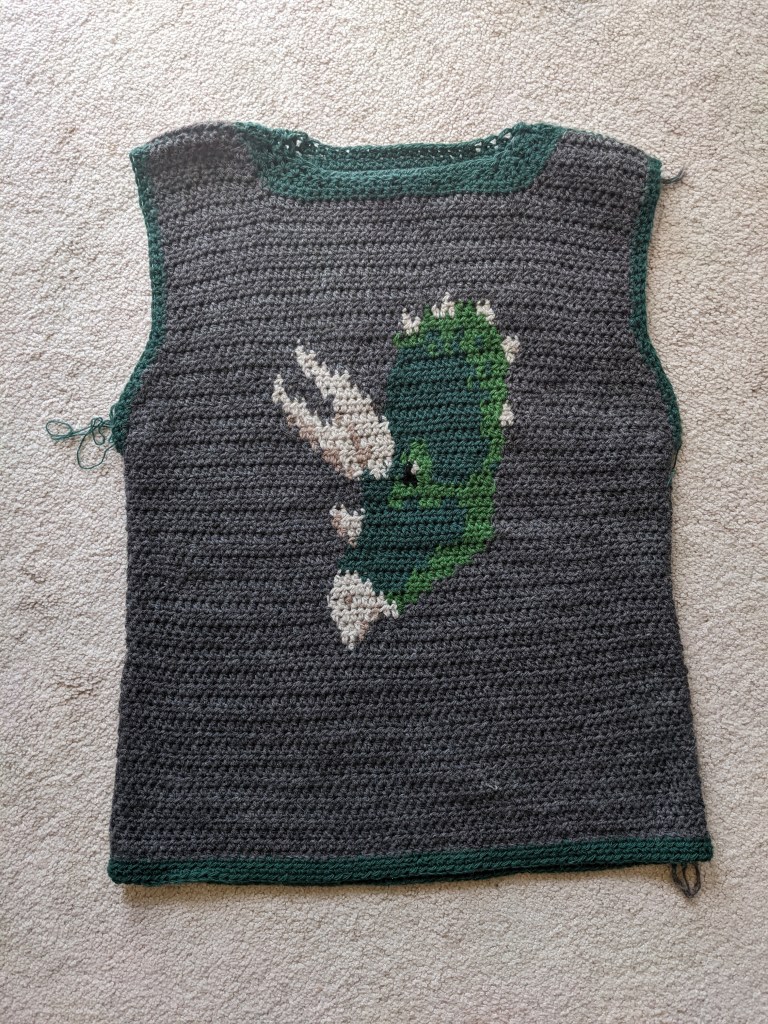
Then I saw this TikTok and needed to make my own dinosaur sweater, so I did. The pattern was really straightforward, and it’s made to measure instead of a set row/stitch count. I started doing the back and (a) got nervous I would run out of yarn, which I did not and I have a lot left over, and (b) thought it would be fun to do some color changes for the aesthetic and for practice. Practicing the color changes and learning how different techniques (such as tapestry and intarsia) create different looks was very helpful in planning and executing the front. Also, now I know that I can crochet any colored design that can be made with a grid (some artists use crochet to do 8bit art, and a crazy dedicated artist is using crochet to make an early-2000s-wordart piece).
Crochet colorwork like this uses a grid to tell you what colors to use.
The color work wasn’t technically difficult, but required a lot of care to keep the different yarns in their own space and not tangled. I tried to weave in the ends as I went, but then I had to undo some of it because I forgot to adjust for the arm holes, and that didn’t go very well. After that, and in the future, I’ll keep the ends loose until I’m positive that everything is correct and I don’t have to undo anything.
I didn’t do ribbing, because I don’t like it, but I think the green border does add a little something. A finishing touch.
I think crochet has reopened the door to making my own clothes because it’s more forgiving than sewing, especially with non-stretch fabric. There’s much more precision and care necessary for sewing garments, and I enjoy playing with crochet’s many textures. Plus, there’s the “by hand” aspect, which is fun and compelling for me. And I do love a good sweater 🙂
Other crafts I’ve been up to recently:
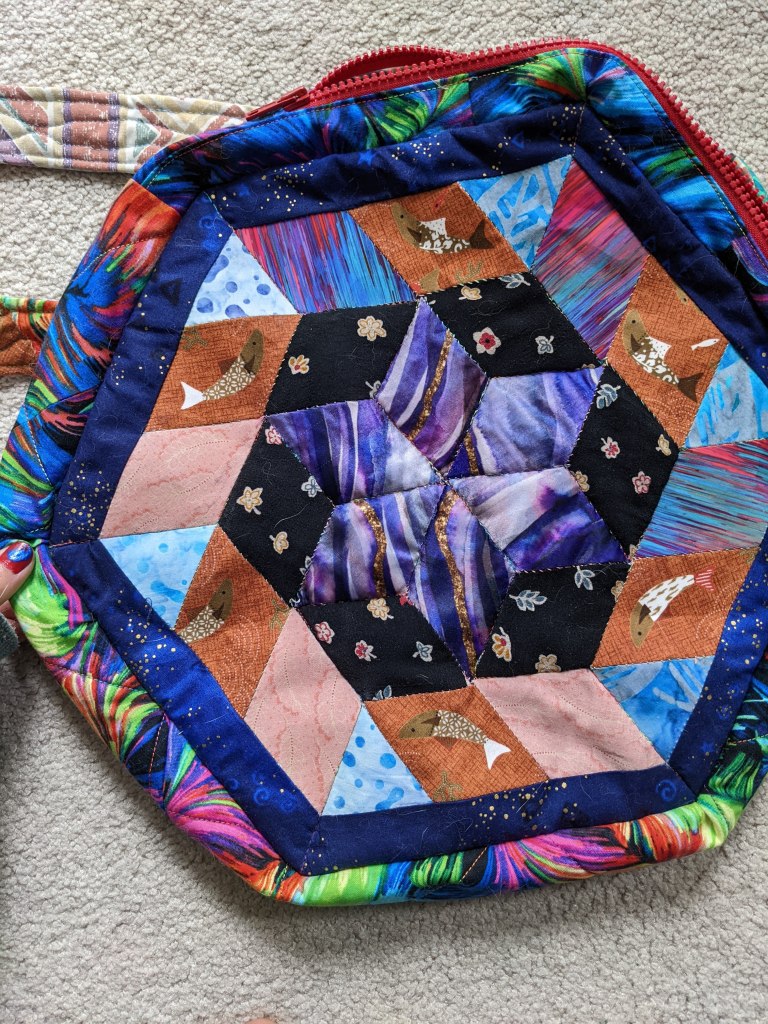
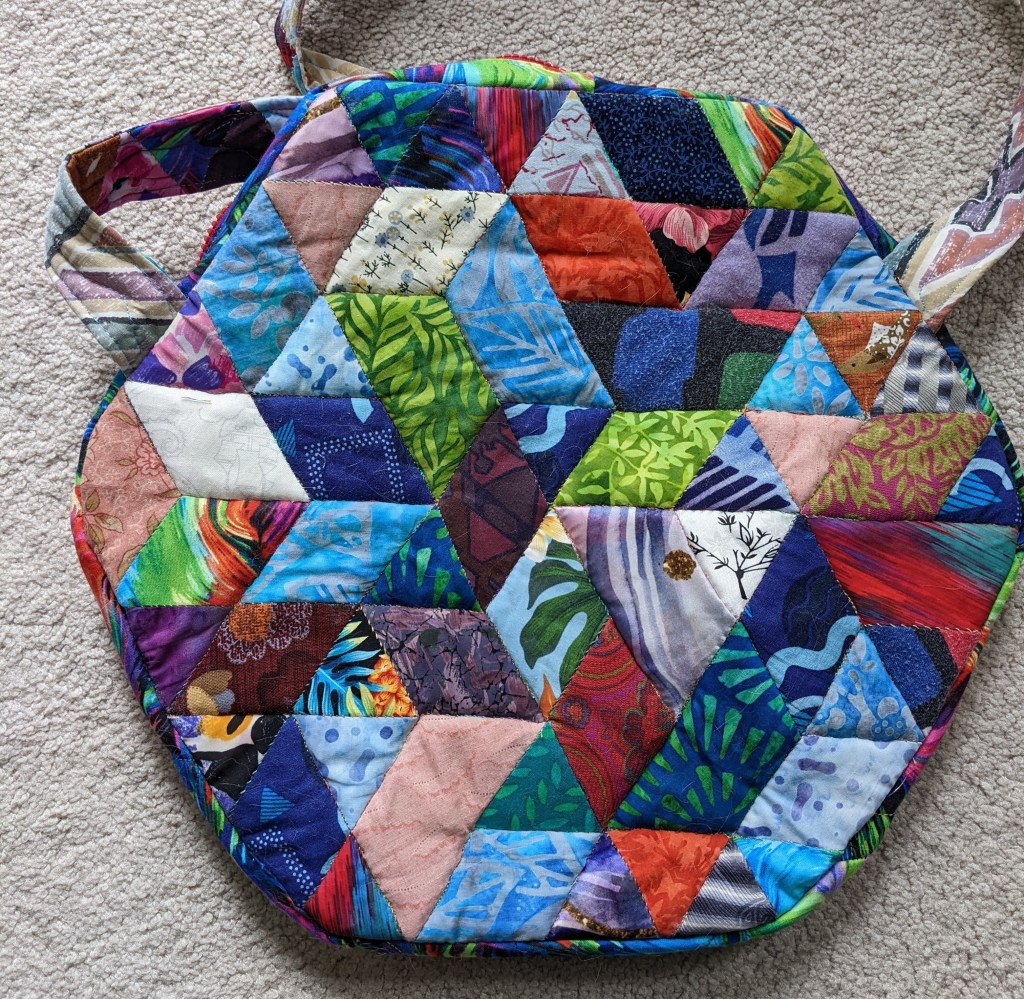
EPP bag to celebrate my new job (front)EPP bag (back)Paint your own pottery – before firingPaint your own pottery – after glazing

 Finch's Creative Endeavors