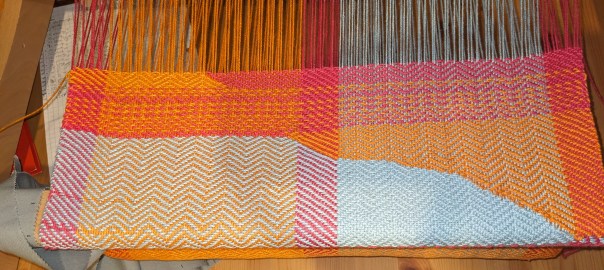
Twill towels
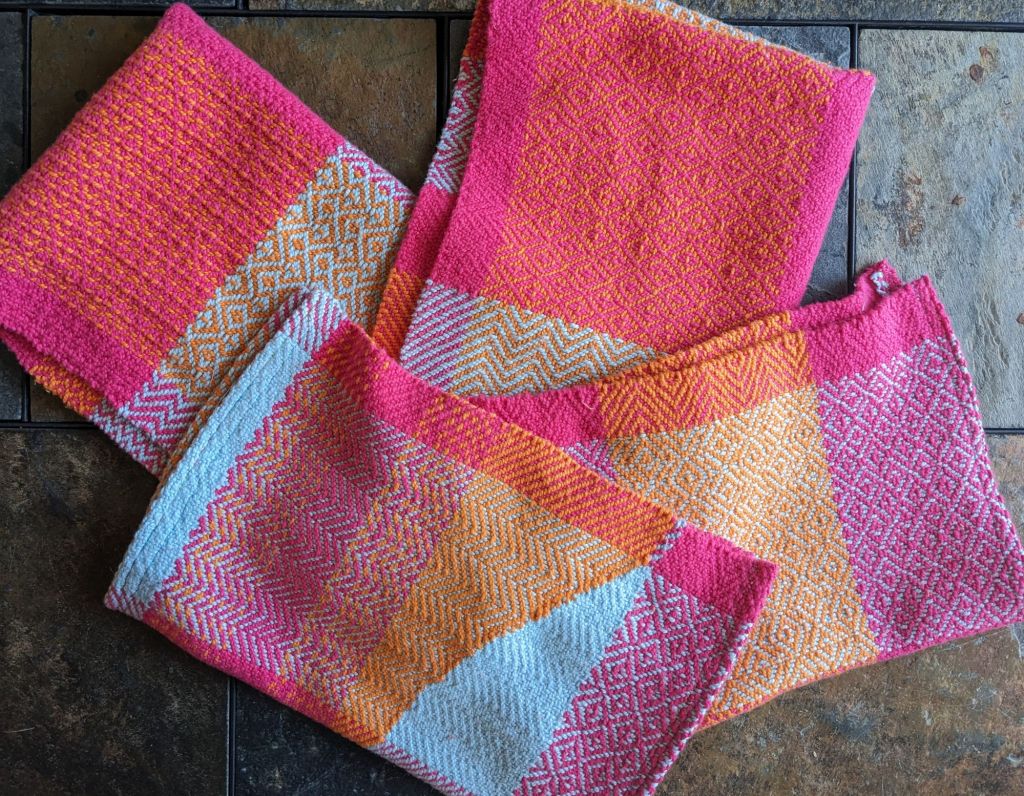
- 3/2 cotton “Beam” thread from Gist Yarn warp and weft in three colors
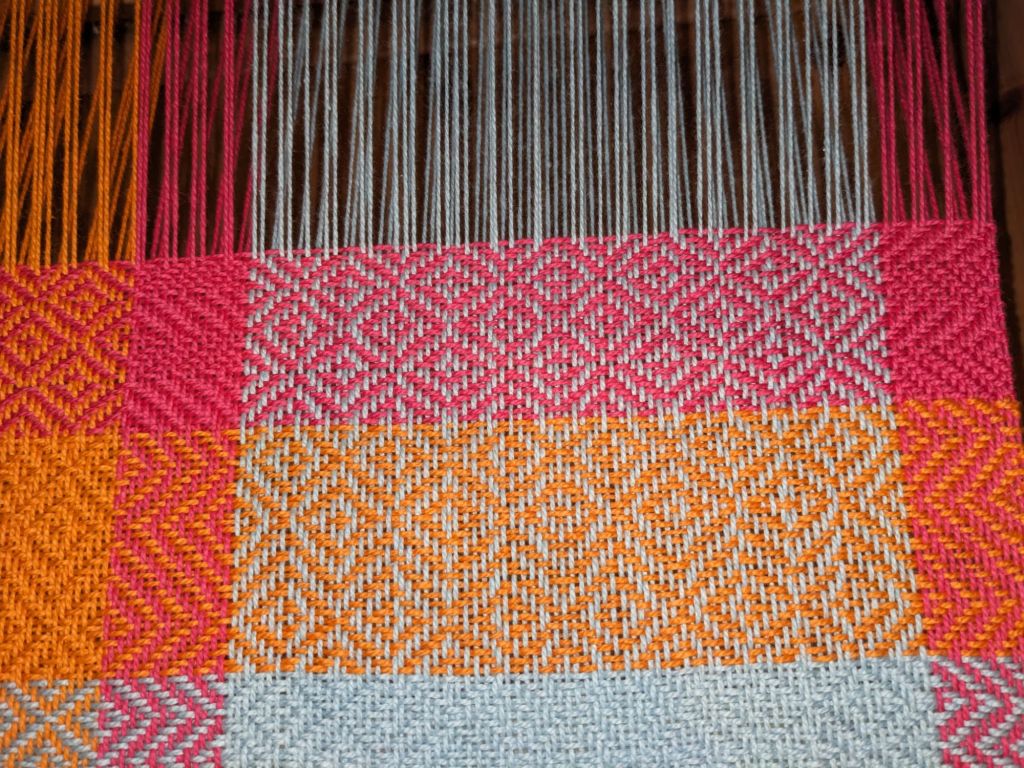
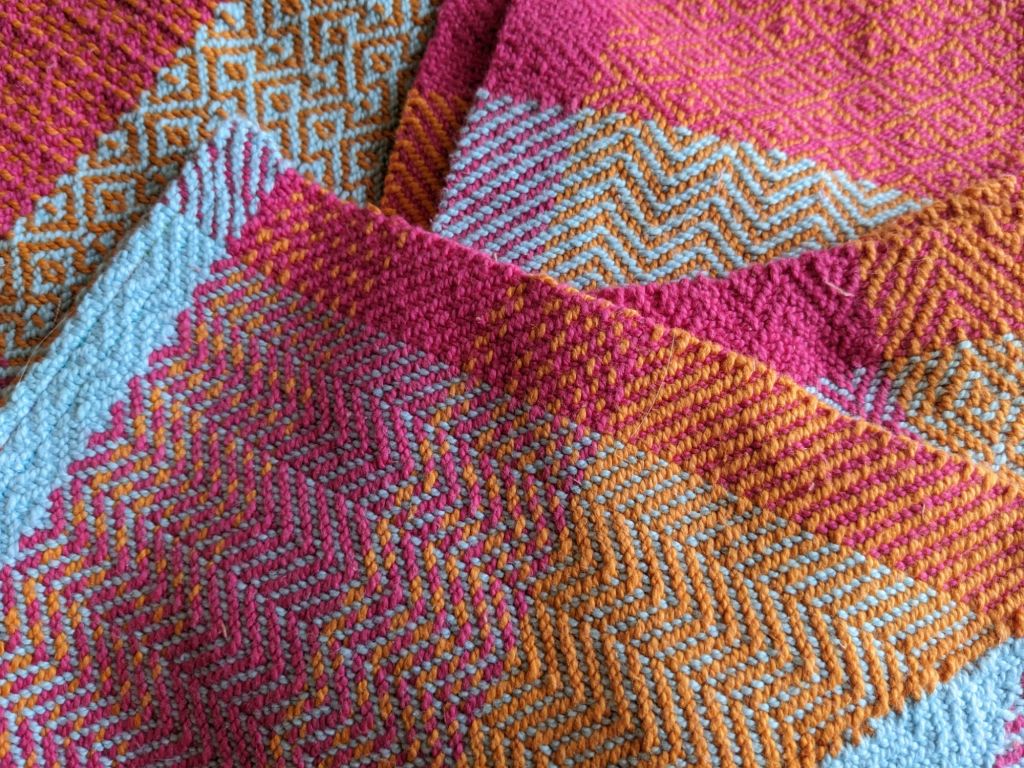
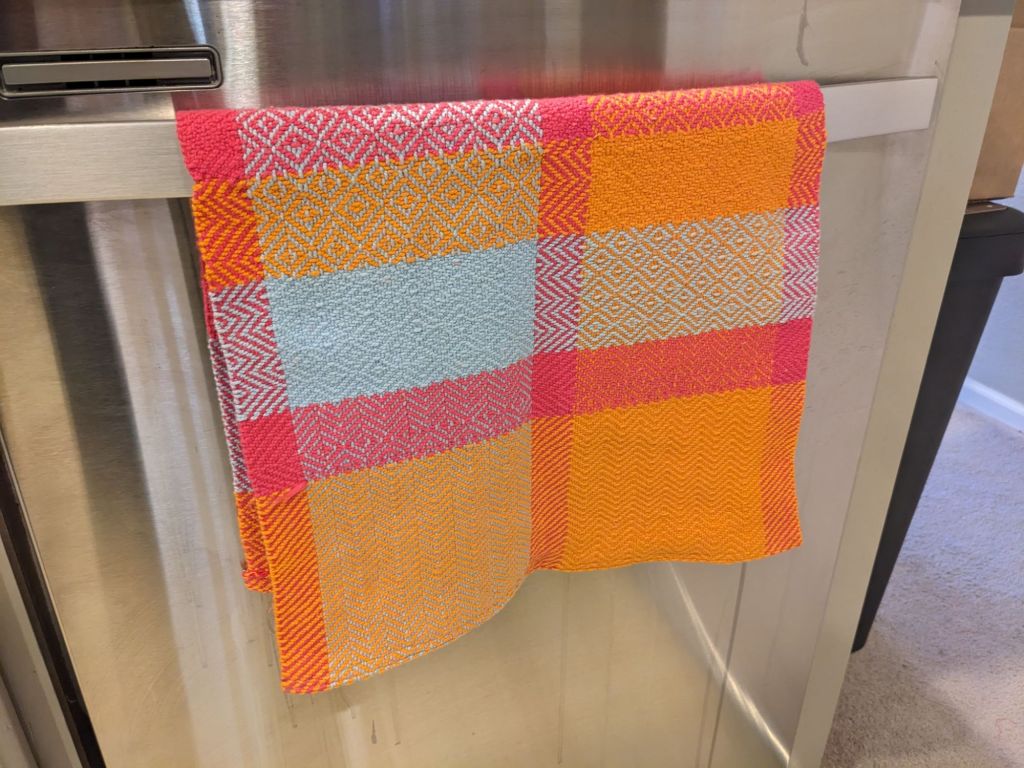
- Threading was by color, so I could experiment with different patterns and see the effect of the weave and the color 🙂 I planned to have all patterns be based in 2/2 twill, just different combinations and repeats
- Pink – straight 12345678
- Orange – point 12345678765432
- Blue – broken
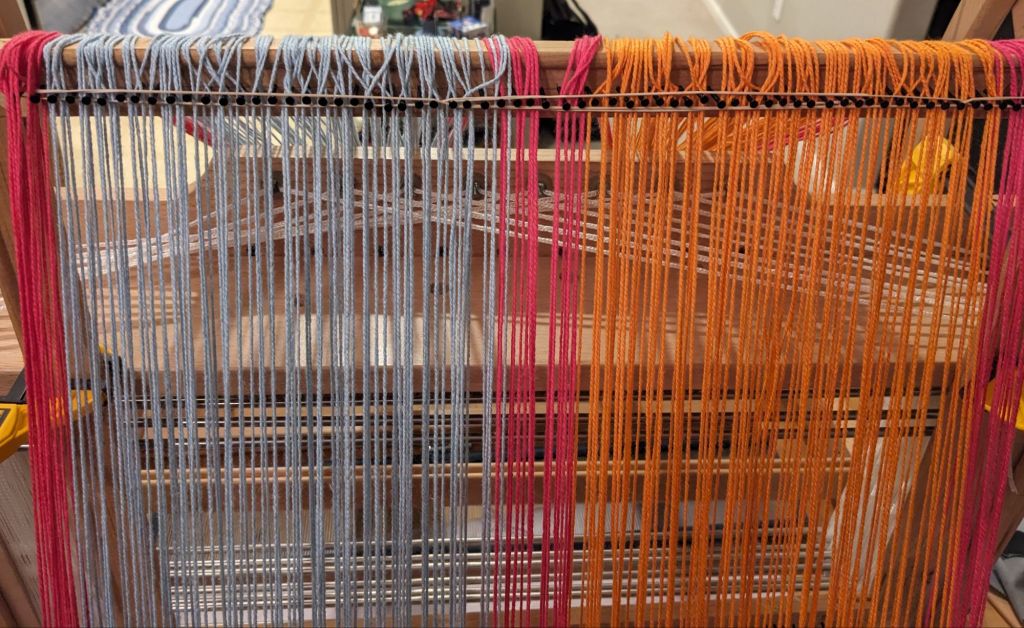
- Warped between two chairs flipped upside down on a counter and table – did not work very well because they slid together over the warp, so the beginning threads were longer than the ending ones.
- Also learned that I need to put more organizational ties on the warp so the threads don’t get tangled when transferring to the loom
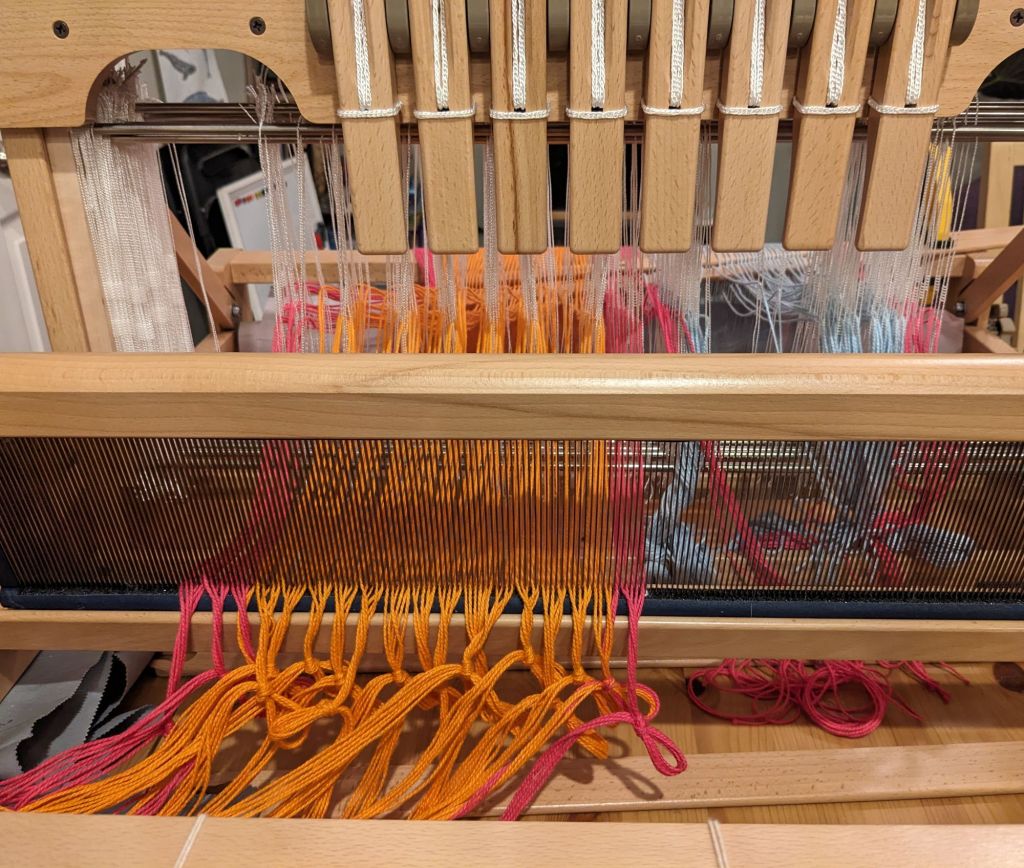
- I had to use a homemade pin loom as a makeshift raddle to separate the warp threads, and since I didn’t really keep the warp untangled… this was really annoying and I had to keep stopping to untangle the threads so they’d go through the raddle, and also the tension was really uneven throughout the winding of the warp.
- One floating selvedge on each side to attempt to keep the edges straight and allow patterns that don’t always go over and under the outside threads

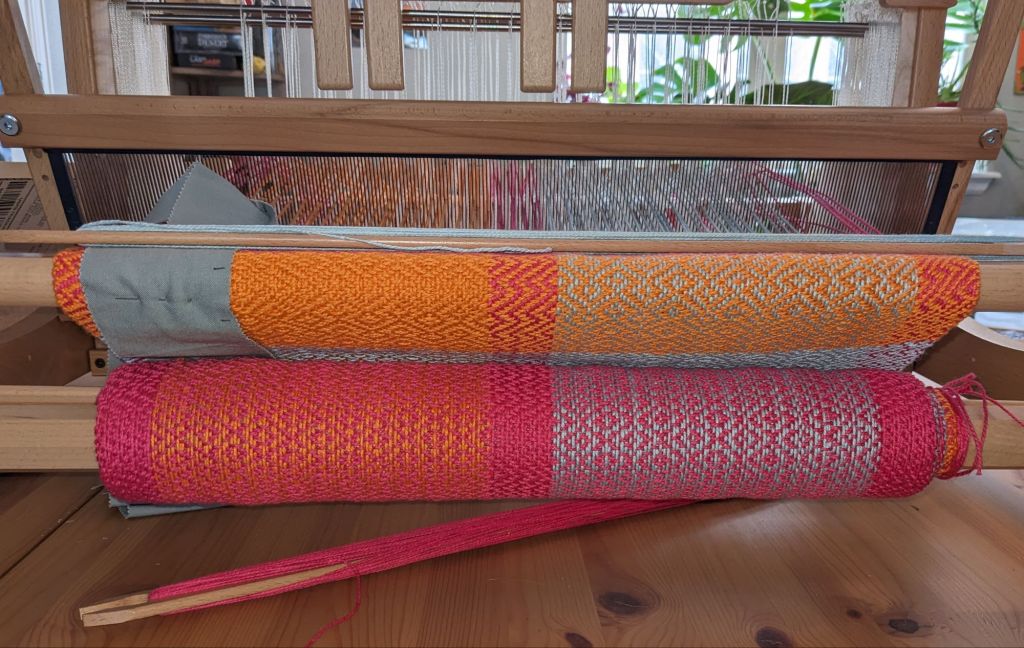
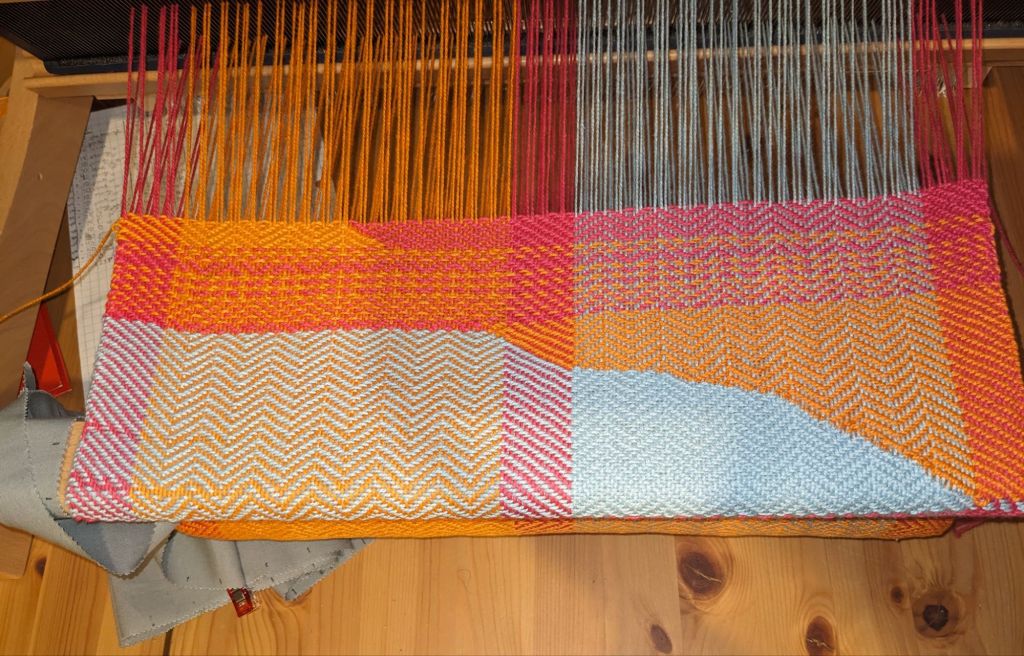
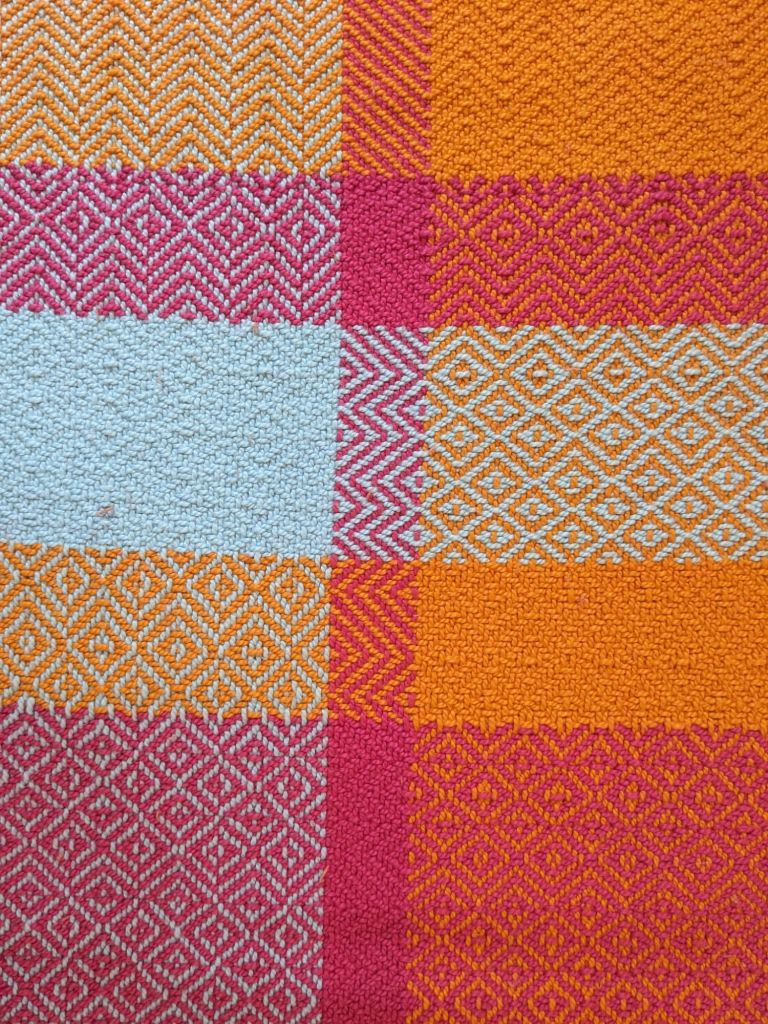
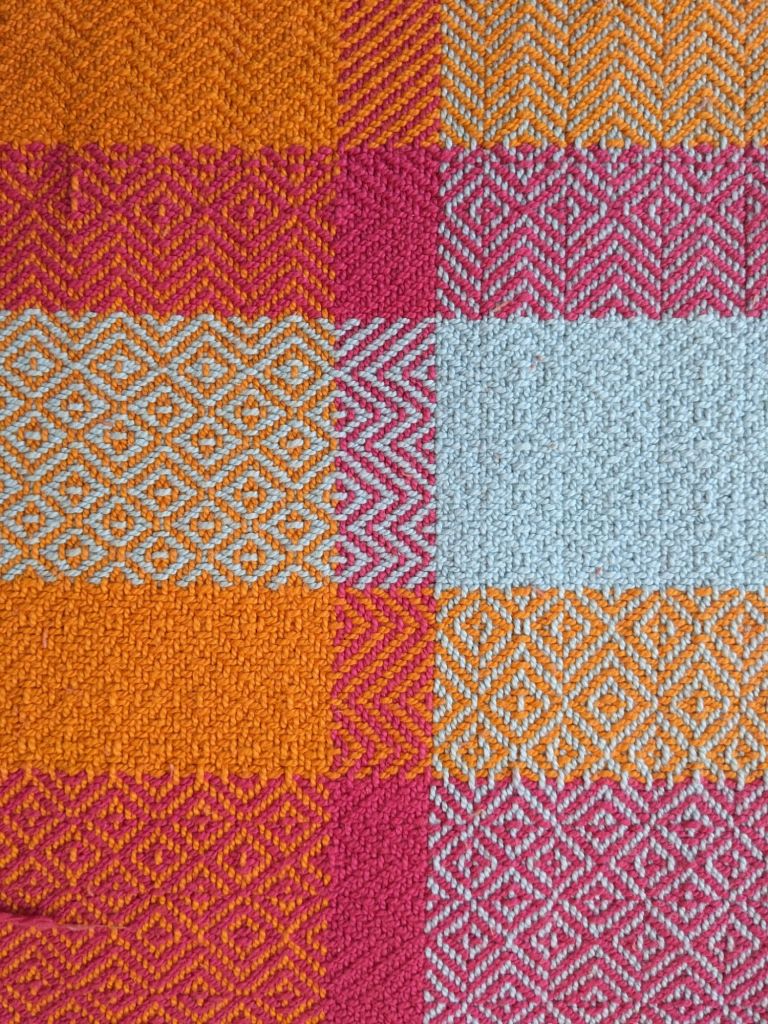
- Finished in the washer, dryer, and ironed, then used my sewing machine to make two kitchen towels and two napkins. It was a little intimidating to cut into my handwoven fabric, so I did a basting stitch on my machine on both sides of where I needed to cut.
Pillow
- Cotton warp, acrylic weft that I frogged from a sweater that I didn’t wear
- Wanted to try my hand at using one pattern for an entire project instead of having fun improvising. I used Carol Strickler’s #178 for threading and “treadling” – which on a table loom is levering, I guess?
- Direct warped with a clamp on the *opposite* side of my kitchen island, which ensured the clamp couldn’t move or fall off. I warped a couple sets of threads instead of doing all ~360 threads at one time. This was better for me logistically and it reduced the effect of the warp building up on the clamp, making some threads longer because they’re more diagonal than straight to the clamp.
- I mainly chose to direct warp because using the homemade raddle went so poorly on the towels, but I want to try “normal warping” again.
- Two floating selvedges on each side just to see if it would help with straighter selvedges.
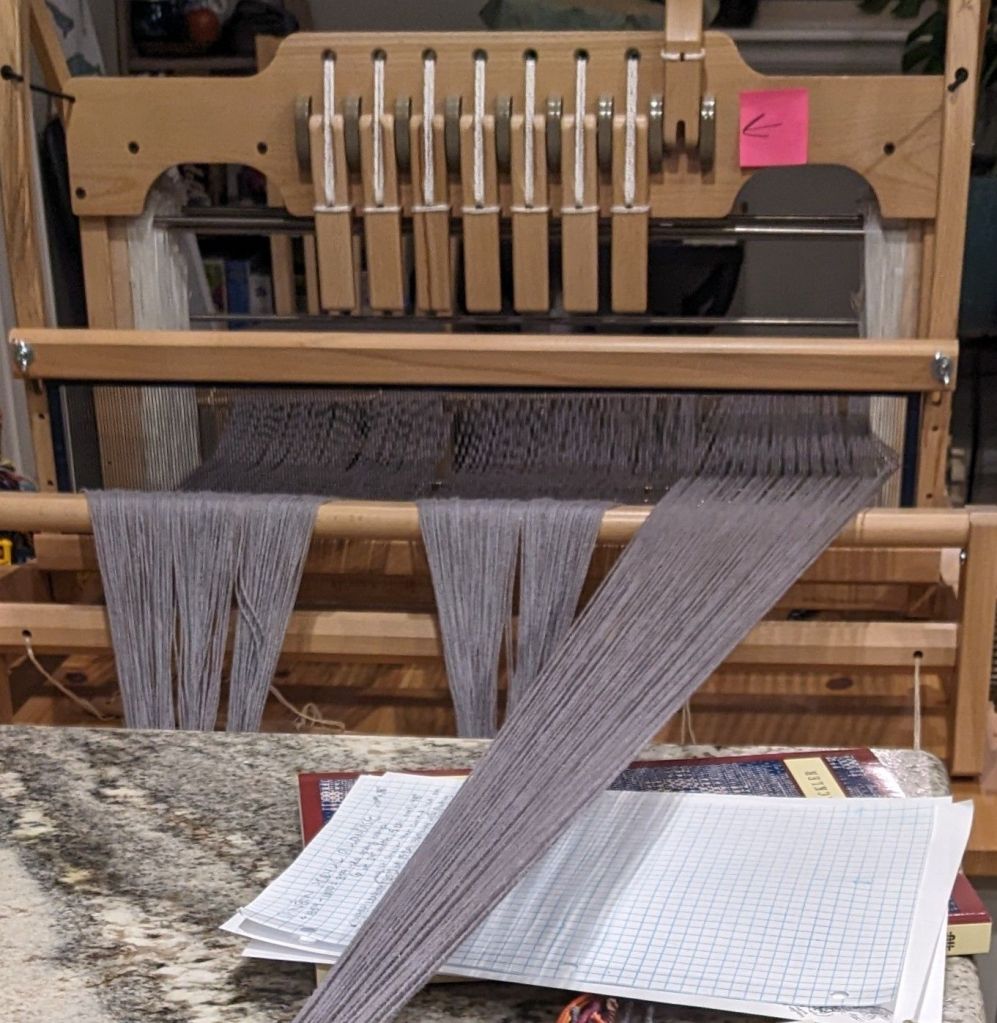
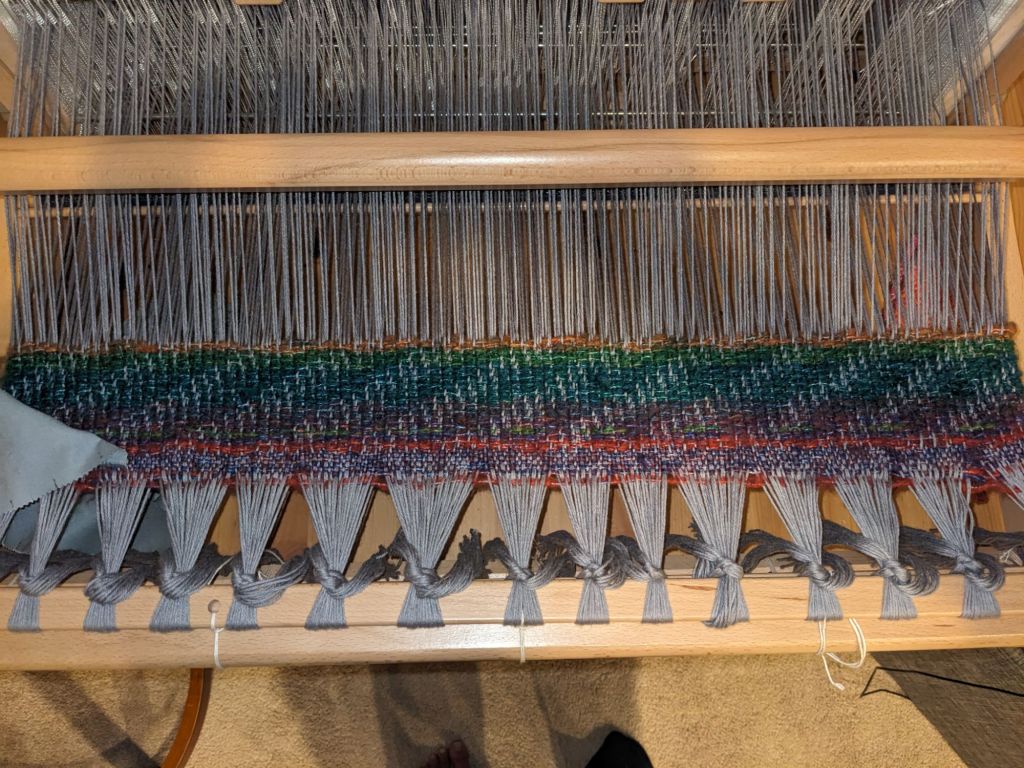
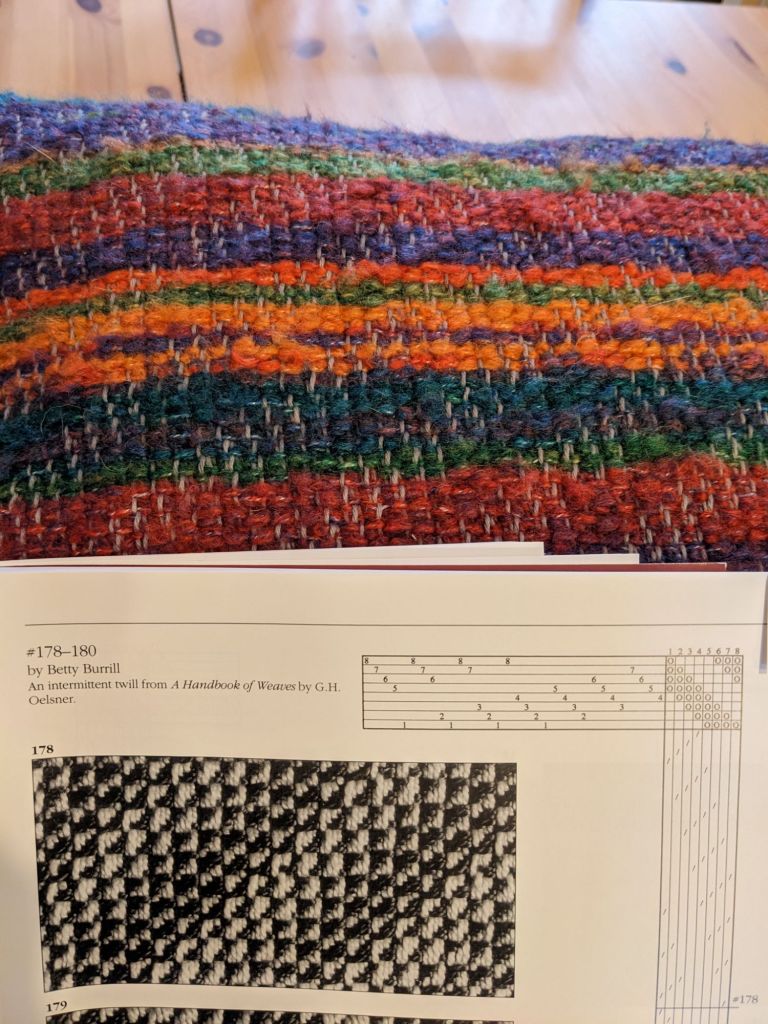
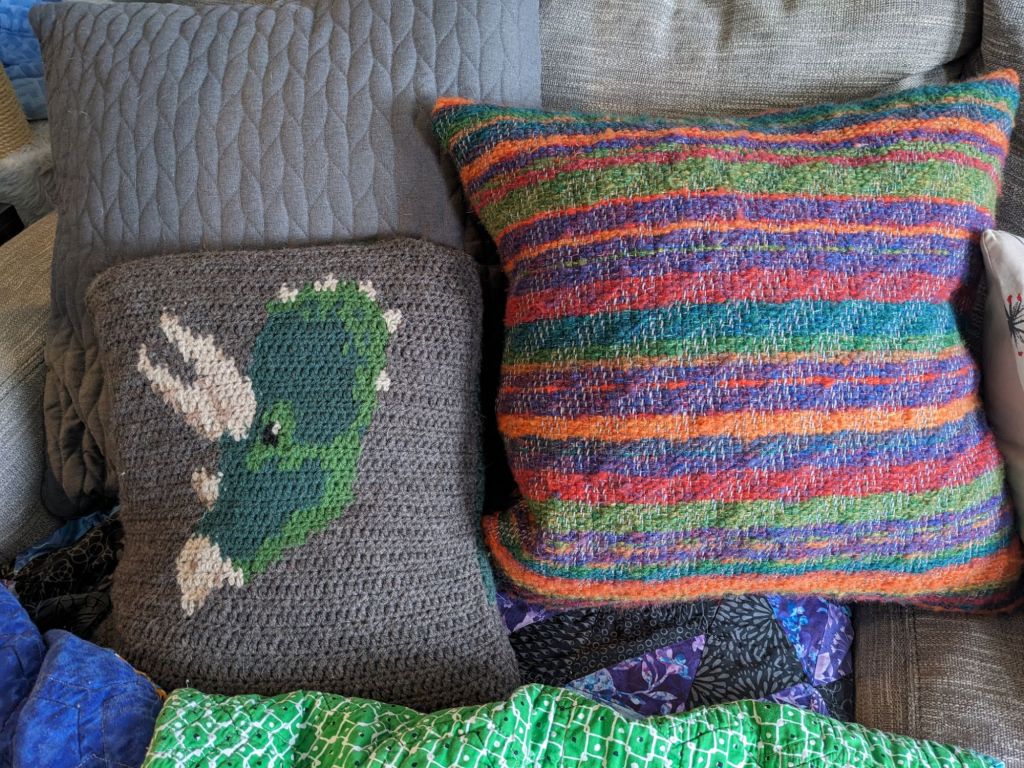
It was very rhythmic, weaving the same pattern over and over again. I started using an eight-sided die to keep track of which line I was on, and just wove and wove and wove. And I used all the yarn I frogged!
Projects completed early 2025.
 Finch's Creative Endeavors
wow, that is so beautiful
LikeLike